How to Train a Whippet: 10 Vet-Approved Tips


In this article
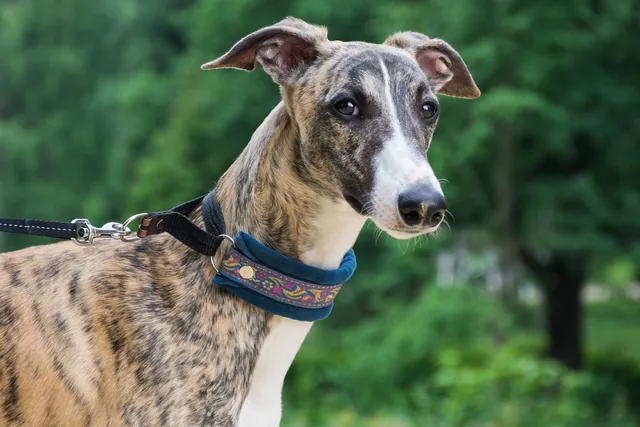
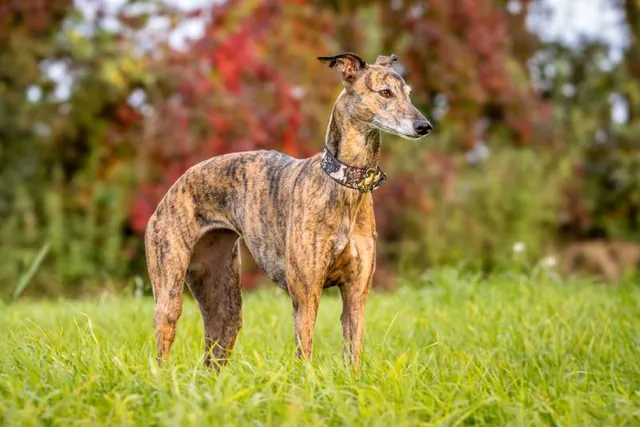
Whippets are charming, loving dogs that look like miniature Greyhounds. They make excellent family dogs, bond deeply with children, and get along well with other dogs if socialized early. They’re agile and fast, and you cannot stop them when they get going. So, what do you need to know when training a Whippet?
Whippets are intelligent but have a stubborn streak that can sometimes make training a little tricky. So, we’ve put together 10 expert tips and tricks to make your training journey easier.

Are Whippets Easy to Train?
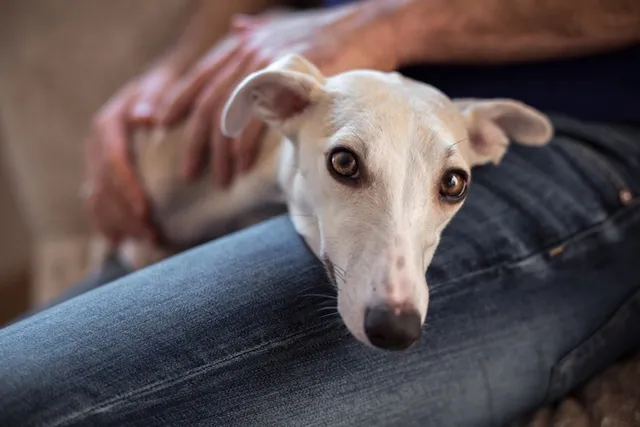
Before we discuss training, we thought it was a good idea to look closer at the temperament and trainability of the Whippet. Whippets are generally quiet and don't cause much fuss or bark. They’re incredibly loyal, but also prone to separation anxiety.
Whippets have a strong prey drive, so they tend to view cats and smaller pets as prey; it isn’t uncommon for Whippets to attack and kill cats entirely out of instinct. This makes early socialization essential for Whippets. They do well with other dogs in the house and are great for motivating older dogs and children to exercise.
A Whippet’s intelligence and stubborn streak combined can mean they recognize exactly what you are teaching them, but they might choose to do the opposite. Training your dog is a crucial part of being a responsible owner, so while it might be a challenging journey you’re about to embark on, it’s for the best.


The 10 Tips for Training a Whippet
1. Start as Soon as Possible
Many owners think they must wait to start training when they bring a new puppy into the home, but you can begin training as soon as possible. Early training and socialization are crucial for your Whippet’s development, as they won't have time to learn bad habits that you will have to train out of them. It is also a wonderful bonding experience for you both.
2. Be Consistent and Patient
Everyone in the home must be on the same page so your Whippet isn’t getting mixed signals. Confusion can lead to frustration and make teaching your dog more challenging. Whippets are intelligent but stubborn, which means they will test your patience.
Stay calm and avoid getting frustrated or resorting to harsh corrections. Positive reinforcement like praise and treats will yield far better results.
3. Provide Stimulation and Exercise
Whippets are relatively calm but need exercise to avoid developing undesirable behavior, such as becoming destructive. They need a minimum of 60 minutes of exercise daily. If you attempt to train them before letting them burn off this energy, chances are they won't pay you any attention. As an intelligent breed, ensure exercise is varied and keep their mind busy with playtime.

4. Leash Training Is Important
Whippets need a fenced-in yard to run free and get rid of all their pent-up energy. If you let your Whippet run free in an unsecured environment and they catch the scent of something that interests them, getting them back will be challenging as they can reach speeds up to 35mph.
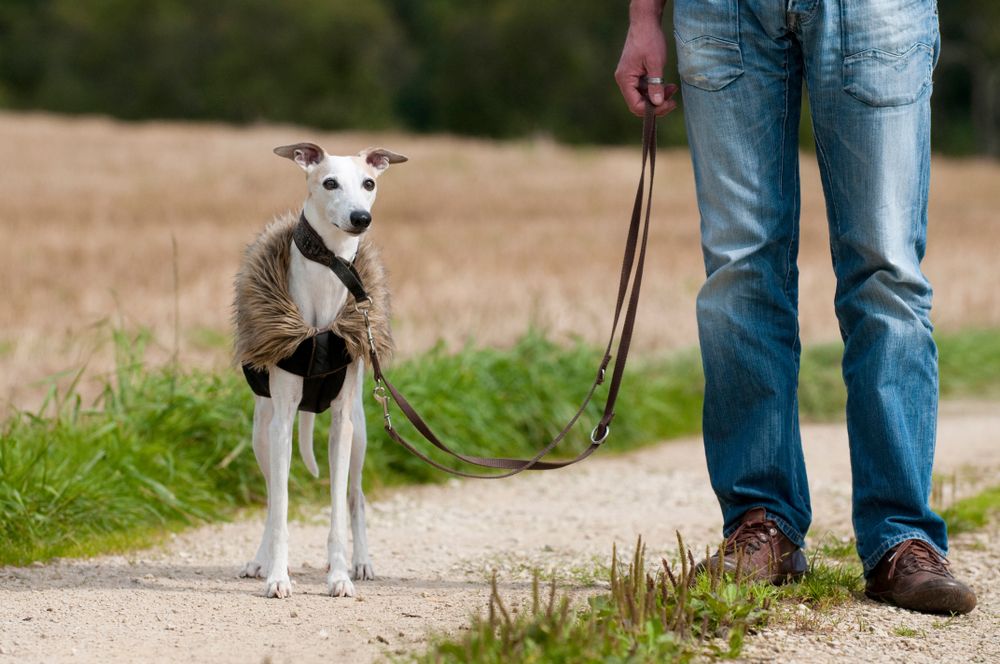
Use a harness and leash to keep your Whippet safe from giving into their high prey drive, and teach them to walk at your side with positive reinforcement techniques.
5. Don’t Forget Socialization
Early socialization is critical for your Whippet. Introducing them to different environments, people, and animals from a young age will ensure your adult dog is comfortable with variation and is more well-rounded, reducing the likelihood of becoming anxious, fearful, or aggressive when faced with new situations.
6. Teach Them House Training
Puppies are messy initially, and your technique for house training will dictate how messy an adult they are. This can't be rushed; remember to keep calm when mistakes happen.
It’s important to note that puppies can't hold their pee for as long as adults. Typically, the rule to follow is they can hold it for an hour plus one for every month of their age. So a 2-month-old can hold it for 2 to 3 hours, and so on.

7. Teach Them Obedience Training
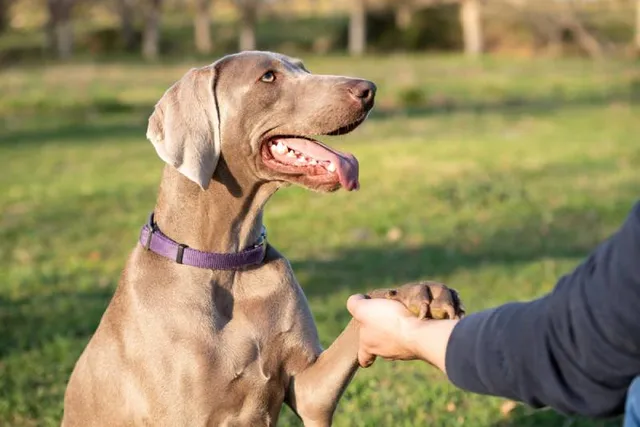
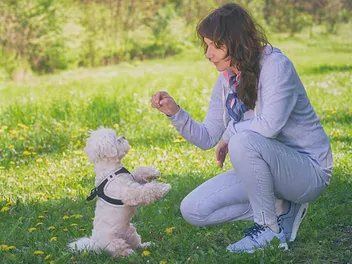
Basic commands will make both of your lives easier. Start small with commands like “stay,” “sit,” and “leave,” and work on recall. This is still important even if you will be using a leash because they will be out in the yard, and you want to be able to call them back in. After you’ve mastered the basics, you can move on to more advanced commands like handshakes and “wipe your feet.”
8. Consider Crate Training
Many people view crates as a punishment, but that isn’t their purpose. A crate provides your Whippet with a safe place that belongs only to them. It also aids with potty training and reduces destructive behaviors or the likelihood of getting into trouble when alone in the house. Introduce the crate to them gradually and use positive reinforcement to get them to associate the crate with positive experiences.
9. Keep Sessions Short and Fun
Short training sessions are usually far more successful than long ones. Five to 10 minutes per training session might not feel like a lot, but it prevents your dog from feeling frustrated and bored.
Always try to end training sessions positively, even if you’ve been working on something small. Praise your dog and let them know what a fantastic job they’ve done. If your Whippet enjoyed their session, they’re much more likely to want to try again and try even harder to impress you.

10. Revisit the Basics
Occasionally, you’ll need to take a step back in training if your Whippet isn’t progressing. This isn’t an indication of failure. When learning something new, some dogs take longer to catch on. Training is also never completely over, and you might find you have to refresh your Whippet’s memory, especially with something they haven’t used for a while.

Conclusion
Whippets are intelligent, loving dogs that make remarkable family pets. Their intelligence helps them learn fast, but they are known for having a stubborn streak, so you must be firm and patient. If you struggle with your training journey, remember it isn’t one you need to go on alone. If you need a professional trainer to provide guidance or address a specific behavioral problem, there is no harm in asking for help.
Training doesn’t have to be all work and no play. It’s an excellent way to bond with your new pet, and in no time at all, you’ll both be having the best time together, learning new tricks to impress the rest of the family!
Related Reads:
Sources
Featured Image Credit: Dora Zett, Shutterstock
Expert dog care, straight to your inbox
News, insights, expert advice, and everything dog.

No spam — unsubscribe anytime.
By signing up, you agree to our Terms & Conditions and Privacy & Cookies Policy.
How useful was this post?
Click a star to rate. You can leave written feedback afterwards. (We read all feedback.)
Kerry-Ann lives in Scotland and wishes her garden was bigger so she could have her very own Highland cow but thinks her dogs probably wouldn’t like that idea very much. She has a La Chon called Harry who was poorly with a liver shunt when he was a puppy. It wasn't likely he would make it into adulthood, which was difficult to comprehend, but he beat the odds and is a healthy old man now. She also has a Pug called Maddie who is a big foodie. She’s small, sassy, and every day she finds a new way to wind her brother up.
When she isn’t writing you can find Kerry-Ann going for long walks when it isn't raining, reading, or watching cartoons when she should be tidying her house. She would one day like to be a tourist in her own country and travel through the Highlands with her family.