How to Train a Portuguese Water Dog: 9 Vet-Approved Tips


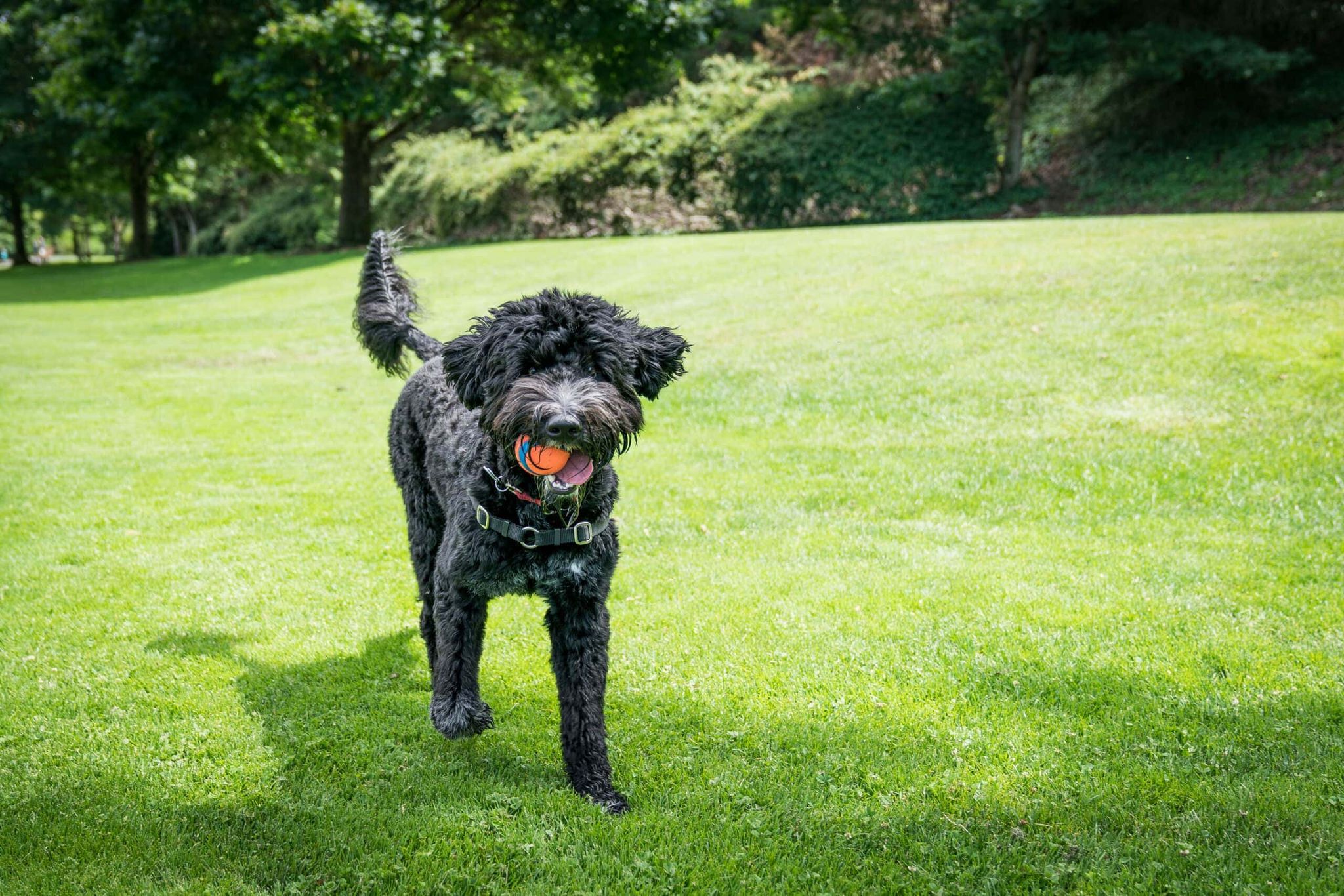
If you’re looking for an intelligent and active pet with a loving nature and a fun personality, you should definitely consider getting a Portuguese Water Dog. These canines are friendly, outgoing, and eager to please, which is why they make perfect human companions.
Due to their high intelligence, Portuguese Water Dogs are capable of learning all kinds of commands, tricks, and words. However, if you want a well-mannered companion, you need to know how to train them. These dogs want to please you, but they are also independent, meaning you need to know how to approach them, help them adapt to the new rules, and master new activities.
Keep reading to get nine Portuguese Water Dog training tips, so you can have a happy and well-behaved puppy that will carry those traits into adulthood.

The 9 Tips for Training a Portuguese Water Dog
1. Start Early
Portuguese Water Dogs are extremely intelligent and active, which is why it’s best to start training them early. The puppies grow rather quickly, so if you don’t provide the necessary training, these dogs could easily develop bad habits that may be hard to correct later.
To ensure that your Portuguese Water Dog will be well-behaved, friendly, and social, you need to start training them as soon as they are ready to come home (at around 8 weeks old).
Starting early will help your dog learn faster and easier while also strengthening your bond. This breed is keen to learn and eager to please, so you’ll find training them to be a fun and positive experience for both of you.
2. Be Gentle But Firm (Help Your Portuguese Water Dog Learn to Respect You)
Portuguese Water Dogs are independent and smart, which is why they need a leader whom they’ll respect and listen to. Although this breed is genuinely eager to please their owners, they can still be strong-willed and often stubborn. Therefore, you need to be gentle yet firm, showing your dog that there are clear boundaries.
Once you start training your Portuguese Water Dog, you’ll need to earn your dog’s respect and show that you’re in charge. Once you do, your training sessions will flow much smoother, and your dog will be more open to learning.

3. Try to Incorporate Various Vocal Commands Into Your Training Sessions
Due to their high intelligence, Portuguese Water Dogs respond well to vocalizations, so try to incorporate various word-based commands in your training sessions.
If taught properly, these canines can learn and respond to basic words like “stop,” “sit,” “come,” and “no.” After a while, your dog will learn to perform activities faster and on command. Use these vocal commands from an early age, and always stick to a specific word for a particular action. Otherwise, you may risk confusing your Portuguese Water Dog.
4. Know That Practice Makes Perfect
Portuguese Water Dogs have a curious nature that combines with their intelligence, enabling them to learn a large number of commands. However, if you want your dog to actually listen to you, you need to put a great deal of effort and practice into your training sessions.
They will be ready to please you in every way, but you still need to provide them with plenty of opportunities to evolve and improve. These dogs want to do a good job, so the more repetition in your commands and training sessions, the faster your furry friend will pick up and respond to them.
5. Break the Training Into Multiple Smaller Sessions
Although Portuguese Water Dogs are generally active and need mental and physical attention, they easily get tired in their puppy years. Spending hours every day learning a new trick or command could be daunting for both of you.
Try to avoid long training sessions; instead, break the training into multiple smaller sessions while still making the most of the time that you have. This will enable your dog to adjust to the commands more easily.
It’s best to stick to 10–20-minute training sessions, followed by either rest or playtime, depending on how your dog feels after the training. To get the best results, consider making small goals in advance that will enable you to stay on track and be consistent.

6. Set a Schedule (and Stick to It)
Portuguese Water Dogs need a routine, which is why it’s best to set a schedule that you’ll stick to, so your canine can get used to daily habits. To provide structure, pick designated times for when your dog will go potty, go for a walk, eat, or train.
If you have been taking your furry companion out every morning at a specific time, try to stick to that same time every day. This rule also counts for night walks, rest, and playtime. By creating a schedule, your dog will know what happens next, which will add a sense of order and help them adjust to the new pace of life better.
7. Learn How to Stop Nippiness, Biting, and Mouthiness
Portuguese Water Dogs love to explore the world with their mouths! However, such behaviors may be destructive, as these dogs tend to nip, bite, or destroy things while using their mouths to touch, carry, and chew them.
Although these dogs have no intention of hurting anyone or making a mess, these behaviors can often be frustrating and may cause problems, especially when in public. That’s why it’s best to set clear rules and boundaries on the things that your dog can handle with their mouth.
Here are a few ground rules to establish a positive attitude in your dog while limiting these issues:
- Never allow your Portuguese Water Dog to bite or nip people or other animals.
- Show your puppy that they are biting too hard.
- Provide toys that your dog can safely chew on.
- Avoid chasing games, as they may lead to nipping or biting; try catching games instead.
As long as you provide playful ways for your dog to express their need to chew or bite on things, your dog shouldn’t be destructive. Also, ensure that your dog learns that it’s not okay to bite people and other dogs, but allow them to play catch and bring you objects with their mouths, as this should satisfy their need for mouthiness.
8. Add Crate Training to Your To-Do List
Some people think that crates are cages for punishing puppies; however, they are just the opposite. Every dog needs a designated, safe place where they can relax, unwind, and simply rest without interruptions.
When such a place is not provided, you may notice your furry companion lying on the floor, under the table, or in various places throughout your home. Having a crate and promoting crate training for your Portuguese Water Dog will help you in various ways, including:
- Teaching your dog how to use a crate means you can leave them home alone in a safe, comfortable, and protected environment, without needing to worry about things getting destroyed
- Providing a safe space for your dog to rest, explore, or spend time while you’re away
- Allowing your dog to be housetrained more easily
- Allowing dogs to easily adjust to new surroundings
- Preventing accidents and helping your dog learn how to hold it while inside the crate
Overall, crate training is beneficial for all dogs, and it makes life easier for us and our furry friends.

9. Always Practice Positive Reinforcement
Always practice positive reinforcement when training your Portuguese Water Dogs. It’s the best way to connect with your dog and form a trusting yet respectful bond between you.
After your dog accomplishes a particular command or a request, be sure to reward and praise the behavior, thus enabling them to connect the behavior with a positive experience. You can offer treats or toys or simply use praise words like “good dog!” This way, your dog will be more likely to repeat the actions and behavior, as they will know that it’s a positive thing and that you’ll be proud of them.
Rewarding your dog positively reflects on your training sessions and your dog’s behavior in general.
Conclusion
Portuguese Water Dogs make excellent pets and human companions, but you’ll need to train them from a young age while using positive reinforcement and being patient. These dogs are extremely intelligent, so they’ll quickly engage in positive behaviors if you create a routine and allow them to learn at their own pace.
Featured Image Credit: blrz, Shutterstock
Expert dog care, straight to your inbox
News, insights, expert advice, and everything dog.

No spam — unsubscribe anytime.
By signing up, you agree to our Terms & Conditions and Privacy & Cookies Policy.
How useful was this post?
Click a star to rate. You can leave written feedback afterwards. (We read all feedback.)
I'm a creative, adaptable content writer that covers various topics such as DIY, pets, home improvement, travel, gardening, and more.
As a young mom and a college student, I didn’t have enough time to balance my personal and work life, so after multiple years of working a regular 9 to 5 job, I decided to pursue my passion and make a living out of it. I have been writing for a couple of years now, helping people to find valuable and interesting information online.
I believe that writing is a great way to share your knowledge with the community and express yourself. There's nothing that words cannot accomplish, so I always try to use them in the best possible way.