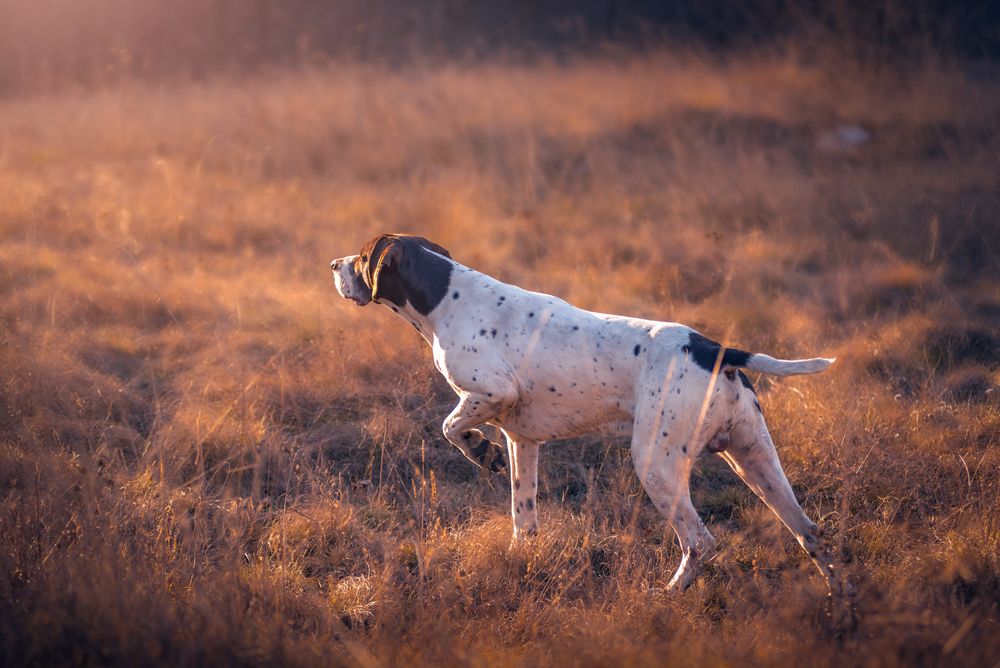
How to Train a Hunting Dog: Vet-Approved 10 Tips & Tricks

In this article
Hunting prowess has long been a crucial advantage of having dogs since the early days of domestication, and many breeds have evolved specifically for their ability to find, flush, and retrieve game.
For many of these modern dogs, hunting-related behaviors are strongly instinctive. By giving them a chance to work in the field and put their talents to the test, you make your job easier while giving your dog a fun, purposeful activity they’ll love, making your bond healthier in the process.
Although they come packed with potential, dogs don’t always have an innate understanding of how to hunt alongside their human companions. It takes frequent training to build discipline, yielding surprising results if you take an informed approach. Follow these tips and tricks for training a hunting dog so you can see the magic of your dog working the field as soon as possible.

The 10 Tips & Tricks to Train a Hunting Dog
1. Teach Basic Obedience From a Young Age
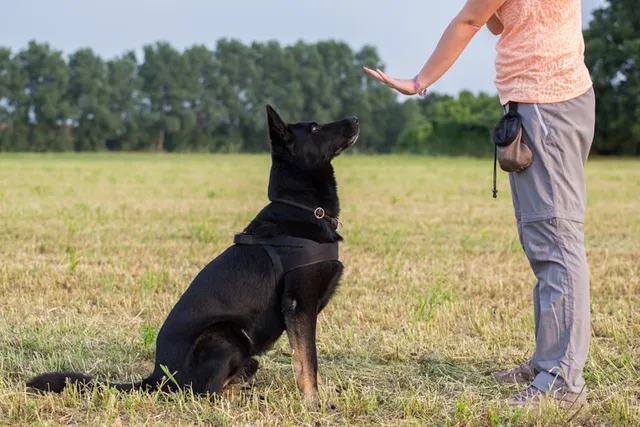
Basic obedience and the ability to follow commands are essential before you can train specialized hunting skills. Start training your dog from a young age, as early as eight weeks. Train the essentials, including sit, stay, down, place, drop it, release, and recall. Make positive reinforcement training sessions part of your daily routine.

2. Play Fetch
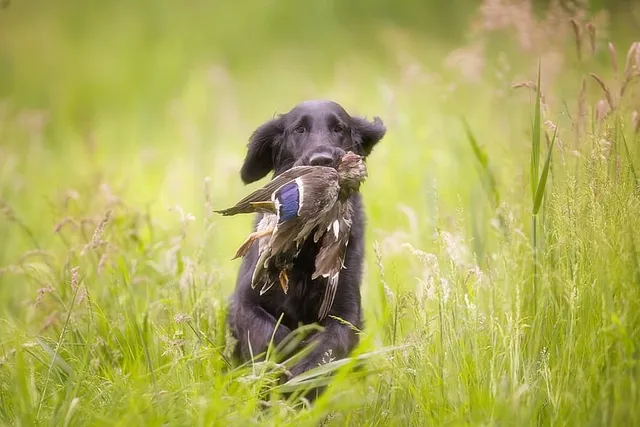
Fetch translates well to hunting, giving your dog practice in bringing and releasing objects to you. A hunting dog will often have a natural urge to retrieve and carry items, so this will essentially fine-tune it and put it on cue. You can play fetch indoors initially, particularly in long hallways that leave little room for the dog to wander off in the wrong direction.
Put your dog on a long leash to coax them toward you if they hesitate to return on your “come” command. Ensure the dog doesn’t drop or chew on the item as they walk it back to you. Cue them to a "sit" upon returning and praise them.
After issuing a “drop” command to take the item, give your dog praise and treats. You can eventually work on this in outdoor environments with growing distance and distractions.
3. Train Your Dog to Wait for Your Command
A lot of passive training can occur around the home to sharpen responses to cues and develop a general habit of looking to you for guidance. Such is the case with the “whoa” command for Pointers or "hup" for Spaniels. If your dog wants to go outside, exit their crate, or eat their dinner, have them wait before you release them to do so. Your dog will learn to manage their impulses and await your command, which is a critical hunting skill.

4. Keep Training Session Short, Rewarding, and Successful
Training sessions should be rewarding; you don’t want your dog to become burnt out and unfocused. Limit training to about 10-minute sessions, 2–4 times daily maximum. Watch your dog and move at their pace. Never force them to progress faster than they can handle, lest they become scared or unmotivated to perform crucial tasks.
Introduce your hunting dog slowly to gunfire, water, quartering, and other training elements. When the dog shows comfort and confidence, increase the difficulty with added distance, more distractions, and more complex environments. Set them up for success so you can reward them consistently, and when responses are exceptional, handsomely, to keep them excited about work.
5. Socialize Your Dog and Build Your Bond
Socializing your dog from a young age is essential in developing a hunting dog that can transition to a well-mannered family pet when they come home. At the same time, it primes the dog’s brain for learning, helping them pick up and cement their training faster.
As they gain experience around new people, animals, and places, they’ll also grow more comfortable in changing outdoor environments. However, you must maintain supervision and appropriate control in new situations to prevent poor experiences.
Letting an untrained dog off leash in a dog park can cause an unfortunate run-in that could put them on edge. Always ensure you can manage your dog and promote obedience to keep experiences positive. You can eventually train in novel environments, helping your dog stay engaged in their work.

6. Train Retrieval at Around Six Months
Train hunting routines with bumpers or decoys in the field to help your dog learn marked and blind retrievals. Switching this up in various terrains and from different distances will help your dog generalize the behavior and build their efficiency in following your direction. To start, you’ll want to work in an open field with minimal distractions or obstacles.
Train Marked and Blind Retrieves
Train from a short distance and lengthen the space as your dog gets used to marked retrieves. Have a helper throw a bumper in the air to simulate a falling bird, and have your dog retrieve and return it to you. Once they have these down, you can transition to blind retrieves.
Teach blind retrieves by having your helper drop a bumper in an open area when the dog returns to you from a marked retrieve. Once your dog sees the target, you can release them. Slowly build the retrieval distance until your dog relies less on their sight of the target and more on your commands.
Repeating this will establish the connection between the release to hunt and the blind retrieve target. Training marked and blind retrieves equally is crucial, as your dog must understand that you can provide accurate guidance if they miss where the bird falls.
7. Train With a Check Cord
A check cord is a valuable tool for giving your dog room to move in the field while keeping them under control. Whatever the discipline you’re training, a check cord is a handy tool for ensuring obedience and maintaining safe, consistent control, so you aren’t reduced to chasing, repeating yourself, and weakening the importance of your commands. A few ways the check cord will help include:
- Creating an allowable search area
- Training direction cues during quartering
- Reinforce “come,” “whoa,” and “hup” commands
Check cords are also a handy transitional device when you move from training to the first hunt. You can maintain convenient control as your dog acclimates to a hunting scenario.

8. Teach Quartering in a Yard
Quartering is a fun activity for a young dog and one of the most invaluable hunting skills they can possess. Training with a check cord can reinforce directional cues like “this way” as you lead your dog in a zig-zagging pattern through a field.
Use verbal or whistle signals, gradually building your dog’s understanding of each cue's meaning and how they should react. They’ll soon get used to the habit of sweeping the area as you walk in a straight line and respond to your guidance about where and when to turn.
9. Desensitize Your Dog to Gunshots
Gunshots are startling to almost any dog, potentially igniting a fear response that won’t work in a hunting setting. You’ll have to focus on desensitizing your dog to the sound so they stay focused on their job and remain calm by your side until given a command.
Gradually acclimate your dog to the sounds of gunshots and pair the sound with positive experiences. Start with a helper a few hundred feet away, and release your dog to retrieve. Have your helper fire a shot, immediately rewarding your dog afterward.
You can bring the noise closer as your dog becomes more comfortable with the gunshot. Watch your dog’s reaction, making sure not to bring the shot any closer than they can tolerate. They must stay consistently successful to help build a positive conditioned response to remain relaxed when they hear the shot. Eventually, you can work up to being next to the dog when firing.

10. Spend Time Bonding and Appreciating Your Dog Daily
We should always foster our hunting dogs’ responsiveness to cues and cooperation, but at the same time, we must appreciate all they accomplish and do the most we can to make them enjoy working with us. Take time to play with, work out, and love your dog daily to enhance your bond and keep them motivated and engaged with their skills during the hunt.
Final Thoughts
Training your hunting dog can be a very rewarding experience, provided you take the time and have the patience. Don’t be afraid to ask for professional help as you dial in your hunting dog’s specialized training, either, as they may be able to help you troubleshoot some areas where you’re struggling, so you can improve efficiency and keep your dog interested. Whatever your training method and type of hunting dog, using these tips and tricks and partnering with an expert can make all the difference in prepping your pup for their first outing.
Sources
Featured Image Credit: Drazen Boskic PHOTO, Shutterstock
Expert dog care, straight to your inbox
Vet-reviewed advice, training tips, and the best of Dogster. Free, and you can unsubscribe anytime.
By signing up, you agree to our Terms & Conditions and Privacy & Cookies Policy.
Ollie is a zoologist turned freelance animal writer living in South Australia with his partner Alex and their mini zoo consisting of their eldest, a rescue dog named Pepper, many aquatic creatures, and their cat Steve. Ollie has a Master's degree in wildlife biology but became a freelance animal writer in 2020 and hasn't looked back. He loves sharing what he has learned with pet parents around the planet.
Join the conversation
Ask a question, share your story, or send private feedback.