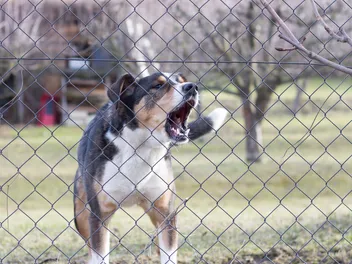
How to Train a Dog to Stop Barking on Command: 7 Vet Approved Steps for Teaching



Barking is one of most dog owners' major complaints about their best buds. Barking can be disruptive and taxing on the spirit—but more so, hard to correct. So, what exactly causes excessive barking, and how can you make it stop?
In this article, we’d love to set your expectations, explain the importance of barking, and encourage adequate training. We hope you can find these tips useful for your situation.

How to Train a Dog to Stop Barking on Command
1. Learn About Barking
Barking is a natural behavior for dogs. It is a form of communication that they use to communicate with humans and other animals. Expecting a dog never to vocalize is unrealistic, as it is taking away a part of their natural behavioral repertoire.
For them to experience punishment or suppression for normal communication is unhealthy and can lead to stress-related or anxiety-associated behaviors. However, there are ways to encourage appropriate barking and discourage unnecessary barking. All it takes is a little motivation, patience, and proper training on the owner's end.
If you are interested in decreasing your dog’s bark volume and frequency, you can check out these tips, but remember that you should never want to eliminate the behavior completely. Our dogs should be allowed to bark if it is appropriate, and we must teach them when it is appropriate and when it isn’t.

2. Understand the Breed
When barking is a problem, you need to look at the breed. It is important to understand exactly what that dog is all about because some breeds are more prone to barking than others. Some dogs rarely bark at all.
For example, the Basenji is known as the barkless dog. This dog is less likely to produce typical barking vocalizations, even if there is a very good reason to do so. They might draw attention to something going on, but they typically produce alternative vocalizations, such as yodels or howls.
The exact opposite could be said for a notoriously talkative breed like the Husky. This dog often shows a high tendency toward vocalization, but it can still be trained to respond to cues and develop appropriate vocal behavior.
Having said that, there are dogs that lie on a spectrum when it comes to barking. Personality plays a huge role, as do genetics and other environmental factors. The rule of thumb when it comes to knowing how much a dog will bark is to look at the probability based on breed. The list below is not all-inclusive, but below are some dog breeds that tend to bark more or less.
3. Pinpoint Primary Triggers
What exactly really gets your dog going? Is it the squirrels out the window? A knock at the door? A neighbor passing by? Or just anything and everything that they possibly find stimulating?
Once you know what really gets your dog going, you can diligently work towards creating a less stimulating environment by providing appropriate training. It is crucial to desensitize your dog and teach them to appropriately respond to external stimuli.

4. Choose a Single Command
If you're trying to train your dog not to bark, the easiest way to do this is to choose a single word and use it solely when you are referencing the command. For example, you could choose a simple word, like “stop.” You could even use something more general, like “no.”
But every time the dog barks inappropriately, you have to give the cue consistently and follow through with other means of reinforcing the desired quiet behavior, such as treats and praise. If you use the command every time your dog barks at a certain trigger, such as seeing a squirrel outside, and the dog stops barking, give them a treat. Likewise, don’t use the command if you want them to bark when there’s a knock at the door, so they know that it’s okay to keep barking in this situation. They will eventually learn what they should bark at and what they shouldn’t as long as you keep using the command and reinforcing calm, quiet behavior when appropriate.
We highly recommend never treating barking with aggression. In certain dogs, punitive or aversive training methods can actually increase the risk of poor behavior. It’s important to treat your dog with respect while providing clear, consistent guidance and reinforcement.
5. Encourage Healthy Barking
Encourage healthy barking? Whatever could this mean? Dogs should bark. It’s a natural behavior of their species. Just like animals in the wild communicate with one another with different vocalizations and body language, our dogs do the same. This is why it’s important to train them to understand when it’s okay to bark and when it isn’t.
Barking is very much an expected part of dog ownership. You simply have to learn how to navigate around it. With excessive barkers, this can be very complicated, and you might feel like you just want to pull your hair out!

6. Ensure Your Dog Gets Adequate Exercise
You might not necessarily equate barking with exercise. However, a dog that has a lot of pent-up energy is more inclined to arousal-related or stress-related behaviors, like barking, chewing, destructiveness in general, and separation anxiety.
If you have a high-energy breed that just isn't burning enough steam in a day, anything that moves can overstimulate them. If you find that this is happening, you can always increase both physical exercise and mental enrichment and make sure that your dog is appropriately tired and relaxed by the end of the day.
This could reduce many of these undesirable behaviors and make it much easier and quieter to live with your dog. The amount of exercise your dog needs depends greatly on its breed, size, health, and age. A veterinarian can recommend an exact number based on these factors. The vet might also recommend certain stimulating games to capture their focus.
7. Seek Professional Training
When all else fails, it’s time to seek professional training. Barking is something that is often manageable with appropriate behavior modification, depending on the underlying cause.
Professional trainers deal with these sorts of issues on a daily basis and have all the tools and resources necessary to help you achieve your goals. Oftentimes, trainers will recommend that you work alongside your canine companion to solidify that bond and put an equal effort into training.
Others prefer that you leave the dog at their facility while they train. If you prefer to do it at home yourself, you can also find free training resources online, but guidance from a qualified professional helps ensure safe and effective methods.
Ultimately, you will choose the best trainer for your intentions and budget. You can be very communicative with them, letting them know exactly what you hope to achieve with training so the two of you can come up with a proper plan. Don’t be afraid to ask for recommendations in your area.
Conclusion
Now, you can work toward teaching your dog to stop barking when you command it and allow them to bark when it's appropriate. It can be difficult for your dog to learn at first, but as long as you're diligent and consistent, you can decrease barking.
Remember to choose the right breed before you even run into barking issues. Then, simply work on training, training, training—it’s key!
Featured Image Credit: Serhii Yushkov, Shutterstock
Expert dog care, straight to your inbox
News, insights, expert advice, and everything dog.

No spam — unsubscribe anytime.
By signing up, you agree to our Terms & Conditions and Privacy & Cookies Policy.
How useful was this post?
Click a star to rate. You can leave written feedback afterwards. (We read all feedback.)
Ashley Bates is a freelance dog writer and pet enthusiast who is currently studying the art of animal therapy. A mother to four human children— and 23 furry and feathery kids, too – Ashley volunteers at local shelters, advocates for animal well-being, and rescues every creature in need. Her mission is to create awareness, education, and entertainment about pets to prevent homelessness. Her specialties are dogs and cats.