How to Tell a Dog "No" in 4 Vet-Approved Steps


In this article
Dogs are like children in that they may constantly push your boundaries and need your help to learn the rules. A harrowing rite of passage for every dog owner is the simple but not-so-simple task of teaching your dog the meaning of the word “no.” It seems straightforward to us humans but sometimes just out of reach for your dog’s excitable little furry brain.
Some dogs are more challenging to teach this than others, but the good news is that it is teachable for every dog! Join us below as we break it down into an easy step-by-step guide you can follow to teach your dog “no” ASAP.

Before You Begin
All you need to successfully teach your dog the word and concept of “no” is a leash and a bag of treats. “Easier said than done,” you’re probably thinking, and it’s true—you’re going to need a ton of patience and maybe a little luck, depending on your dog’s personality. Headstrong breeds like the Siberian Husky will probably give you a harder time than a mellow Labrador Retriever, but every dog is different.
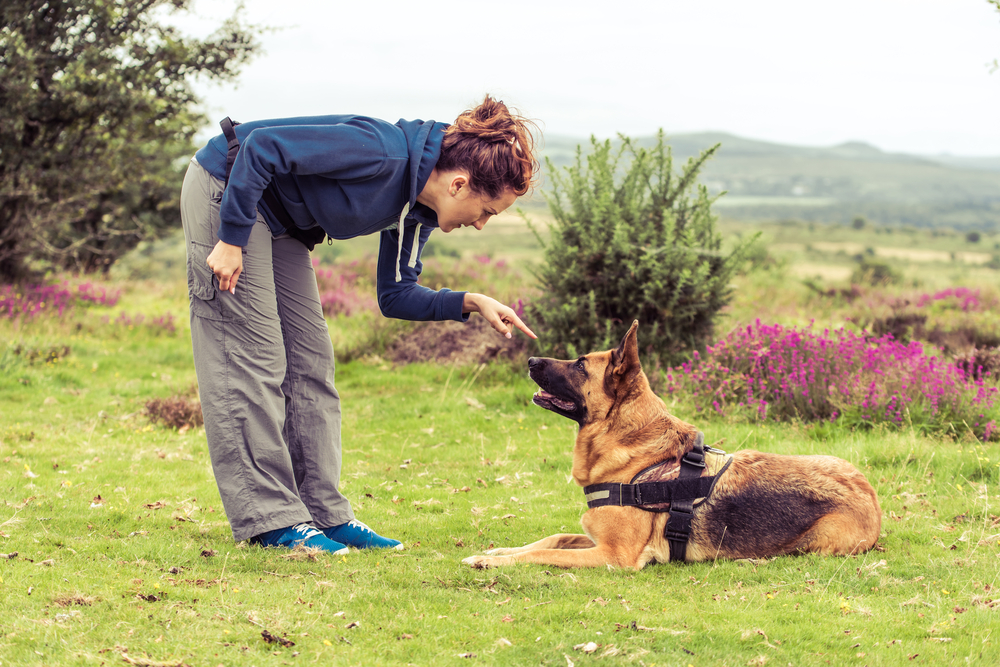
You need to understand dog body language, too. Your body language should be relaxed but authoritative, and your dog should be calm and receptive to training. If your dog is feeling stressed out or hyperactive, your efforts will be less successful, and you could scare your dog with the wrong approach.

The 4 Steps for Telling a Dog "No"
1. Show Your Dog a Treat & Say “No”
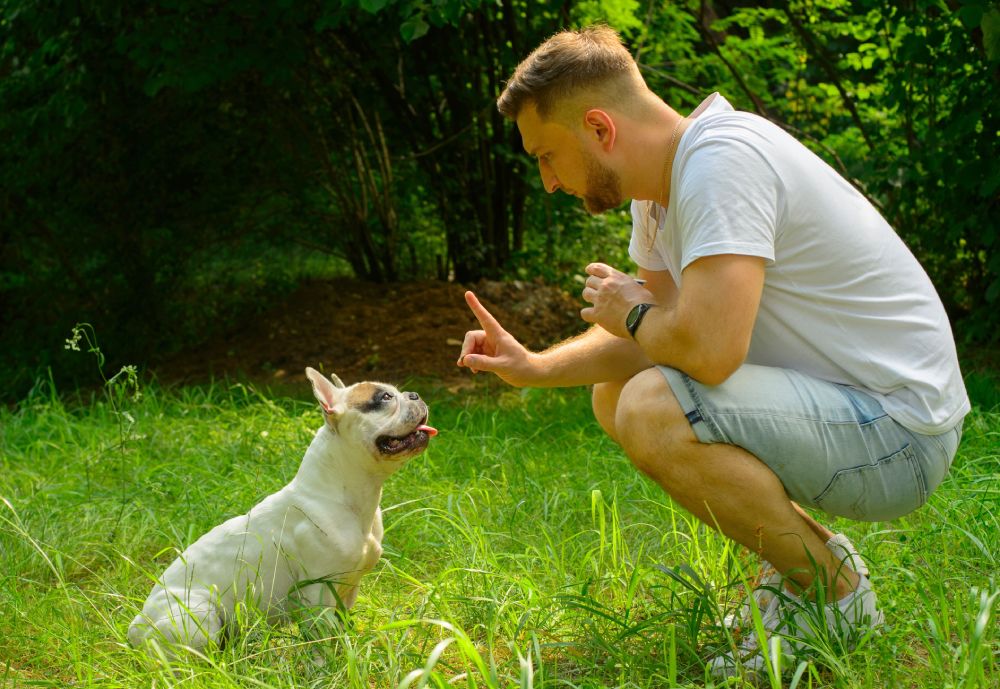
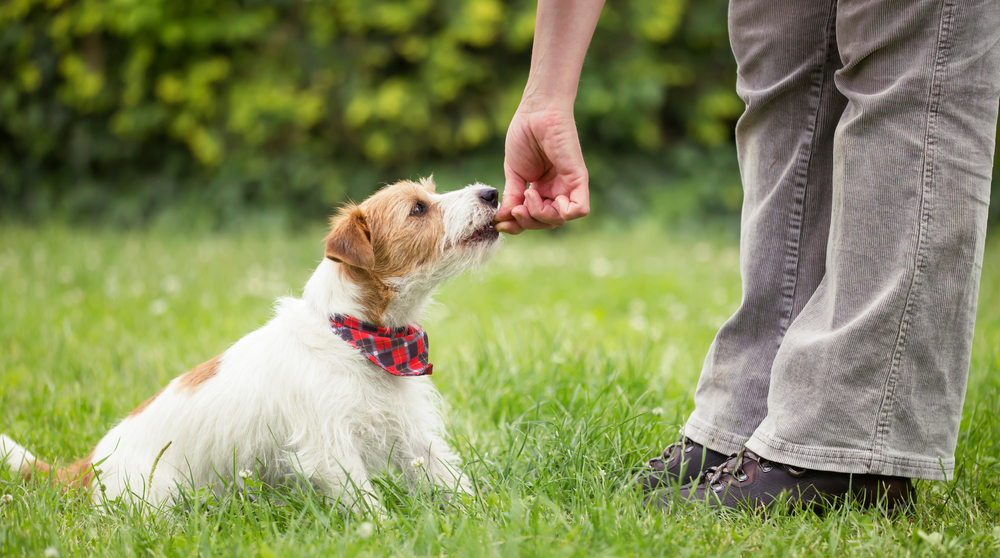
The goal here is to capture your dog’s attention with the most delicious treat you have on hand—whatever they go bananas for will work. Hold the treat carefully out of your dog’s range and calmly ignore their efforts to snag it from you. Close your hand over the treat and firmly say, “No.”
It may take multiple attempts to get your dog’s attention, depending on how determined they are. For an easier time handling big dogs, we suggest using a leash during these sessions. Expect to do this frequently. When your dog finally gives up and looks to you for direction, give them a release command like “okay” or another word of your choice. Then you can celebrate! Give your dog the treat and give your good boy/girl a ton of well-deserved praise.
An alternative exercise you can try to teach the same concept of “no” is if your dog likes to bark at animals or tug on their leash. Wait for your dog to spy a squirrel and go nuts barking, then stand as stock-still as a statue. Like before, say, “No!” in a firm voice. Do not continue on your walk until your dog stops barking and behaves calmly. Again, this can take numerous tries before your dog makes the initial connection.

2. Reinforce Success With Praise & Treats
Treats and showering your dog with praise when they ignore your closed hand after “no” will help them make the mental association with good behavior getting a reward. This is fundamentally how all positive reinforcement training works and carries over to all aspects of your dog’s training: housebreaking, advanced commands, and so on. As with all training, it’s now time to up the ante a little.
3. Put the Treat on the Ground
Leash your dog up for the same old exercise, but this time, change it up by putting the treat on the ground while holding your dog just out of range. Ignore their efforts to tug on the leash and say, “No,” which your dog should understand from your prior training. If they strain to get the treat, stand passively and repeat your command. When they sit calmly and look at you, relax on the leash and use your release command.

4. Rinse & Repeat in Different Settings
Now you just need to solidify your training in your dog’s mind with repetition. Eventually, they should understand your commands so well that you can give them some trust off the leash. This command helps your dog stay safe when, for example, they see a dead bird and instinctively try to retrieve it. The same thing applies to dirty puddles your dog tries to drink out of or any number of unsafe items.
To generalize the behavior to all types of situations, you can try this training at the dog park, in your yard, or on your daily walks. Dogs sometimes have trouble translating or generalizing commands to different circumstances, but with patience and your help, it’ll eventually click.
Conclusion
Teaching a puppy or older dog the concept of “no” can be tricky, especially if they are stubborn. Thankfully, with enough patience and treats, you can teach any dog this basic command. “No” and “leave it” are useful in many different situations to keep your dog safe but also to teach delayed gratification as a foundation for future training.
See Also:
Featured Image Credit: marcin jucha, Shutterstock
Expert dog care, straight to your inbox
Vet-reviewed advice, training tips, and the best of Dogster. Free, and you can unsubscribe anytime.
By signing up, you agree to our Terms & Conditions and Privacy & Cookies Policy.
Codee Chessher is a freelance writer whose motto is: there is nothing a well-worded sentence can't accomplish! He loves to write about pets, travel, DIY, and more. Codee's experience is varied, but the written word has always been his strongest and biggest passion.
Join the conversation
Ask a question, share your story, or send private feedback.