How to Potty Train a Pomeranian: 10 Vet-Approved Tips

In this article
When you adopt a puppy, you’re looking forward to the fun times you’ll have together, but you also have to deal with the more unpleasant aspects of pet ownership, such as potty training. In fact, potty training is one of the most important steps you can take with your Pomeranian, and once you get it right, you can focus on other aspects of training.
It’s hard to believe that something so small and cute can make such a mess. But that is the case with most dogs, just like babies, so the faster you can potty train your Pomeranian, the better!
In this article, we have put together some great tips for potty training so that you can ensure your Pomeranian doesn’t carpet-bomb you out of your sanity. Let's get started!

Before You Start
Potty training any breed will require patience and consistency, especially with a Pomeranian. Because of their tiny size, they have bladders made to fit, which means they won’t be able to wait as long between potty breaks.
Pomeranians can also be feisty and headstrong, requiring consistency and firm leadership from their owners. Like other dogs, they respond best to positive reinforcement. While it’s normal for your patience to be tested, it's vital that you don’t punish or scold them if training doesn’t go according to plan that day. Stay consistent, and don’t be afraid of over-praising when they succeed.
Your Pomeranian can start being potty trained from 8 weeks old, so the good news is you don’t need to wait long. It typically takes 4—6 months for a puppy to be potty trained, but some can take up to a year. Remember that all dogs are different, so factors such as age, learning history, your training method, and consistency will determine how easily and quickly your Pomeranian learns.
Some puppies may learn very quickly, while some may take more time, but with patience and consistency, most dogs can learn.
The 10 Tips to Potty Train a Pomeranian
1. Choose a Potty Spot
Before you begin training, you must decide which spot or area you want your Pomeranian to do its business. Having a dedicated site will help your pup detect its scent, encouraging it to go to the same place again.
You need to ensure your dog has access to this area at all times when you are away and sleeping. Use the same door and use the same space every time and be sure to accompany your dog to ensure it uses the bathroom.

2. Decide on a Command
A command word will teach your Pomeranian that it's time to go to the bathroom. The word itself is not important, but the consistency is, so whatever word you choose, make sure you use it at potty times. This will help associate the command with the behavior, and eventually, you can get your Pomeranian to go potty on command.
When choosing a word, make sure it is short and simple, preferably one syllable, and make sure you don’t choose a word that often comes up in conversation and will result in you unintentionally telling your dog to go potty.
3. Recognize the Signs
Learning your dog's cues can help you with your training. When you are familiar with the cues and signals that your dog needs to go to the bathroom, it will give you notice and time to get it to where it needs to be.
Some typical cues include sniffing, walking in circles, barking, hanging around, or scratching at the door.

4. Frequent Trips
It is without question that the best way to create a good habit and prevent accidents inside is to take your dog to its potty spot often and regularly. Take your dog to its potty spot immediately after waking up in the morning or when it's up from a nap, after meals, after play sessions, and of course, before you go to bed in the evening.
Remember that small breeds like Pomeranians have smaller bladders and will need more frequent trips.
It may feel that you are spending a lot or most of your time taking your pup in and out in the early days, but it is time very well spent. The time will fly by, and before you know it, your dog will have learned the right spot to eliminate.
5. Clean Up Accidents Immediately
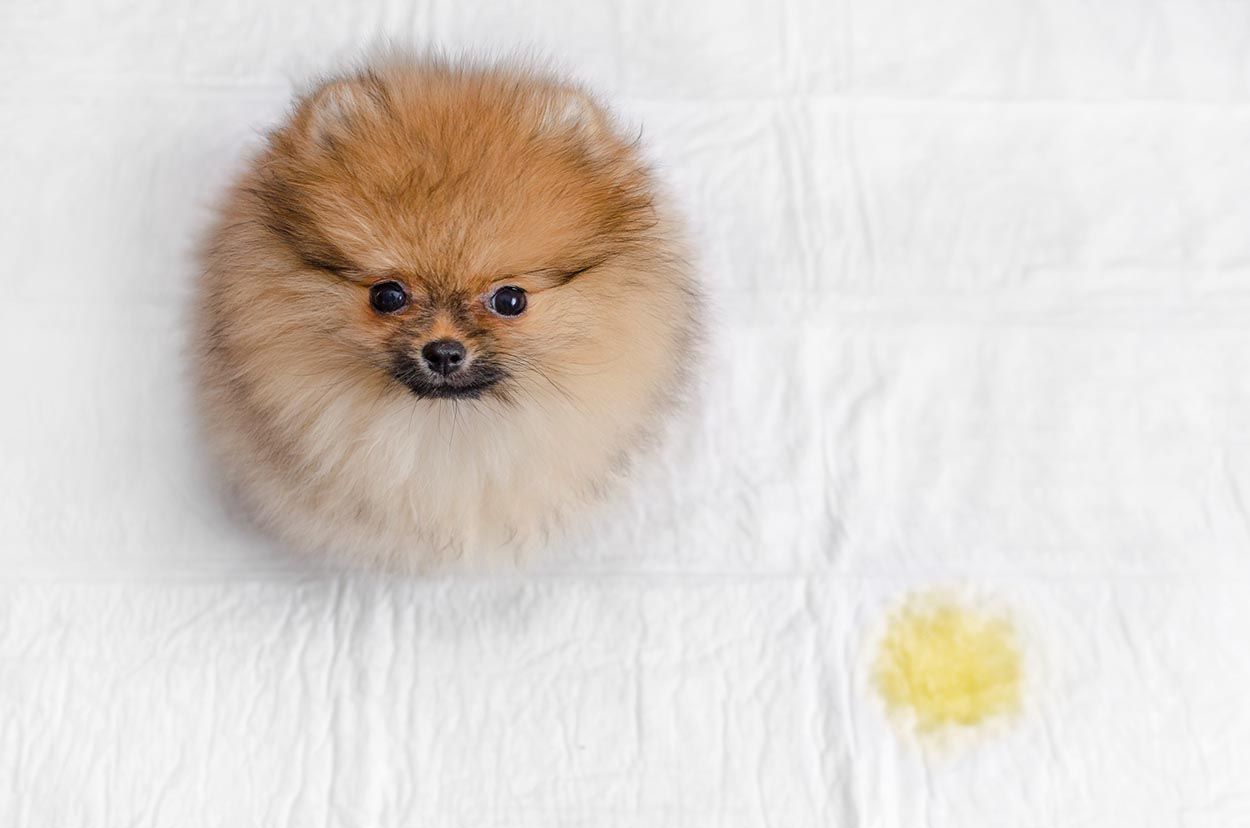
Accidents will inevitably happen. When they occur, it’s crucial that you clean up as soon as you can. The odor of your dog's waste will encourage it to use the same spot again, so it’s important to get the smell out immediately if it's a carpet. Cleaning up as soon as possible will not only help reduce the risk of subsequent accidents, but it will also save your carpet!
Use an enzymatic cleaning product that effectively cleans up the mess and eliminates the odor to remove the waste.
If you're looking for an all-in-one, pet-friendly, enzyme cleaner, we highly recommend the Hepper Advanced Bio-Enzyme Pet Stain & Odor Eliminator Spray.

- ADVANCED ENZYMATIC CLEANER - Penetrates the most stubborn smells and stains at the deepest molecular levels to dissolve any pet mess you encounter and lift it away at the source.
- FOR ANY MESS, ON ANY SURFACE - This pet odor eliminator cleans your carpets, floors, furniture, fabrics, and more. Whether it's urine, feces, vomit, or drool, you can erase all foul spots and smells!
- FRESH, NATURAL ODOR - Our unique formulation doesn't rely on dangerous or unpleasant chemical fragrances to get the job done. We eradicate smells and stains, not just cover them up.
It eliminates tough stains and odors easily and is excellent for accident prevention. Plus, it comes with a 100% satisfaction guarantee! Click here to order now.
At Dogster, we’ve admired Hepper for many years, and decided to take a controlling ownership interest so that we could benefit from the outstanding products of this cool pet company!
6. Control Your Dog's Diet
A puppy’s digestive system is still immature and can't handle large amounts of food. It is recommended that puppies eat three small meals a day. You should also be sure that you use high-quality dog food designed for puppies.
From about 6 months of age, you can start feeding your dog two meals per day. Feed your dog at the same time every day to create a consistent routine and form regular bathroom habits. The last meal of the day should be a few hours before bedtime.
Set aside some time each day for obedience training and play sessions. This will keep your dog healthy and active and help with potty training.
Every pet is unique in their nutritional needs, so we recommend reaching out to your vet for nutritional advice.
7. Continue to Observe and Supervise
You should continue to observe your puppy and its signs and cues. Simply taking them to their spot is not enough. You also need to stop them from going where they shouldn’t go, and by observing and supervising them, you can stop the unwanted behavior. If you notice your dog displaying cues of potty time, you can guide it to its spot and avoid an accident.
This will save your dog from making an accident and will speed up training. It’s also important how you redirect your dog before a potential accident. Try to react calmly, ignoring the behavior but redirecting the dog to the proper spot. If you shout or react negatively, it could teach your dog that going to the correct location will get it punished.
Constant monitoring is so important; that’s why it's best to take some time off work in the early days to get a good and consistent start to potty training.
8. Stay Consistent
Consistency is one of the most important aspects of potty training. It is an effective way to communicate with your dog and will help reduce anxiety during training. While our dogs understand spoken words well, consistency can help your dog learn to respond to verbal cues.
Consistency creates a routine, and your dog will learn what to expect.

9. Positive Reinforcement for the Win
Positive reinforcement is the most effective way to train any dog. It works by rewarding or praising your dog when they perform a desired task. This reinforces the behavior and forms a positive association with it. When it comes to praise and positive reinforcement, your dog can't get enough.
If your puppy makes an accident, try not to make a fuss and clean it up. If you catch your dog just before an accident, pick it up, take it outside, and praise it once it's done. Also, don’t forget your verbal cue! Scolding a puppy will not fix the behavior, especially after the fact.
Scolding will only make your dog afraid of you and afraid of doing its business in front of you. Punishment can only do more harm than good.
10. Be Patient
Patience is key and may be one of the hardest parts of potty training for a pet owner. Potty training will take some time and effort and requires patience and consistency. If you are not patient, you will not be consistent, and potty training will be more difficult and take longer.
Frequently Asked Questions
Should I Use a Crate?
The objective of using a crate for house training is based on the principle that dogs enjoy a clean space and won't usually tolerate urine-soaked blankets or rugs. That is why the size of your dog’s crate is important. A suitable crate should be big enough for the dog to stand up, lie down, and turn around. If the crate is too big, your dog may feel there is enough space to use the potty corner.
Many people may be hesitant to use a crate as it may appear to be confining and somewhat cruel, but the truth is that they make life with a dog and training so much easier. Dogs love the idea of a den for security, and they are ideal not only for housetraining but for travel, vet visits, and emergencies.
What About Puppy Pads?
Using puppy pads for potty training can be tricky since you are reinforcing two conflicting commands. Ideally, you want to teach your dog to hold its bladder until it can reach its potty spot, but puppy pads will teach it to go to any approved area in your home.
However, they may be helpful for someone who is gone all day or when winter is harsh or thick with snow.
Final Thoughts
Potty training your Pomeranian doesn’t have to be a nightmare. As long as you are providing patience, consistency, and positive reinforcement, and you have a plan you can maintain, your dog will be potty trained in no time.
Just remember that every dog is different, and the time your dog takes to learn will depend on many factors. The goal is to teach your dog good habits while maintaining a loving and trusting bond.
Sources
Featured Image Credit: nadisja, Shutterstock
Expert dog care, straight to your inbox
Vet-reviewed advice, training tips, and the best of Dogster. Free, and you can unsubscribe anytime.
By signing up, you agree to our Terms & Conditions and Privacy & Cookies Policy.
Nicole has loved animals of all sizes her whole life so it's no wonder she has dedicated her career to helping them through what she loves best: learning, writing, and sharing knowledge with others. She’s the proud mom of two dogs, a cat, and a human. With a degree in Education and 15+ years of writing experience, Nicole wants to help pet parents and pets around the planet to live happy, safe, and healthy lives.
Join the conversation
Ask a question, share your story, or send private feedback.