How to Crate Train a Great Dane: 7 Vet-Verified Tips & Tricks

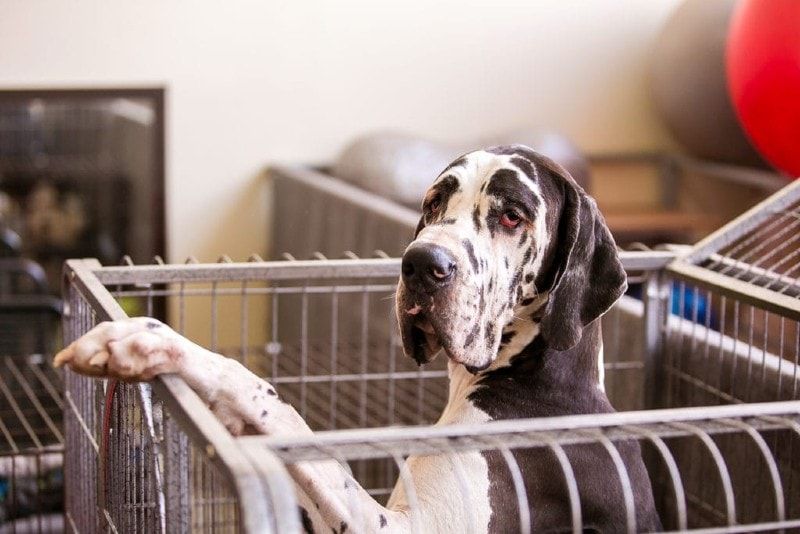
There are many reasons why a dog may need to be crate-trained. Some dogs get into trouble if they are left alone when you are away. Some eat things they shouldn’t, putting them at risk of a blockage. Other dogs may poop or pee in the house whenever they are left alone for too long. Whatever the reason, crate training is a very common and essential part of a dog’s training. But how do you successfully crate-train your dog, especially one as large as a Great Dane?
Here are seven expert tips on how to crate-train your Great Dane for the best possible results.

The 7 Tips For How to Crate Train a Great Dane
1. Choose a Crate Big Enough for Your Great Dane

Great Danes are very large dogs, and they need an equally large crate to keep them comfortable. If a crate is too small, the dog will not feel comfortable and will refuse to enter it again. Check the dimensions of your crate and ensure that they will comfortably accommodate your Great Dane.
Generally, dogs should have enough space to stand, lie down, and turn around in the crate to feel comfortable. If they cannot stand or turn around, they will feel cramped and trapped, which will damage their association with the crate over time.
2. Never Force Your Dog Into the Crate
One thing you should never do while training your Great Dane is force them to enter the crate. Do not grab, drag, or shove your dog into the crate. That will immediately create a negative association, making it much harder to get them to feel comfortable in and around the crate in the future. You should always try to entice the dog to enter the crate on their own.
You can entice your Great Dane to get in the crate by using food or treats. You can also leave the crate open and in a central area to see if the dog will enter the crate out of curiosity or to go and lie down.
3. Always Reward & Praise the Dog When They Enter the Crate

When your dog enters the crate, you should always praise them. Use their name and tell them they are being good when they are in the crate. You can also provide dog treats (or dry food) as a reward for entering the crate. The reward and praise will help your Great Dane form a positive association with the crate rather than a negative one.
4. Start Small & Work Upwards
Dogs will not naturally want to spend hours a day in a crate. You should start small and work your way up to longer periods. If you are working on getting your dog to enter the crate naturally, start shutting the door when they go in. Go small and do not rush the process. After they have been consistently entering the crate on their own and lying down, leave them in the crate for 15 minutes and then eventually 30 minutes. Slowly work up to an hour and then multiple hours if needed. This may take weeks or months to achieve.
Leaving a dog that is not crate-trained alone in a crate for hours at a time, right from the beginning, could cause anxiety and loneliness, as well as destructive behaviors, which can cause self-injury from trying to break free, all of which will create a negative association with the crate. If you get your dog comfortable with the crate and then work them up to longer stints in the crate, they will do much better in the long run.
5. Keep Associations with the Crate Positive

Try to give your dog lots of praise and rewards when they enter the crate. If the dog is in the crate, do not yell at them or become frustrated with them. If you want to crate-train your Great Dane to stay in the crate while you are at work or out of the house, do not use the crate as a punishment.
Some owners like to put their dogs in the crate as punishment when they make a mess in the house or misbehave. However, that only makes the dog associate the crate with negative emotions, which will hamper your ability to fully crate-train your dog in the long run.
6. Encourage Napping or Sleeping in the Crate
Not all dogs can be trusted with bedding inside their crate. If your Great Dane chews or rips up blankets or bedding when you are not around, they cannot have bedding in their crate and remain safe. However, if your dog can be trusted with bedding, put a dog bed and a blanket in the crate to encourage napping. Leave the crate door open to let your dog enter and nap whenever they feel like it.
This will have two benefits. First, it will let your dog know that they can sleep in the crate. Dogs that sleep in their crates do better with long periods of time when they need to be crated. Second, it continues to build that positive, safe, and comfortable association.
7. Praise & Let the Dog Out After Each Release

Getting your dog to go in the crate is just part of the equation. You must also give your dog specific cues when they exit the crate. Dogs typically hold their bladder when they are in the crate so they do not pee or poop on themselves.
Whenever you let your dog out of the crate, you should praise them and immediately let them outside to relieve themselves. That way, they do not have to hold it. They will get bladder relief and positive praise, which will make them feel like the crate is safe. It also builds a routine connected to the crate that will build trust over time.
Summary
These tips will help you crate-train your Great Dane with a high rate of success. The most important part of crate training is building that trust and creating lasting positive associations between your dog and the crate. Avoiding negative associations and heaping large amounts of rewards and praise are vital components of crate-training a Great Dane. As long as your dog feels comfortable with the crate, training them should be a breeze.
See also:
Featured Image Credit: marinaks, Shutterstock
Expert dog care, straight to your inbox
Vet-reviewed advice, training tips, and the best of Dogster. Free, and you can unsubscribe anytime.
By signing up, you agree to our Terms & Conditions and Privacy & Cookies Policy.
Nicole has loved animals of all sizes her whole life so it's no wonder she has dedicated her career to helping them through what she loves best: learning, writing, and sharing knowledge with others. She’s the proud mom of two dogs, a cat, and a human. With a degree in Education and 15+ years of writing experience, Nicole wants to help pet parents and pets around the planet to live happy, safe, and healthy lives.
Join the conversation
Ask a question, share your story, or send private feedback.