15 Vet-Verified Herding Dog Commands: Facts & Guide


Herding dogs have strong instincts and thus have fantastic herding abilities. While they are excellent working dogs, many people also keep them as companions. If you’ve decided to give a herding dog a forever home, it’s important to note that even with their innate herding abilities, you still need to train your dog and make sure they know the key herding commands.
In this article, we’ll discuss some of the most common herding dog commands you should know.

The 15 Key Herding Dog Commands
1. Come by
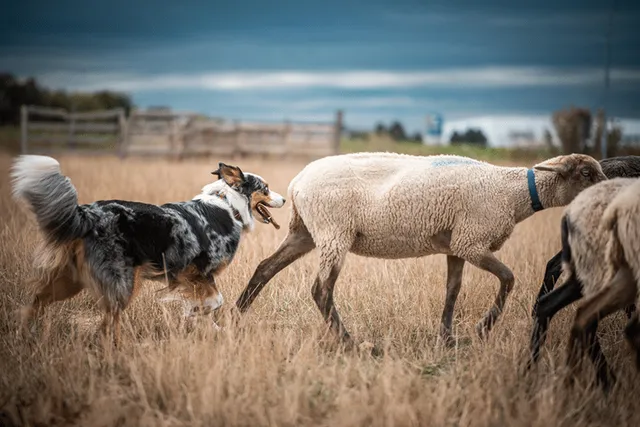
The “come by” command instructs your herding dog to move clockwise. It is the opposite of another term we’ll discuss later in the list. It also means that your dog will be going to the left of the livestock instead of the right. In most cases, the herding dog will follow the commands by staying far away from the stock but still moving in a clockwise position.

2. Find
The “find” command instructs your herding dog to find a missing member of your livestock. Some well-trained herding dogs will bark to let their owners know they’ve found the missing animal.
3. Cast or Flank
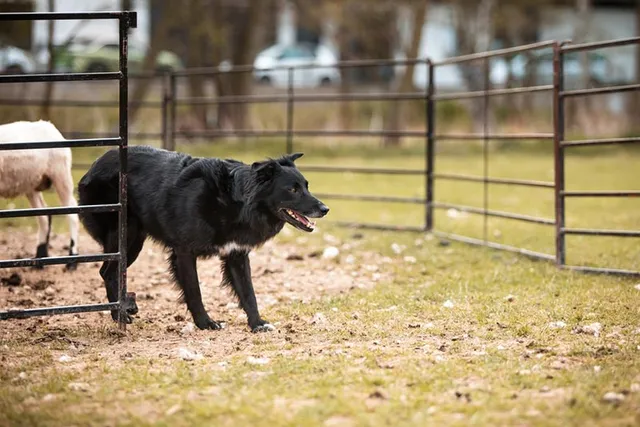
You’ll, at some point, need all your stock gathered into one group. That’s where the “cast” or “flank” command comes in. This command will cause your dog to circle the herd at a safe distance. They’ll move in a circular motion while moving the herd closer together until they’re all in one place.
4. Bark or Speak Up
The “bark” or “speak up” command works for herding any animals, but it is extremely important to teach your herding dog these commands if you work with cattle or sheep. For example, if your stock is stubborn and you’re having a problem herding them from one area to another, this command will be used to apply pressure, and they will move a bit quicker. It instructs your dog to bark to move the herd faster.

5. Away to Me
“Away to me” is a herding command that is used to tell your dog to circle in a counterclockwise motion. This command instructs your dog to move around the stock, then turn squarely as they keep a consistent distance from the herd.
6. Get Back or Get Out
The “get back” or “get out” command is used to tell your dog to move away from the animals if they're getting too close. It is used as a distance cue and helps prevent the herd from getting stressed or anxious. However, make sure that you don’t stress your herding dog or be too tough on them.
7. Look Back
The “look back” command is often said to be an advanced command and is somewhat similar to the “find” command. It’s used to tell your dog to leave the herd and look for other animals that might have been left behind. It’s different from “find” because you’ll use it when you’re unsure if an animal is missing. It’s more advanced than other techniques and may be unnecessary if your dog is talented at keeping the herd together.

8. In Here
The ”in here” command is intended to tell your dog to start separating the animals in your herd. If a few animals need to be separated from the others, this is the command you’ll use to get your dog to do it. Once the animals are separated, normally sheep, you say “in here” to your herding dog so that the dog will move into that gap and help keep the animals separated.
9. Hold
Giving your dog the command “hold” means that the dog should keep the stock where it’s at until you’re ready to start moving again. Make sure you’ve taught the dog the other commands on our list so that they’ll know what to do when the herd is ready to move again.
10. Take Time or Steady
“Take time” or “steady” are commands that prompt your herding dog to tell the dog to slow down, especially when calm, controlled movement is needed. You can use either of these commands to prompt the dog to slow down and put more room between them and the herd. This is often used to maintain control and reduce pressure on the stock.

11. That Will Do
“That will do” instructs your dog to stop what they're doing right away and come to where you’re standing. It is an essential command you should teach your dog when they're in training. Dogs who are in training are apt to veer away from the line and need to be called back.
The dog is much more likely to respond to “that will do” than the wrong “flank” command if they're in training.
12. Walk, Walk Up, or Walk On
The “walk,” “walk up,” or “walk on” commands are used to put your herding dog nearer to the stock instead of moving the dog further away. The trick is to avoid scaring the herd when the dog gets closer. Your dog will know to move slowly and steadily toward the herd if you give them one of these commands. It’s much better to avoid scaring or spooking the herd, which can cause panic.
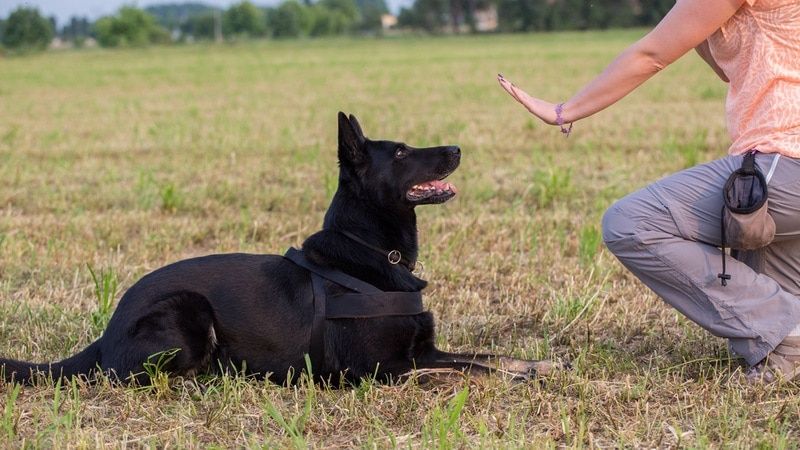
13. Wait or Down or Sit
The “wait,” “down,” or “sit” command may seem obvious, but it’s also an important command for your dog to know. Sometimes the “stand” command doesn’t work initially, and these commands can be taught to help control movement.

14. There
“There” is a command that lets your dog know they're done flanking. While this one isn’t used by owners very often, it is a good one to teach your herding dog. It also lets the dog know that they need to turn squarely facing the herd.
15. Stand
The last command on our list is the “stand” command, which means to stop while remaining on all fours. If you give the command sharply, it means to stop immediately.

Conclusion
You’ll use several commands to control and train your herding dog, and the 15 we discussed are considered to be the most common. The best thing to do to train your herding dog is to have patience, make sure that you are consistent, and never punish your dog. If you’re looking to give a forever home to a herding dog, whether as a working dog or as a companion, it’s best to train them so they can follow basic commands when needed.
Featured Image Credit: Luca Nichetti, Shutterstock
Expert dog care, straight to your inbox
News, insights, expert advice, and everything dog.

No spam — unsubscribe anytime.
By signing up, you agree to our Terms & Conditions and Privacy & Cookies Policy.
How useful was this post?
Click a star to rate. You can leave written feedback afterwards. (We read all feedback.)
Patricia is an experienced pet writer and lifelong animal lover. When she isn’t writing, Patricia enjoys spending time with her pets, cats Binx and Link and dog Mystery. Mystery and Link have been with her since birth. Binx was found under her house as a kitten and promptly welcomed into the family. Patricia enjoys volunteering at her local rescue shelter and sharing her extensive knowledge of pets.