Why Does My Dog Play With Their Food? 4 Reasons & What to Do


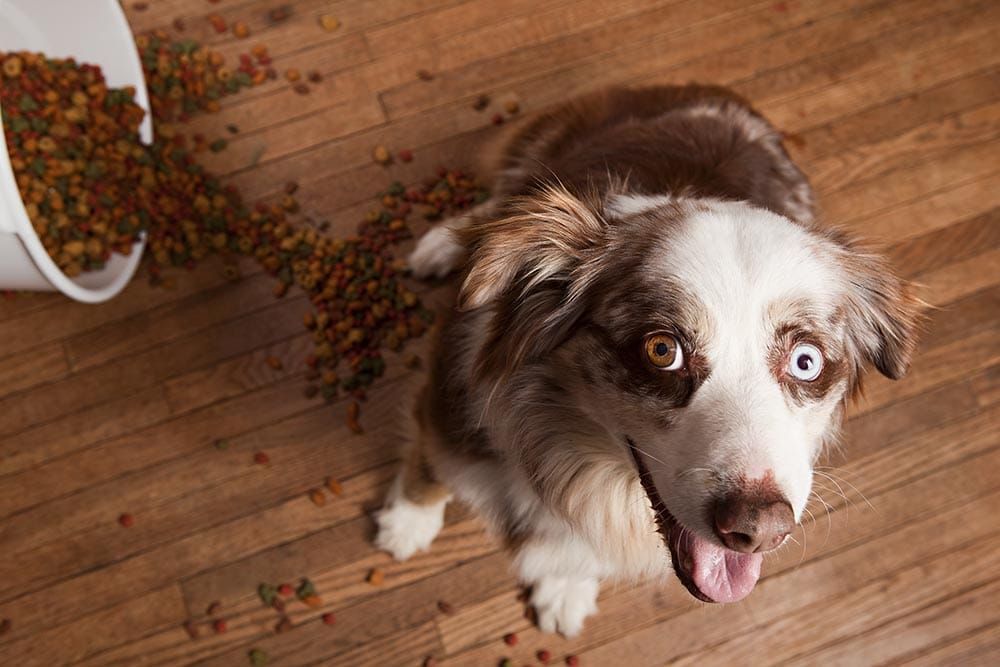
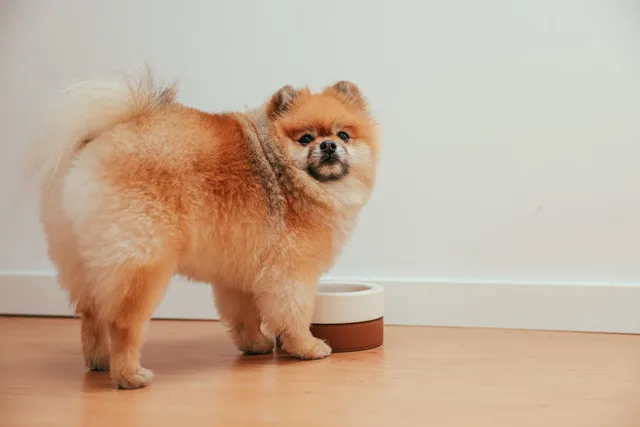
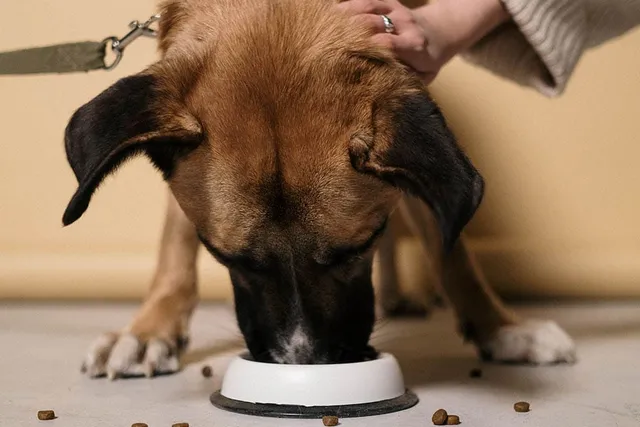
Finding more kibble littered around your house than in your dog’s bowl (or their belly) can leave many dog parents wondering why their dog prefers to toss, chase, bat, or even roll their food around rather than eat it. Playtime is a normal part of every dog’s daily routine—they need it to stave off boredom and release pent-up energy—but sometimes, the line between playtime and dinnertime gets blurred.
All dogs can do this, but puppies in particular like to turn mealtime into a game.
While we can’t ever really know what dogs are thinking, dogs that exhibit playful body language like the play bow, wagging tail, and relaxed posture are probably in a fun mood. In this post, we’ll explore four possible reasons why dogs play with their food to help you get to the root of the matter.

The 4 Reasons Why Your Dog Plays With Their Food
1. Boredom
Boredom is one of the most common causes for dogs playing with their food. If your dog has no other way to expend their energy (toys, walks, exercise, etc.), it’s not unusual for them to find novel ways to entertain themselves. Playing with their food is also a way of attracting your attention, especially if you have accidentally reinforced this behavior in the past.
The best way to solve this issue is to schedule playtime throughout the day and keep up with your dog’s daily walking routine. Also, exercise them prior to feeding because, in nature, dogs work before they eat. Keep their mealtimes calm and don’t encourage any playful behavior at this time.
This will allow them to release all that pent-up energy and learn to differentiate between playtime and meal times. It can help to keep the eating area separate from play areas and to only feed in these specific areas too.
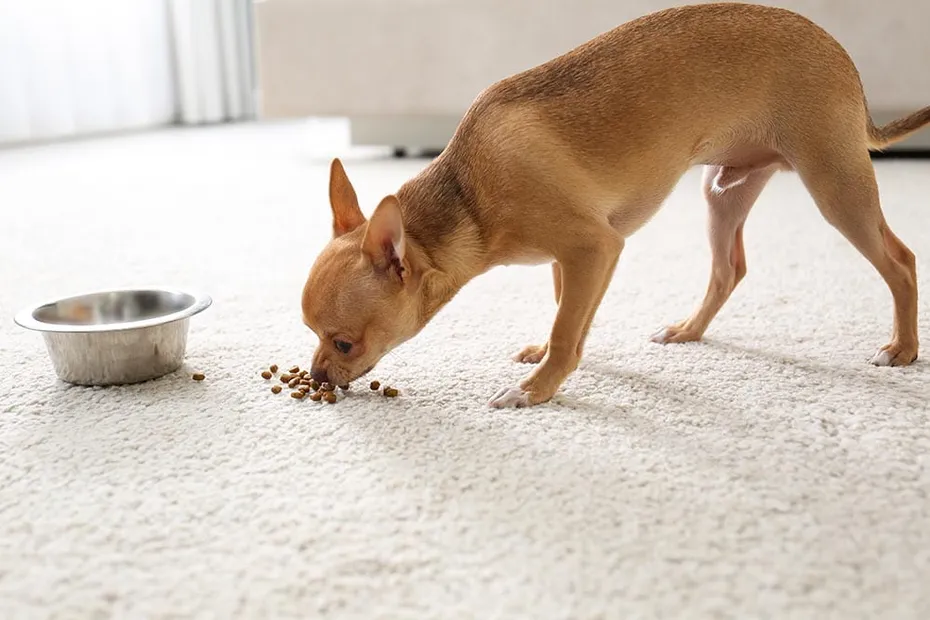
2. Anxiety
Sometimes anxious dogs, especially those with generalized anxiety, will not want to eat in some circumstances. Commonly, they won’t want to eat alone and prefer you to stand with them.
The internal conflict of wanting to eat and feeling anxious can lead to some unusual behaviors, referred to as “displacement” behavior, which may include playing with their food.
Like a bored dog, an anxious dog may act out and find ways to soothe their anxiety. Anxiety manifests differently in individual dogs and has a range of signs, including destructive behavior, vocalization, panting, and tucking their tail between their legs. If your dog is showing signs of anxiety, it’s best to speak to your vet to find out how to manage and/or treat it.
3. Natural Instincts
Dogs are curious by nature and revel in inspecting pretty much everything. While humans interact with the world around them more by sight, dogs use their sense of smell. They might find the smell of their food so wonderful that they want to roll in it. If you’ve recently changed foods, for example, it wouldn’t be unusual to find your dog “sizing up” what’s on offer by sniffing at and pushing the food around rather than eating it.
This is especially true if you have puppies. Puppies are experiencing the world and many things for the first time, so it’s normal for them to want to play with something new and interesting.
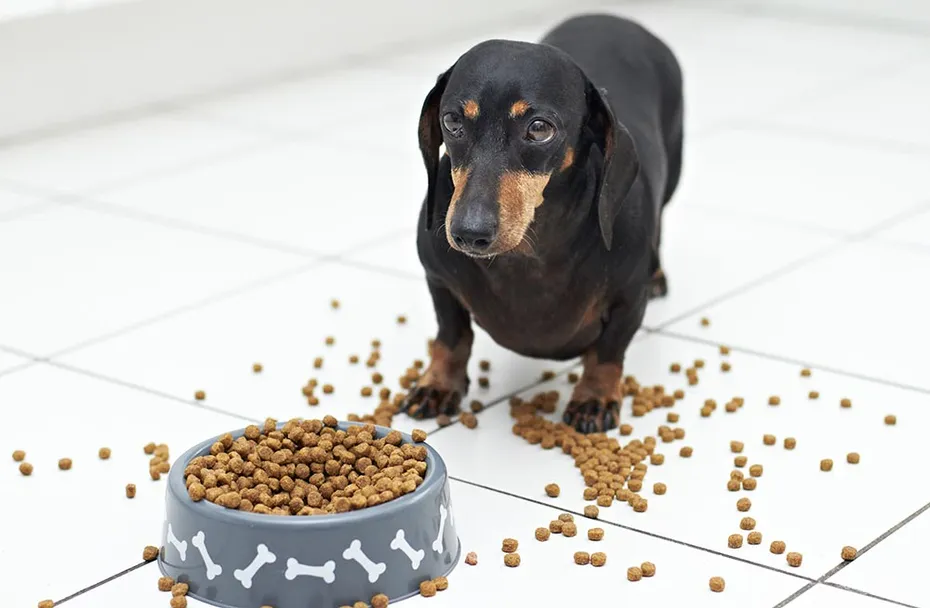
4. Overfeeding
If your dog is leaving a lot of food in their bowl and you’ve noticed them playing with the remnants, this could be a sign that you’re feeding them a little too much. It’s normal to want to make sure your dog doesn’t go hungry, but it’s a good idea to refer to a feeding guide to find out how much they should be eating for their age and size.
Make sure you're feeding your dog the right amount, check out our dog food calculator here:
Dog Calorie Calculator
Recommended Daily Calories
The exact amount of calories an individual animal needs to maintain a healthy weight is variable and influenced by many factors including genetics, age, breed, and activity level. This tool is meant to be used only as a guideline for healthy individuals and does not substitute veterinary advice
Also if you're concerned about your dog's health we suggest you speak to a vet.
Conclusion
If your dog is getting a little too excited at meal times, there could be a variety of causes. Observe for signs of anxiety and take into account when and how much your dog is exercising. It could be a simple case of them needing to be exercised more, provided with toys to keep them busy when you don’t have time to play, and being fed only after exercise. See also:
Sources
Featured Image Credit: Michelle D. Milliman, Shutterstock
Expert dog care, straight to your inbox
News, insights, expert advice, and everything dog.

No spam — unsubscribe anytime.
By signing up, you agree to our Terms & Conditions and Privacy & Cookies Policy.
How useful was this post?
Click a star to rate. You can leave written feedback afterwards. (We read all feedback.)
Kit Copson is a freelance writer and lifelong animal lover with a strong interest in animal welfare. She has parented many furry beings over the years and is currently a proud cat mom of two—one very chilled (unless hungry) Siamese and a skittish but adorable Domestic Shorthair—and dog mom of one—an adopted Bichon Poodle cross. When not writing about or spending time with pets, Kit can be found drawing in her sketchpad, reading, or more often than not, drinking tea.