What to Feed a Mother Dog After Giving Birth: Vet-Approved Options & Tips

In this article
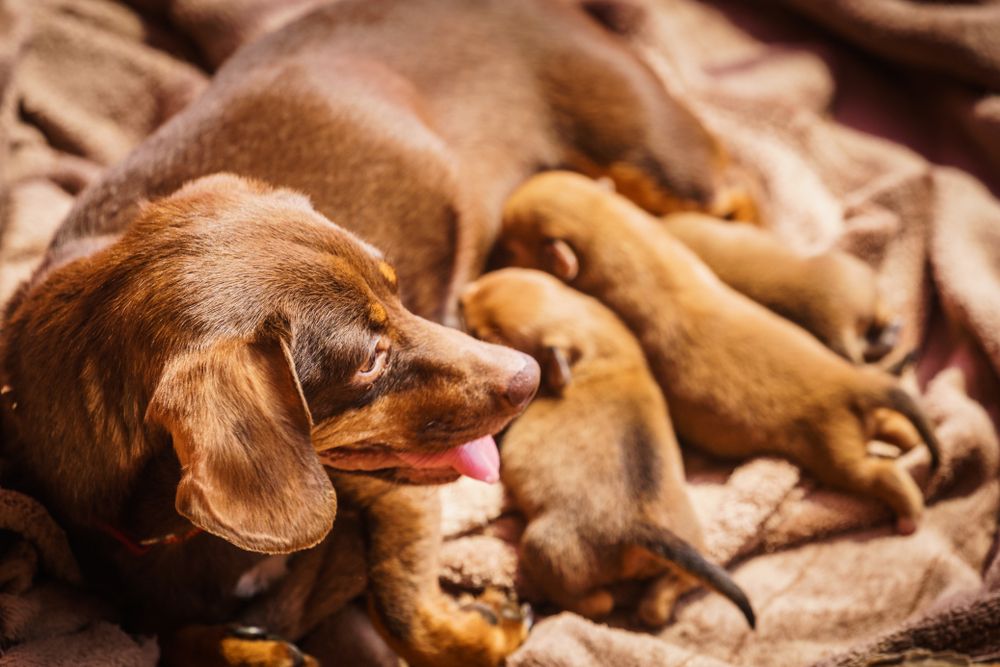
View 2 More +After a mother dog gives birth to her puppies, she needs immediate dietary support. Birthing an entire litter takes a lot of energy, and she will continue to require an uptake in calories, fat, and protein as the pups grow and rely on her for their nutritional needs.
Providing your lactating female with proper nutrients isn’t necessarily challenging, but it takes proper measuring and specific dietary changes. If you’re wondering what to feed a mother dog after giving birth in order to make sure she gets all the nutrients she needs, we have meal suggestions and other information for you.
Before making the switch, be sure to contact a veterinarian to determine the best diet to feed your female during the upcoming weeks.

What to Feed a Mother Dog After Giving Birth
Once your mother dog gives birth, her diet must be tweaked, and portions will need to be increased. Most nutritionists will tell you that females should switch to high-quality puppy food that is rich in protein and other nutrients during both pregnancy and after birth.
Below, we have listed vet-recommended puppy recipes that may work best for your nursing dog.

Dry Kibble for Puppies
Dry kibble is the most popular choice for everyday nutrition. It could be your preference due to its long shelf life, dental health perks, and wide availability. We have chosen our favorite dry kibble recipe to consider.

We prefer the Castor & Pollux Organix Healthy Grains Organic Puppy Dry Dog Food. It is incredibly healthful, supporting the mother with high calories and protein along with nutrient-rich ingredients.
Wet Canned Food for Puppies
Vets will usually recommend more palatable dishes during this time, and wet foods can enhance appetite, making it an excellent topper or standalone dietary option. Feeding a nursing dog puppy food can help the puppies get some of the nutrients found in the food (such as DHA) that are necessary for development via their mother’s milk. Puppy foods are also higher in calories, which your mother dog needs to maintain energy levels and a healthy weight while nursing.
Here is our recommendation for wet canned puppy food. Note that once the puppies are weaned, the mother should be fed food formulated for adult dogs, but the puppies can still eat the puppy food.

The Hill’s Science Diet Puppy Chicken & Barley Entrée Canned Dog Food would make a terrific diet for your nursing mother dog, as it is specifically geared to match their nutritional needs. The recipe is crafted to boost immunity and enhance mobility.
Tips for Feeding and Hydrating Nursing Dogs
In addition to transitioning the mother to puppy food, other bases need to be covered regarding overall nutrition. Here are a few other key concepts to keep in mind during the nursing stage.
1. Offer Liquids Right Away
After your dog gives birth, she will be very tired and often thirsty. Having fresh, clean water available to your dog continually is crucial during nursing weeks. She should be able to drink freely with easy accessibility.
Monitor her liquid intake and make sure you keep the liquids debris-free. Keep an eye on the dish and provide fresh, clean water as needed.
In some cases, excessive thirst can indicate a bigger problem. If you notice that your dam is not satisfied or seems abnormally thirsty, it could indicate a serious health condition called eclampsia.
Since this condition causes a life-threatening drop in calcium, it’s best to monitor her from birth up until the third or fourth week postpartum. If eclampsia develops, you may notice she acts disoriented or agitated or shows an inability to walk.
This condition requires immediate veterinary attention. So, if you suspect eclampsia, don’t delay getting the proper treatment.
2. Bring Food and Drink to Her
After birth, many mothers are reluctant to leave their puppies to fulfill even the most basic needs. This behavior is especially common among new, inexperienced mothers who have never had a litter previously.
It is best to help your dog avoid unnecessary disruption by bringing food and water to her. She will still be able to care for her puppies without the stress of getting up or going out of sight. Once your dog is acclimated to the nursing process, you can eventually put food anywhere you wish.

3. Make Food More Desirable
It isn’t uncommon for dams to lose their appetite after birth. She may not show the same desire for food for hours or even days afterward. Because her intake of calories is such a crucial element for her health, however, owners must encourage eating.
Your nursing dog should have a substantial appetite to keep up with the calories she is losing after whelping. To enhance her appetite, you may need to make food more desirable by adding broth, meat, yogurt, egg, or other sense-triggering food additives.
If your dog still seems disinterested in food or the decrease in appetite is worsening after 24 hours, contact your vet right away. Prolonged lack of appetite can be a sign of health issues like metritis, a potentially life-threatening uterine infection.
4. Increase Food Portions as Needed
Your dog will need to replenish all the calories they are losing to nourish their pups. Up until 8 weeks postpartum, she will require a major uptake in food portions to reap the benefits of added nutrients.
Generally, the mother will require two to four times the number of calories than that of a normal adult dog. Her calorie needs usually peak around 3 to 5 weeks and slowly decrease as the puppies start the weaning process.
Increasing the number of meals you feed your dog per day and giving her a selection of healthy treats in between can help her body sustain.
According to the AKC, you should increase food intake by one-and-a-half times her usual amount by the first week, two times by the second week, and three times by the third week. Often owners will allow free feeding during these weeks rather than timed meal feeding.
You can also use our calculator tool to help you here:
Dog Calorie Calculator
Recommended Daily Calories

The exact amount of calories an individual animal needs to maintain a healthy weight is variable and influenced by many factors including genetics, age, breed, and activity level. This tool is meant to be used only as a guideline for healthy individuals and does not substitute veterinary advice
5. Regularly Monitor Weight
Since nutrition is gravely important during lactation, closely monitoring her weight is a must. Once the dam gives birth, weight loss happens quickly, which is why it is so vital to replenish her lost calories with puppy chow and other nutrient-dense foods.
If the mother isn’t getting enough of the right foods, she can lose too much weight and miss out on those important nutrients instead. Be careful not to offer her an overabundance of food, either, as it could lead to weight gain and general upset.
If you feel that she is gaining or losing too much weight, you can work closely alongside your vet to adjust portions to match.

Final Thoughts
Learning the correct diet and portions for your lactating mother dog is vital to ensure she thrives while nursing. Raising a litter of puppies is incredibly draining and can have detrimental effects on the mother if she isn’t fed appropriately.
During this time, it is highly advised to work together with your vet to properly monitor her health, recovery, and livelihood. Soon enough, she will be back to normal after having raised all her puppies to self-sufficiency.
Sources
https://wagwalking.com/wellness/how-to-boost-your-dogs-milk-supply
https://www.cornucopiapetfoods.com/blogs/news/can-dogs-eat-eggs
https://pethelpful.com/dogs/Dog-Health-Common-Complication-in-Dogs-After-Giving-Birth
https://www.akc.org/expert-advice/dog-breeding/the-care-and-feeding-of-the-breeding-bitch-part-two/
Featured Image Credit: Shift Drive, Shutterstock
Expert dog care, straight to your inbox
News, insights, expert advice, and everything dog.

No spam — unsubscribe anytime.
By signing up, you agree to our Terms & Conditions and Privacy & Cookies Policy.
How useful was this post?
Click a star to rate. You can leave written feedback afterwards. (We read all feedback.)

I am a wife, mother, nature enthusiast, animal lover, and business major. I was born and raised in Ohio but now live in Tulsa, Oklahoma. We share our home with a German Shepherd, several snakes, tarantulas, and a couple rescue cats.
My husband and I enjoy traveling the US with our kids and photographing wildlife. My passion is to educate others on the importance of proper animal care, with an emphasis on reptiles and exotics since their care requirements can be much more complex. I am also a huge advocate for bully breeds. I feel most at home in the forest either on horseback or in hiking boots.