Can Dogs Eat Sunflower Oil? Vet Reviewed Facts & FAQ



Sunflower oil sounds about as natural as it gets. Whole foods have taken root in the dog food market as obesity rates are on the rise, and pet parents have become more knowledgeable about how to care for their fur babies. Natural supplements such as fish oil are often recommended to switch dogs out of inflammatory mode and help them live healthier and longer lives.
At first, it seems like sunflower oil also fills these requirements, promising healthy fats and providing a better alternative to blatantly unhealthy cooking oils such as palm oil. However, your dog's diet already contains as much of the particular type of fats found in sunflower oil as they need—and maybe even more. Although sunflower oil isn’t toxic to dogs, let's take a look at why it isn't the healthiest choice for your dog and see what's better instead.

What Is Sunflower Oil?
Sunflower is a popular cooking oil. It may be found in almost everything from crackers to fried food. It's typically cheaper than olive oil and is definitely a healthier choice than popular frying oils, such as partially hydrogenated oils.
There are four types of sunflower oil in the United States. High linoleic sunflower oil has the highest ratio of monounsaturated versus polyunsaturated fats. While fat gets a bad rap, every dog and human needs some fat in order to survive. Monounsaturated fats are found in avocados, peanuts, and sunflower oil and are generally more helpful than polyunsaturated fats, although canines need both. In this way, high oleic sunflower oil is better than other types of sunflower oils that have more polyunsaturated than unsaturated fats.
Health Benefits and Risks
Another piece of the puzzle to consider is Omega 3 fatty acids versus Omega 6 fatty acids. While dogs need both of these essential polyunsaturated fatty acids, everything is only beneficial in moderation. As it turns out your dog's food—and the Western diet—probably has as many Omega 6s as is necessary and maybe even more. Your dog is probably lacking in omega 3s, which are found in sunflower oil but not in as rich of a supply as healthier foods like fish.
Sunflower oil is also a source of vitamin E. However, again, fish oil is a more efficient choice for this essential nutrient.
Since all types of sunflower oil contain fats, you should limit foods with this oil in order to prevent pet obesity. If you feel like your dog needs more healthy fats, talk to your veterinarian about a fish oil supplement instead of feeding them sunflower oil. If you're simply wondering if your dog can snack on a chip that has sunflower oil as an ingredient, go ahead and let them have a nibble (as long as it doesn't contain any ingredients that are harmful to dogs, of course).
What to Use Instead of Sunflower Oil
Let's be clear that sunflower oil isn't toxic to your dog. However, it's not the healthiest choice to consume on a daily basis for you or your canine.
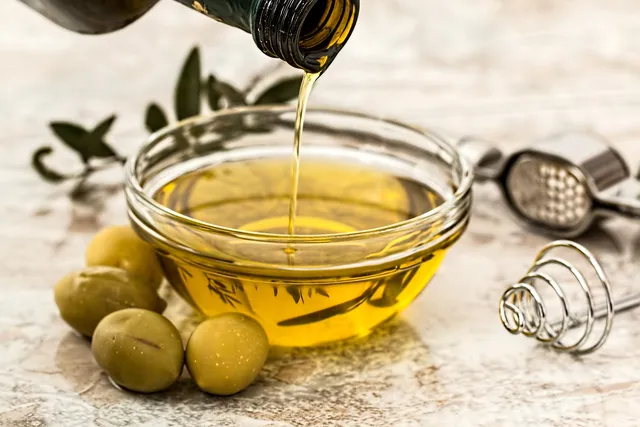
Olive oil is probably the best cooking oil to use. It has a higher ratio of omega 3s to omega 6s than sunflower oil. Some pet parents even drizzle a little over their dog's food to improve the taste. However, olive oil obviously is full of fat, even if it's the healthy kind. You might not want to add olive oil to your pet's food if they already struggle with obesity.
Conclusion
Sunflower oil isn't inherently harmful to dogs, but it isn't the healthiest choice. If your dog suffers from a skin or joint condition, talk to your vet about fish oil supplements to provide them with a beneficial ratio of omega 3s to omega 6s. Unfortunately, sunflower oil contains too many omega 6s proportionally to be considered a healthy food. However, it's a better choice than partially hydrogenated oils and does contain some Vitamin E.
You shouldn't be afraid to feed your dog a little bit of food cooked with sunflower oil as long as the dish doesn't contain any toxic ingredients. If you're trying to figure out which cooking oils to add to your grocery list, use high-linoleic sunflower oil if you want to keep using sunflower oil at all, or opt for olive oil instead.
Sources
https://www.healthline.com/nutrition/is-sunflower-oil-healthy#nutrition
https://www.nomnomnow.com/learn/article/adding-healthful-oils-to-a-dogs-diet-regimen
https://www.businessinsider.com/omega-6-and-omega-3-efas-in-sunflower-oil-2014-1
https://www.heart.org/en/healthy-living/healthy-eating/eat-smart/fats/monounsaturated-fats
https://www.dogsnaturallymagazine.com/can-dogs-eat-seed-oils/
Expert dog care, straight to your inbox
News, insights, expert advice, and everything dog.

No spam — unsubscribe anytime.
By signing up, you agree to our Terms & Conditions and Privacy & Cookies Policy.
How useful was this post?
Click a star to rate. You can leave written feedback afterwards. (We read all feedback.)
Brooke Norris has 2+ years experience as a freelance writer. She graduated from University of North Georgia with a B.S. in Media Studies, and is intrigued by the idea of storytelling across different mediums. Currently she lives in New Orleans, Louisiana, with her husband and four pets. When she isn’t writing, you’ll probably find Brooke petting her dog, Tuggles, or one of her three cats, Satura, Rosie, and Demelza. They follow her around the house as she gardens, cooks, brews coffee, and otherwise makes their house a home.