Dogster is reader-supported. When you buy via links on our site, we may earn a commission at no cost to you. Learn more.

Dog Nutrition

Can Dogs Eat Flaxseed? Vet Reviewed Diet & Health Facts

Nicole Cosgrove
By Nicole Cosgrove · Reviewed & fact-checked by Dr. Paola CuevasVet Approved
Dr. Paola Cuevas
Reviewed & Fact-Checked byDr. Paola CuevasVeterinarian
Dr. Paola Cuevas is our Senior In-House Veterinarian at Dogster and Pangolia. She has over 19 years of experience working with an array of species and loves sharing her knowledge and experience with our readers and aims to provide assistance with any issue presented by your non-human family members. She received her degree from the University of Guadalajara, Mexico.View authorThe information is current and up-to-date in accordance with the latest veterinarian research. Learn more
Updated on June 17, 2026
Share
Can Dogs Eat_Flaxseed

Flaxseeds, sometimes known as linseeds, provide a host of nutritional benefits to humans. They are packed with essential omega-3 and omega-6 fatty acids and have anti-inflammatory properties that can ease joint pain and arthritis. But can dogs have flaxseed?

The answer is a resounding yes! Flaxseeds can be a great way to improve your dog’s health, and they are inexpensive and easy to prepare. As with all new foods, however, moderation is vital, and there are concerns with feeding flaxseed to your pup.

In this article, we'll examine the health benefits of this amazing seed and the concerns you need to be aware of when feeding flaxseed to dogs.

divider dog paws 4 oct 2024

What Are Flaxseeds?

Flaxseeds are nutty-flavored seeds that come from the flowering Flax plant, Linum usitatissimum. Flax is one of the oldest cultivated plants, and its usage dates back almost 5,000 years! The plants have been commonly used throughout history to make fabrics and linen, and the seeds have been used to make linseed oil, which is used as a nutritional supplement and a wood-finishing oil. Flax fibers are two to three times stronger than cotton and are naturally smooth and straight.

Flaxseeds come in two distinct varieties: brown and yellow. Both have similar nutritional value, but the yellow seeds are most often used for culinary purposes. Due to their high nutritional value and low cost, flaxseeds have grown dramatically in popularity over the last few decades.
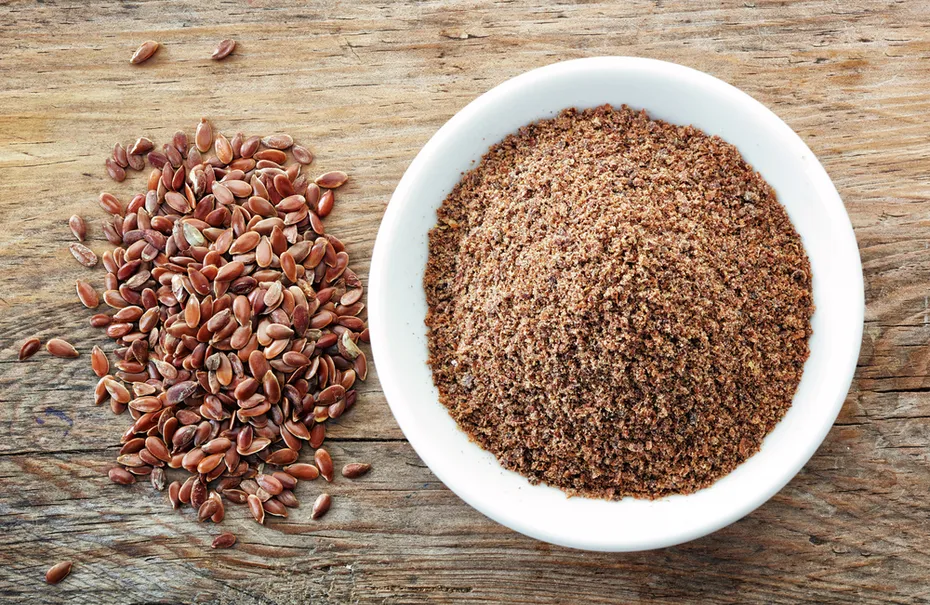
Image Credit: MaraZe, Shutterstock

Is Flaxseed Good for Dogs?

Flaxseeds come with many benefits for dogs, with one of the biggest being the essential omega-3 and omega-6 fatty acids that they contain. These are beneficial for your dog’s skin and coat, can help with skin conditions, assist in alleviating allergies, help kidney function, are great for joint health, boost cognitive function, and much more. Omega-3 fatty acids, also known as alpha-linolenic acid, contribute to optimal cell function, immune function, and overall well-being.

Flaxseeds contain antioxidants called lignans. These compounds can improve your dog’s immune function, fight inflammation, and even help prevent cardiovascular disease. The seeds are also loaded with fiber, which can aid in digestive function and treat diarrhea.

Image Credit: Andrii Spy_k, Shutterstock

Do Flaxseeds Pose Any Risks for Dogs?

Flaxseeds are a healthy, nutrition-packed food that is generally great for your dog’s overall health, but there are a few minor concerns to be aware of. Flax poisoning is possible if your dog ingests too much of the crushed seed or oil, but this is rare, and your dog would need to eat a very large amount to be adversely affected. As long as you only serve it occasionally, it is not something to worry about. Still, if your dog has managed to chew up your flax supplements or ingested a large number of raw seeds, keep an eye out for these signs:

  • Nausea
  • Diarrhea
  • Vomiting
  • Fatigue
  • Rapid heart rate
  • Confusion

If you notice these signs, it’s best to take your pup to the vet immediately.

How Much Flaxseed Should I Give My Dog?

As with most foods, the amount of flaxseed to give your dog depends on their weight. Ground flaxseed is the most common and readily available, and it's much easier to mix into your dog's food than other forms. Whole flaxseeds will usually pass through your dog’s digestive system and negate any potential benefit, and flax oil can go rancid over time. It’s also a good idea to start small, give your dog half the recommended amount, and see how they react first to ensure there are no adverse reactions.

For small breeds, around ½ teaspoons a day is ideal, and you can then increase it to a full teaspoon. Medium-sized breeds can safely have up to 2 teaspoons, and large breeds can have 3–4 tablespoons per day. We recommend mixing the powder into their food to make it more palatable.

Remember, these doses are basic guidelines only, and it’s best to visit your vet first if you have any concerns.

divider dog faces oct 2024

Final Thoughts

Flaxseeds are perfectly safe for your dog and have health benefits, with a few potential side effects. Besides the potent ratio of omega fatty acids, flaxseeds can also aid in digestion and immune function and help fight inflammation. In the proper amounts, flaxseeds can be a great addition to your dog’s diet.

Related reads:

Sources
The Dogster Newsletter

Expert dog care, straight to your inbox

News, insights, expert advice, and everything dog.

No spam — unsubscribe anytime.

By signing up, you agree to our Terms & Conditions and Privacy & Cookies Policy.

Click a star to rate. You can leave written feedback afterwards. (We read all feedback.)

Nicole Cosgrove
Authored by

Nicole Cosgrove

Leave a Reply

You're very welcome to leave a comment or question. Please know that all comments must meet our community guidelines, and your email address will NOT be published. Let's have a positive and constructive conversation.

Is Flaxseed Good for Dogs? Vet-Verified Benefits, Risks & Tips

Is Flaxseed Good for Dogs? Vet-Verified Benefits, Risks & Tips

Feeding your dog a well-balanced diet that is suitable for their unique needs is important for their overall health and well-being. So, as dog owners, we want…

Lindsey Lawson
By Lindsey Lawson · 3 weeks ago
Can Dogs Have Flaxseed Oil? Vet-Approved Health & Nutrition Guide

Can Dogs Have Flaxseed Oil? Vet-Approved Health & Nutrition Guide

If you are like most pet parents, you worry about your dog’s health and are always looking for ways to improve it. For example, adding natural supplements to y…

Elizabeth Gray
By Elizabeth Gray · 1 month ago
6 Top Seeds for Dogs: Vet-Approved Healthy & Nutritious Options

6 Top Seeds for Dogs: Vet-Approved Healthy & Nutritious Options

Seeds are popular snacks, especially among health enthusiasts, due to their dense nutritional value. Naturally, some people wonder if they’re also safe for dog…

Ed Malaker
By Ed Malaker · 4 weeks ago
Can Dogs Eat Hemp Seeds? Vet-Verified Facts & FAQ

Can Dogs Eat Hemp Seeds? Vet-Verified Facts & FAQ

There are many highly nutritious superfoods on the market that we add to our diets daily, and we may consider doing the same for our dogs. Hemp seeds are a pop…

Nicole Cosgrove
By Nicole Cosgrove · 4 weeks ago

Sources of Omega-3 for Dogs & How Much They Need Daily (Vet Approved)

Dogs need a wide variety of nutrients for a healthy and active life, especially nutrients that play important roles in brain function and immune system health.…

Jaimie Wisniowski
By Jaimie Wisniowski · July 10, 2026
Sources of Omega-3 for Dogs & How Much They Need Daily (Vet Approved)

Before You Add Olive Oil to Your Dog’s Bowl - Read This!

You drizzle it on your salad, cook with it, and probably have a bottle sitting proudly on your counter. Olive oil is celebrated for its heart-healthy fats and…

Dan Seymour
By Dan Seymour · June 27, 2026
Before You Add Olive Oil to Your Dog’s Bowl - Read This!

Can Dogs Have Chia Seed Pudding? Vet-Reviewed Health & Nutrition Guide

Chia seed pudding is a delicious vegan snack made by soaking chia seeds in plant-based milk. It’s often enjoyed as a breakfast or dessert and pairs well with f…

Sarah Psaradelis
By Sarah Psaradelis · June 23, 2026
Can Dogs Have Chia Seed Pudding? Vet-Reviewed Health & Nutrition Guide

Can Dogs Eat Quinoa? Canine Diet & Health (Vet-Approved)

Quinoa is a gluten-free seed that has been a staple in many human diets for centuries, but has been elevated to prominence in recent years as a natural alterna…

Nicole Cosgrove
By Nicole Cosgrove · June 29, 2026
Can Dogs Eat Quinoa? Canine Diet & Health (Vet-Approved)

7 Benefits of Salmon Oil for Dogs: Canine Health and Nutrition

Salmon oil is a healthy supplement for both humans and dogs. Rich in omega-3 fatty acids, fish oil promotes heart health, a sleek coat, healthy skin, and stron…

Nicole Cosgrove
By Nicole Cosgrove · June 29, 2026
7 Benefits of Salmon Oil for Dogs: Canine Health and Nutrition

Can Dogs Have Olive Oil? Vet-Verified Health Facts & FAQ

You’ve undoubtedly heard of the benefits of olive oil on human cardiovascular health. Research has also shown it has anti-inflammatory properties, contains ant…

Chris Dinesen Rogers
By Chris Dinesen Rogers · July 10, 2026
Can Dogs Have Olive Oil? Vet-Verified Health Facts & FAQ

Green Lipped Mussels for Dogs: Vet-Verified Facts & FAQ

You may have never heard of green-lipped mussels (GLMs), but these particular shellfish are nutrient-rich mollusks that have many health benefits. They are gre…

Hanh Duong
By Hanh Duong · June 17, 2026
Green Lipped Mussels for Dogs: Vet-Verified Facts & FAQ

Can Dogs Eat Pine Nuts? Vet-Verified Nutrition Facts & Considerations

There are many pieces of misinformation floating around the web on what is and is not safe for your canine companions. One of these very topics might have to d…

Ashley Bates
By Ashley Bates · June 17, 2026
Can Dogs Eat Pine Nuts? Vet-Verified Nutrition Facts & Considerations

Love Dogs? So Do We! Join the Dogster Community

Stay informed with expert pet care insights delivered straight to your inbox! Discover professional guidance on animal behavior, feeding tips, trusted product picks, and much more.

You may opt-out at any time. View our Privacy Policy for more information.

The Dogster app on a phone