Urinary Tract Infections (UTIs) in Dogs: Our Vet Explains the Signs, Diagnosis & Treatment

In this article
Urinary tract infections, abbreviated UTIs, are a very common finding in dogs. We most commonly see this problem in female dogs, though male dogs can absolutely be affected. Many people who have had a UTI themselves can easily recognize the pain and discomfort that their dog may be in. Other times, the abnormal signs may be more subtle and difficult to notice. Signs, causes, and care of a UTI are important for any dog owner to know, as it can affect a dog at any age.

What Is a Urinary Tract Infection?
A urinary tract infection is a bacterial infection of any part of the urinary tract. The urinary tract consists of the kidneys (one on each side of the abdomen), the ureters (which attach each kidney to the bladder), the bladder, and the urethra (which takes the urine from the bladder and then exits the body). Most commonly we see urinary tract infections affect the bladder and urethra, and this is what we will be referring to for the purposes of this article. However, it’s important to know that sometimes infections can affect the kidneys and ureters, but this is commonly referred to as pyelonephritis and is a much more serious condition that we won’t discuss here. A urinary tract infection not only refers to the infection itself, but also the secondary inflammation and irritation that occurs with the affected organs.

What Are the Signs of a Urinary Tract Infection?
Many people may not realize that blood in the urine (referred to as hematuria), is one of the most common signs of a UTI. You may notice that when your dog urinates, the entire puddle of urine appears bloody or pink in color. Other times there may be small blood clots present, or a small amount of blood at the end of the urine stream.
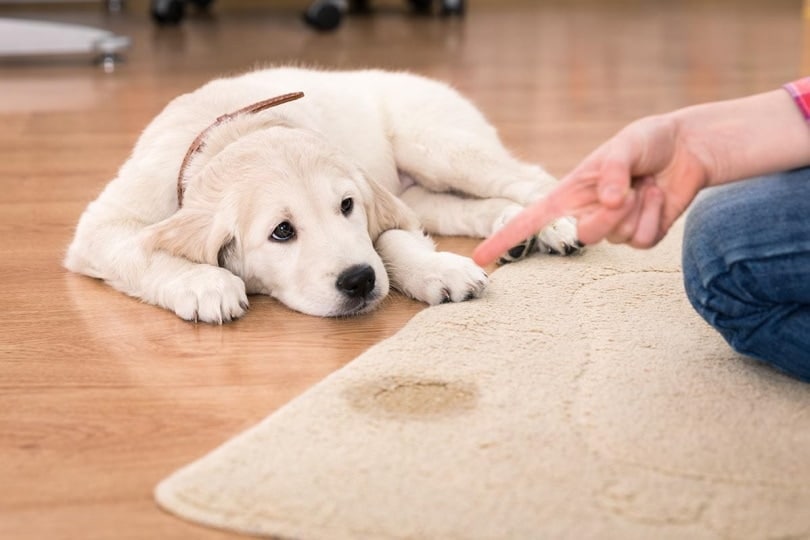
Your dog may also be straining to urinate, straining and only passing small amounts of urine at a time, or wanting to go outside more frequently than normal. Some dogs may start to lick at their genitals if they have a urinary tract infection or even vocalize as if uncomfortable while trying to urinate. Some dogs may have accidents in their crate and/or house which is atypical for them, and you may notice an odor to the urine as well.
Another vague sign which may be hard to recognize is an increase in drinking and urination. This is especially difficult to notice if you have a doggy door, or your dog goes out into a yard unsupervised. Many people may not even notice that their dog is urinating more frequently. However, you may notice an increase in drinking to accommodate for the urinary loss, and you may notice yourself filling the water bowl more frequently. Other times dogs may just act generally anxious. They may pace, pant, or seem as if they can’t get comfortable or settle down. These are important signs to notice as they can be from a number of different diseases and not just a UTI.
What Are the Causes of a Urinary Tract Infection?
The most common reason we see UTIs in dogs is from external bacterial contamination. In other words, bacteria from the skin, your dog’s mouth, and/or the environment enters the urinary tract from the outside and travels in. The bacteria makes the reverse trip that urine makes, working its way up into the urethra and bladder from the outside. E. coli is the most common bacteria found in urinary tract infections. The source of E. coli is typically from fecal matter that then infects the urinary tract.
Other dogs will actually develop an infection because they have bladder stones or urinary crystals. The diagnosis of bladder stones and/or crystals is a double-edged sword because certain types of crystals and stones can form from chronic infections. However, dogs may also develop a UTI because they have primary stones and/or crystals.
Dogs who are immunosuppressed for any reason are at a higher risk for developing urinary tract infections. If your dog has chronic allergies and/or pyoderma (bacterial skin infections), then they are likely more prone to developing a UTI. Dogs with diabetes are also at higher risk for UTIs due to the increased levels of sugar in their urine. Overweight dogs may also be at higher risk due to chronic moisture and infections trapped in their skin folds. Always speak with your veterinarian about your dog’s risk of developing a UTI if they have underlying health issues.
Diagnosing a Urinary Tract Infection In a Dog
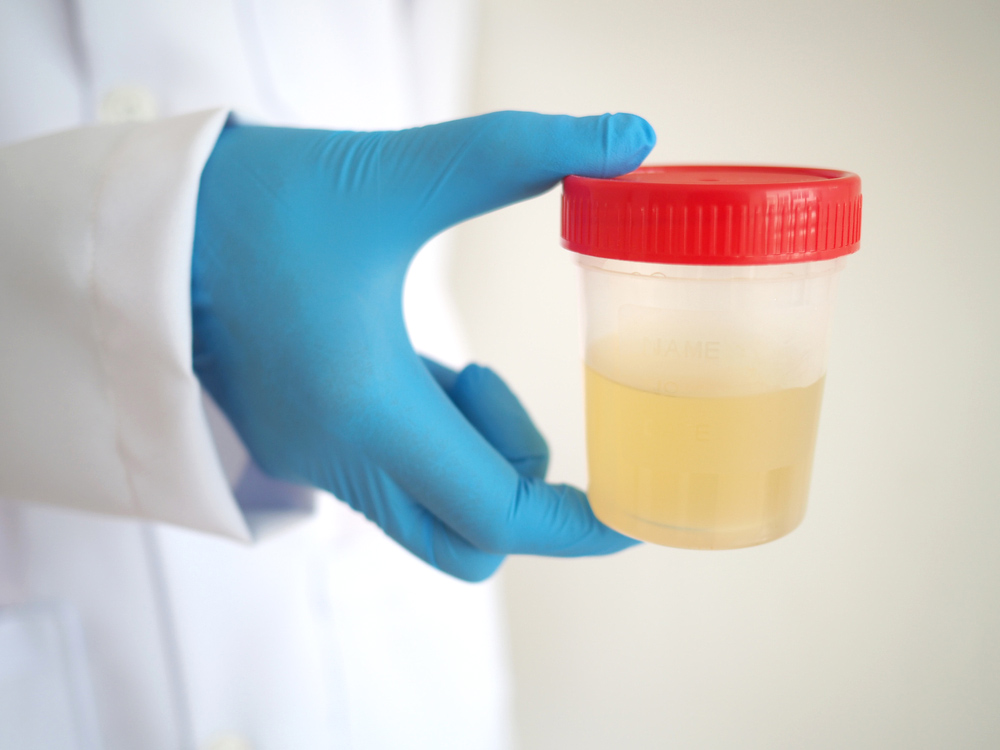
A urine sample from your dog will need to be evaluated under a microscope to diagnose an infection. Depending on the veterinary practice, your veterinarian may send the sample to a laboratory or have a machine in house that will evaluate it for them. It’s always best to try and get a sample, even if your dog has very classic signs, just to rule in/out other causes and to monitor whether the infection clears or not.
It’s best to get a sterile sample of urine, especially if your dog has any skin irritation and/or bacteria. A sterile sample is obtained by a cystocentesis – which is the process of inserting a sterile needle attached to a syringe into an animals’ bladder. This may sound scary but is a very common procedure in veterinary medicine. The bladder sits just underneath the skin and muscles at the back (caudal portion) of the dog’s abdomen. Inserting a needle into the bladder is a fairly similar concept of inserting a needle into a vein to get a blood sample that also sits below the skin. It’s best to do a cystocentesis if possible because if the urine sample is collected off the floor (if your dog urinates in the hospital), or caught while they urinate, the sample may contain bacterial contamination and not actually be bacteria in the urine itself.
If your dog is getting frequent UTIs, or seems to be having difficulty clearing the infection, your veterinarian may want to complete further testing. Radiographs are often taken to rule in/out bladder stones, an abdominal ultrasound may be needed to evaluate the rest of the urinary tract, and/or a urine culture may be sent to the lab to make sure that an effective antibiotic has been chosen.
How Do I Care for a Dog With a UTI?
If your dog has a diagnosed urinary tract infection, antibiotics will be needed to clear it. Depending on your dog’s other underlying health problems and their level of discomfort, many veterinarians will also prescribe a pain medication. Oftentimes NSAIDs are prescribed as they provide medication to help with both pain and inflammation.
If your dog has chronic skin issues, chronic UTIs, or other underlying health issues, they will also need to be managed and controlled in order to appropriately clear the infection.

Frequently Asked Questions
Does Cranberry Help with UTIs in Dogs?
Currently, there is some evidence that cranberry extract, when given at prescribed doses, may help to prevent UTIs in dogs. However, more evidence-based research is needed to form a definitive conclusion. If your dog suffers from chronic UTIs, it may be worth asking your veterinarian if adding a supplement may help, or at minimum might not hurt to try. For regular dogs, just like humans, who develop a UTI only a few times in their lifetime, supplementation would likely be unnecessary.
Are There Diet Changes That May Help With a UTI?
If your dog suffers from chronic urine crystals and/or bladder stones, there are prescription diets that can both help to dissolve these and prevent future recurrence. However, there is no food aimed to help prevent urinary tract infections. If your dog is suffering from chronic and/or resistant UTIs, it’s best to work with your veterinarian to help control any other underlying disease processes that may be contributing to these infections.
Conclusion
Urinary tract infections, or UTIs, are a common occurrence in our canine companions. Most commonly we will see infection with E. coli that invades the urinary tract from the outside of the body, and makes its way into the bladder. Your dog may experience blood in their urine, strain to urinate, pant, be in pain, and urinate inappropriate amounts. A diagnosis of a UTI is made by evaluating your dog’s urine under a microscope. A course of antibiotics is needed to clear the infection though further testing may be needed if your dog is unable to clear the infection and/or continues to develop them. There are many underlying issues that may contribute to your dog being at higher risk for a UTI than other dogs. However, other times it just happens and may not be a chronic issue. Always work with your veterinarian about the best course of diagnostics and treatment for your dog.
Sources
Featured Image Credit: AnnaStills, Shutterstock
Expert dog care, straight to your inbox
Vet-reviewed advice, training tips, and the best of Dogster. Free, and you can unsubscribe anytime.
By signing up, you agree to our Terms & Conditions and Privacy & Cookies Policy.
Dr. Kim Podlecki DVM (Veterinarian)
A graduate of The Ohio State University College of Veterinary Medicine, Dr. Podlecki has more than 12 years of experience working with small animals in the US. Dr. Podlecki worked almost exclusively in specialty medicine and emergency for more than a decade before transitioning to relief in both general practice and ER. Dr. Podlecki also owns her own consulting company (renewvetconsulting.com) with the focus of helping veterinary hospitals prioritize their staff to promote a healthier internal culture.
Join the conversation
Ask a question, share your story, or send private feedback.