My Dog Has A Lump On Their Chest: Should I Be Worried? Vet Reviewed Advice



In this article
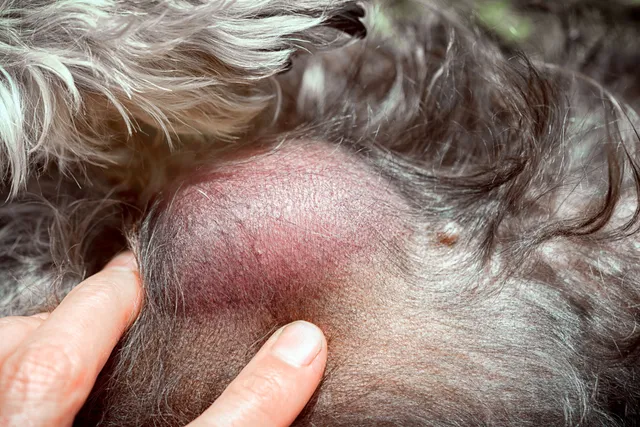
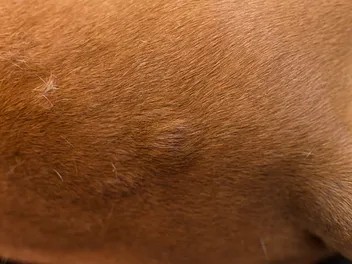
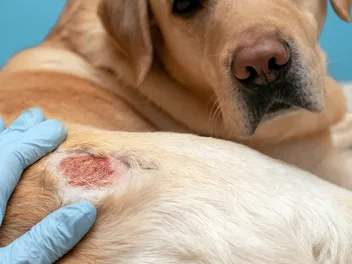
You’re petting your dog as usual when something beneath your fingertips makes you pause; a bump. Pushing back the fur, you notice a lump on your dog’s chest. Immediately, your mind flies to the worst-case scenarios. Is it cancer? Something even worse?
Before jumping to terrifying conclusions, it’s important to know that lumps on the skin are a normal part of an aging dog’s life. They also aren’t uncommon on younger dogs. Lumps on dogs' chests aren’t always something to be worried about. However, some lumps are a sign of a serious condition.
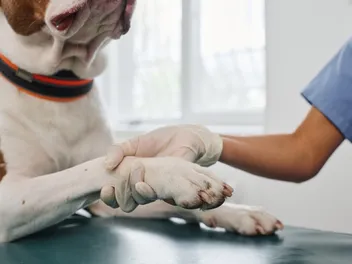
It never hurts to have your dog checked out by a vet when concerned about their health. In this article, we’ll examine why your dog may have a lump on their chest so you know when you should or shouldn't be concerned.

Benign Tumors vs Malignant Tumors
Lumps on your dog’s body fall into two categories: benign or malignant. Benign lumps are not invasive and won’t spread throughout the body. However, malignant tumors can invade and spread to other parts of the body.

Examples of Benign Tumors
If your dog has a benign tumor, there are plenty of things that could cause it. While not exhaustive, the list below contains some common benign tumors.
1. Lipoma
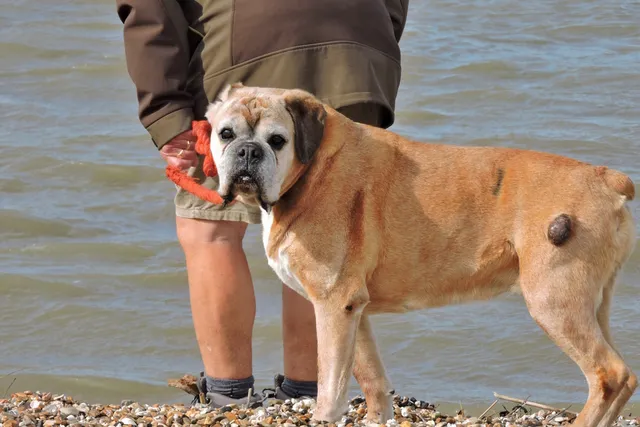
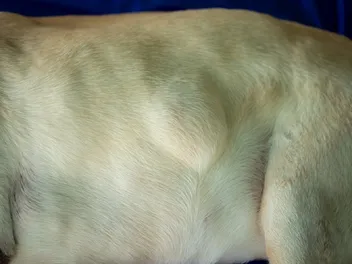
Lipomas are common on your dog’s legs, flank and torso. They come from fat cells beneath the skin and typically develop in older dogs with weight management issues. Some lipomas can grow rather large, making them appear more worrying than they are. They can also manifest in multiple places.
No treatment is necessary for lipomas, but they should be diagnosed by your vet and then closely monitored. If they are causing an issue for your dog due to their size and location, surgery may be warranted.

2. Histiocytoma
Histiocytomas are benign skin growths that are usually pink and fleshy, with a button-like appearance. Typically, they occur in young puppies (3 years of age or less), but they can occur at any age. They tend to regress and vanish over time without treatment, although they may appear to become worse before they get better.
3. Papilloma
Papillomas are small, fleshy growths that appear like cauliflower. They are wart-like and caused by a viral infection. They are contagious, typically appearing around the mouth of young dogs. However, older dogs can also develop them on other parts of the body.
If you have multiple dogs in your home or make frequent trips to dog parks, your dog may have been contaminated by another dog, a toy, or an infected water bowl. Papillomas will usually disappear as a dog’s immune system matures, but in some cases they can persist.

4. Basal Cell Tumors
Basal cell tumors typically develop on the head, neck, and forelimbs. Most basal cell tumors are benign, but 10% of them are malignant. The growths are usually firm, hairless and raised. Occasionally they may be cystic or ulcerate and can vary in size, from a few centimeters to a few inches in diameter.
5. Skin Tag
Skin tags are overgrowths of fibrous tissue in locations where a dog’s skin frequently rubs together, or rubs on a hard surface. They are usually the same color as the skin, or a little but darker, and may appear more commonly in older dogs or certain breeds.

Examples of Malignant Tumors
Benign tumors can be scary at first glance, but typically, the treatment is straightforward, if any is needed at all. However, in the case of malignant tumors, recovery can be more challenging. Below are some examples of malignant tumors that may cause lumps on your dog’s skin.
1. Mast Cell Tumors
Mast cell tumors are the most commonly seen malignant tumors in dogs. While they usually affect older dogs, they can impact dogs of any age and there are some breeds that are more predisposed than others. Mast cell tumors are growths that vary in appearance.
If they grow rapidly, they are more likely to spread to other parts of the body. They can be aggressive, and a prompt diagnosis and treatment are necessary.
If you’re concerned about your pet's health, you should contact a vet.
2. Malignant Melanomas
Malignant melanomas are skin tumors that grow and spread rapidly. They manifest as raised, generally ulcerated nodules that are variable in color. They are most commonly seen in older dogs and are rare on haired skin. They are mostly seen on the nail beds or along the lips.
3. Fibrosarcomas
This is another reasonably common malignant tumor that results from the overgrowth of the connective tissue in the body. Most fibrosarcomas appear on the limbs and the trunk of the body, but they can occur in other locations too. They differ in appearance and size but are normally a single, firm lump under the skin. While they can invade the muscles and bones locally, they typically do not spread to other areas of the body. However, they can be painful, especially if they are on the limbs, so surgical removal, staging the spread of the cancer, and histopathology are recommended.

4. Squamous Cell Carcinomas
Squamous cell carcinomas are irregularly shaped, firm growths that typically arise in light-skinned areas. They vary hugely in appearance, depending on trauma to the area and the location of the tumor. They are more common in dogs that are sparsely haired and have light-colored coats. There is a link between UV exposure and this type of tumor, as there is in human medicine.

When Should You Be Concerned About a Lump?
If you find a new lump that hasn’t been checked by your vet before, you should book your pup in for a check-up. You never need a “good” reason to be concerned about your dog’s health, and in the case of malignant tumors, catching them early can improve your dog’s prognosis.
If the lump is firm, strangely shaped, or rapidly changing in size, texture, and color, you should have your dog examined as soon as possible. Even without these signs, taking your dog to the vet for a new lump is still a good call.
Final Thoughts
Finding a lump on your dog’s body can be scary, but not all lumps are harmful. Many of them are benign and don’t even need to be removed. If they are malignant, your vet can surgically remove them to stop the spread to other parts of the body. If you’re concerned about your dog's health, don’t delay getting help; the sooner your dog is treated, the better.
See also:
Sources
Featured Image Credit: SeventyFour, Shutterstock
Expert dog care, straight to your inbox
Vet-reviewed advice, training tips, and the best of Dogster. Free, and you can unsubscribe anytime.
By signing up, you agree to our Terms & Conditions and Privacy & Cookies Policy.
Pets are Jordyn’s passion, especially cats. Whenever she has the opportunity, she loves to learn about animals and share her knowledge with everyone. She is devoted to her mischievous tabby cat named Jack and works hard to buy him his favorite toys and treats. Discovering new ways to better care for her pet is always on the top of her to-do list, and she is eager to help pet parents everywhere who have similar pursuits. In her free time, she loves to write, read, and take long walks. She has a creative spirit, which often helps her to come up with funny cat names.
Join the conversation
Ask a question, share your story, or send private feedback.