Why Do Dogs Develop Lumps After Subcutaneous Injections? Our Vet Answers

In this article
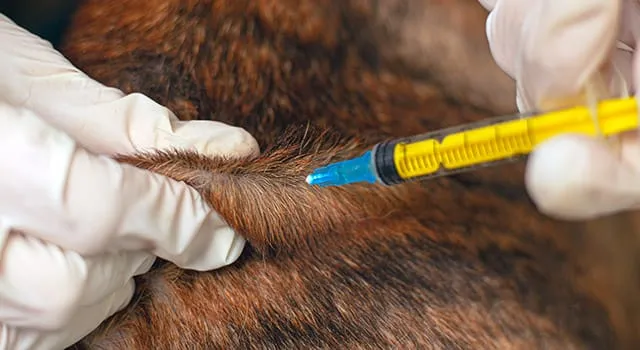
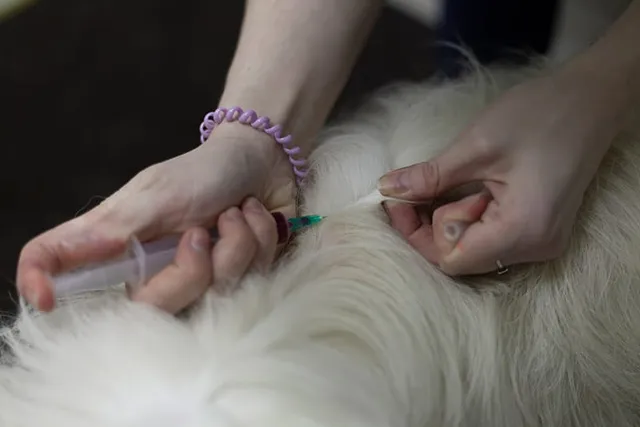
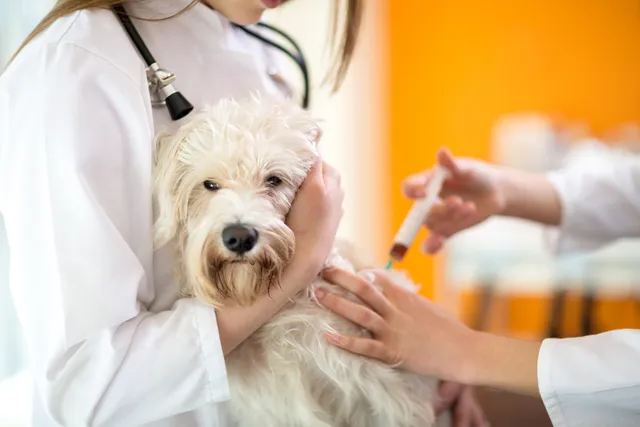
If you’ve noticed a small lump under your dog’s skin after a subcutaneous injection, it’s most likely due to their body reacting to the substance that was injected. Killed vaccines containing an adjuvant are more likely to cause lumps than other types of injectable medications.
While rare, a lump at an injection site may also be due to an infection or an abscess. Any time the skin is punctured there is the risk of bacteria entering the body and causing an infection. This is more likely if a new needle isn’t used or if the injection is given through dirty or infected skin.

Lumps Caused by Vaccines
If your dog is vaccinated with a killed vaccine, they might develop a small, firm lump near the injection site. Why exactly does this happen?
Killed vaccines contain ingredients called adjuvants. Adjuvants create a stronger immune response to a vaccine. They do this by increasing inflammation at the injection site, consequently triggering a stronger immune response. This inflammation can lead to the formation of a lump. These lumps are typically not harmful but can persist for a few weeks.

When to Monitor and When to Worry
Lumps caused by vaccines and other injectable medications are normally small and painless and disappear on their own within a few weeks.
If the lump is painful, starts oozing or draining pus, grows larger, or persists for more than a few weeks with no change in size, you should consult your veterinarian. Any persistent or growing lump should be checked to make sure it’s nothing serious.
Frequently Asked Questions
How Do Veterinarians Diagnose Lumps?
Veterinarians are able to determine the cause of a lump by conducting the following tests:
Fine Needle Aspiration (FNA)
During fine needle aspiration, a thin needle is inserted into a lump to remove cells or fluid. The sample is then analyzed under a microscope.
Analyzing the cells or fluid can help a veterinarian determine if the cause of a mass is due to an inflammatory reaction to an injected substance, an infection, or a neoplastic process (when cells grow abnormally and lead to tumor growth).
Unfortunately, fine needle aspirates do not always give an exact answer. Even if this is the case, an FNA can, however, help rule out causes or guide further diagnostic testing.
Biopsy
During a biopsy, the entire lump or a small section of the lump is surgically removed. The tissue is then submitted to a veterinary pathologist who will examine it under a microscope to determine the nature of the lump.

What Is a Killed Vaccine?
A killed (or inactivated) vaccine uses the killed version of the microorganism that they are designed to protect against. In contrast, live or modified live vaccines use microorganisms that are still alive (but weakened or altered to where they won’t cause disease).
Is There a Way to Prevent a Dog from Developing a Lump from a Subcutaneous Injection?
Other than ensuring that a clean needle is used and that the skin at the injection site isn’t obviously infected or contaminated with dirt, there is no way to prevent a lump from developing after a subcutaneous injection.
If your dog has developed a lump after an injection in the past, discuss this with your veterinarian. Many drugs, such as antibiotics, have an oral alternative, so if your dog is prone to developing lumps from subcutaneous injections, your vet may be able to prescribe an oral form of the drug.
In the case of vaccinations, you shouldn’t avoid vaccinating your pet. Vaccinations are essential for keeping your pet healthy and safe from life-threatening diseases. Lumps associated with vaccines are generally harmless and go away on their own.

Conclusion
Dogs usually develop lumps after subcutaneous injections due to their body reacting to the substance that was injected. While it is rare for other kinds of medications to cause this kind of reaction, it is fairly common for dogs to develop lumps after being vaccinated with killed vaccines containing adjuvants. It is also possible for a lump at an injection site to be caused by an infection or an abscess.
Sources
Featured Image Credit: Ground Picture, Shutterstock
Expert dog care, straight to your inbox
News, insights, expert advice, and everything dog.

No spam — unsubscribe anytime.
By signing up, you agree to our Terms & Conditions and Privacy & Cookies Policy.
How useful was this post?
Click a star to rate. You can leave written feedback afterwards. (We read all feedback.)
Dr. Lindsay Bisset BVSc (Veterinarian)
Lindsay is a veterinarian living in the vibrant city of Cape Town, South Africa with her husband and their rescue animals, Blizzard and Harrison. Lindsay received her bachelor's degree in veterinary science from the University of Pretoria and currently works in small animal practice. When she’s not working, you can find her enjoying time outdoors in nature hiking with Blizzard, or writing.