How to Keep Your Dogs Safe From Wolf Attacks: A Vet-Approved Guide


In this article
Think there’s no reason to be afraid for your dog when in the woods? Think again. Wolf and dog encounters often end negatively, especially when the wolf sees a dog as a threat to their territory. Wolves have been known to attack and kill their other wolves in a territorial spat, so it’s likely that they could do the same to your dog, too.
It’s important to note here that people are rarely seen as a threat to the wolf because of a difference in species. Wolves would rather avoid people entirely. People are rarely attacked by wolves, and in the cases that they are, the people are often the aggressors.
Read on to find out how to keep your dog safe from wolf attacks in the wilderness and at home.

When Hiking or Camping
1. Recognize the Signs That Wolves Are Around
When you are out in the woods with a dog, it’s helpful to know the signs of wolf scat and tracks so you can be the most prepared or know when to leave.
Wolf droppings (also called scat) are 1–1½ inches around with tapered ends. You will typically be able to see hair and bones in it. Keep in mind that coyote scat is a little smaller than wolf scat.
Wolf tracks will look like dog tracks but larger, about 4 inches wide by 4-5 inches long, with claw marks. You might notice your dog’s tracks wander in inconsistent lines, but a wolf’s tracks tend to stay in straight lines. The pawprints will be about 24-36 inches apart within the tracks.
2. Keep Your Dog on a Leash or Bring a Leash
Dogs that are allowed to wander around in the forest are more likely to run into a wolf or bear than if they stay right by their owner. After this encounter happens, the dog might retreat to you, putting you in danger, too.
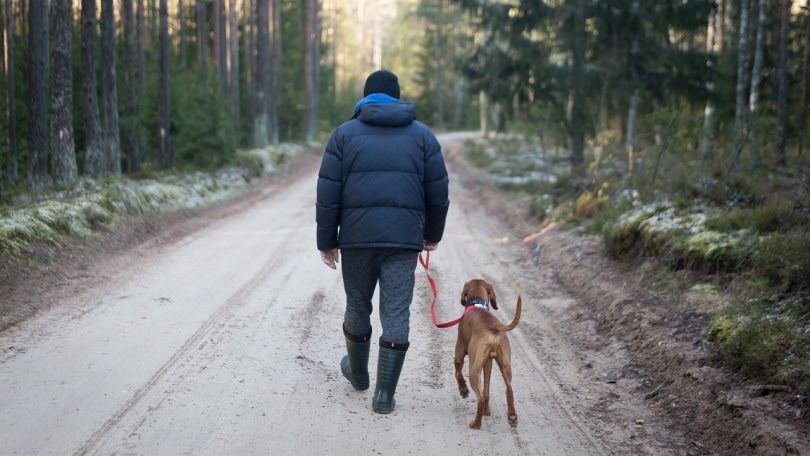
The best way to keep your dog near you is with a leash. There are many dog leashes available; here are some of the best ones you can get. If you’re confident your dog is well-trained enough to stay by your side, going leashless may be an option; just make sure your dog has great recall skills so you can get them to come back to you when needed.

3. Make Your Dog’s Collar Noisy
It may help to put a bell on your dog’s collar or otherwise make it noisy. This will give wolves and other animals a warning that your dog is coming and may prevent attacks from surprised wild animals.
4. Keep Your Dog in Your Tent at Night
If you’re camping, keep your dog inside the tent with you when you turn in for the night. If this is impossible, make sure your dog is as close to you as possible.

5. Make Sure All Food and Garbage Is Sealed and Out of Reach
For experienced backpackers, this is common knowledge to prevent bear encounters, but it also helps keep wolves away: don’t be messy with your food or garbage (or even chewing gum). Keep all food and garbage contained inside a bag after you set up camp. Before you go to sleep for the night, take that bag and tie it up high in a tree or large rock, out of reach from bears and wolves and away from your sleeping area.
This can be done by flinging a long rope or string up around a branch, then pulling up with the other end and securing it on a heavy rock. For additional safety, keep your cooking and eating area away from your sleeping area in case of accidental food spills.
6. If Your Dog Is Attacked, Carry Bear Spray
How do you stop a wolf while it’s attacking or pursuing your dog? You will have to prepare ahead of time by bringing bear spray (which, of course, helps stop bears, too). Bear spray contains a highly concentrated amount of pepper or capsaicin compounds.
Spraying bear spray at the attack will put a stop to it. While your dog might collaterally get hit with the bear spray, recovering from it is much better than recovering from a wolf attack.
When You Live Near Wolves
1. Keep Dogs Inside or Kenneled
When you live in wolf country and nightfall comes, bring your dog (or dogs) inside the house for safety. If they have to be outside, make a secure structure around them, like a tall fence, or kennel them up.

2. Put a Strong Fence Around Your Yard
Wolves will commonly come out at night, but sometimes they are active during the day. If you want to add extra security, you can put a secure fence around your yard to keep your dog in, as well as keep unwanted wild animals out.
3. Install Motion Detector Lights
Wolves are skittish creatures, so any sudden change in light is likely to scare them off. This can be done easily by installing motion detector lights around your house. A good place is right outside your front door or garage door; otherwise, you can install them around the perimeter of your yard.
4. Keep Noisemakers by the Door
If you see a wolf or coyote by your house, making a lot of noise is sure to scare them off. Any noisy thing will do, including a tambourine, loud bells, or a “clapper.” This is a children’s toy that has hands on it that, when shaken, makes loud clapping noises.
5. Don’t Leave Any Food Out
Wolves may sometimes be attracted to your residence if you leave food out, especially meat scraps. Prevent this from happening by disposing of all food in sturdy trash bins and keeping all animal and people food in tightly secured bins when stored outside.
Not only does this prevent wolves or coyotes from coming by, but it also keeps the prey that they hunt from hanging around, too.

6. Spay or Neuter Your Dog
Sometimes wolves will sense that your dog is in heat or vice versa, and pursue them as a mate (after all, dogs can breed with wolves). This is pretty rare, however. To prevent this unlikely event from happening, you will need to spay your female dog or neuter your male dog.
7. Report Wolf Incidents
Your local municipality will likely want to know if there’s been a wolf encounter in the area. If you have had a run-in with a wolf, contact your local wildlife management agency.
Conclusion
To keep your dog safe from wolves, whether out for a hike in the wilderness or if you live in wolf country, being alert and prepared is necessary. Steps like keeping your dog on a leash when out in the woods, not leaving any food out to attract wolves and having a strong fence around your yard if you live near wolves are some of the safety measures to take to prevent your dog from potentially being attacked by wolves.
Related Reads:
Featured Image Credit: furry_portraits, Pixabay
Expert dog care, straight to your inbox
News, insights, expert advice, and everything dog.

No spam — unsubscribe anytime.
By signing up, you agree to our Terms & Conditions and Privacy & Cookies Policy.
How useful was this post?
Click a star to rate. You can leave written feedback afterwards. (We read all feedback.)
Nicole has loved animals of all sizes her whole life so it's no wonder she has dedicated her career to helping them through what she loves best: learning, writing, and sharing knowledge with others. She’s the proud mom of two dogs, a cat, and a human. With a degree in Education and 15+ years of writing experience, Nicole wants to help pet parents and pets around the planet to live happy, safe, and healthy lives.