Can Puppies Have Rawhide? Vet-Reviewed Info & Safety Precautions


In this article
Rawhide chews are one of the most popular, affordable, and accessible chew treats for dogs of all ages. Unfortunately, many people are not well informed on the process of creating rawhide and the safety concerns associated with these treats.
If you’ve considered purchasing rawhide for your puppy, keep reading for the important information you need to know. So, what age can puppies have rawhide? Generally speaking, puppies older than 6 months can have rawhide, but it isn't recommended.
Before we begin, know that you should always supervise your puppy or dog while chewing rawhide or other types of chews, as overly enthusiastic powerful chewers may try to swallow large pieces, leading to choking. Swallowed pieces of rawhide may cause digestive issues or a gastrointestinal blockage. Consult with your veterinarian about the most appropriate chew for your puppy.

Can Puppies Have Rawhide?
Technically, if they're over 6 months old your puppy can have rawhide, depending on their size, breed, and chewing abilities, but it isn’t generally recommended. Rawhide is difficult to digest, and although it starts off quite hard, it softens with moisture. This means that as your puppy chews on rawhide, it will soften and your puppy will be able to chew off pieces.
However, since it is so difficult to digest, these pieces are often passed undigested or minimally digested. If your puppy consumes large enough pieces of rawhide or large quantities of rawhide, then there is a big risk of intestinal obstructions, which can be a life-threatening medical emergency.
Obviously, there are a lot of dogs that consume rawhide annually without any trouble. If your puppy is only chewing on rawhide with supervision and for short periods, then there isn’t much risk of an obstruction forming. If your pup has unlimited access to rawhide chews, though, then there’s a very real possibility that your puppy will consume entirely too much rawhide.
You know your dog’s chewing habits better than anyone, so if your dog is a powerful chewer, then rawhide alternatives are likely a better option. If your dog is a soft chewer, then a rawhide likely poses little risk of intestinal obstructions, but they still need to be supervised while chewing.

What Is Rawhide?
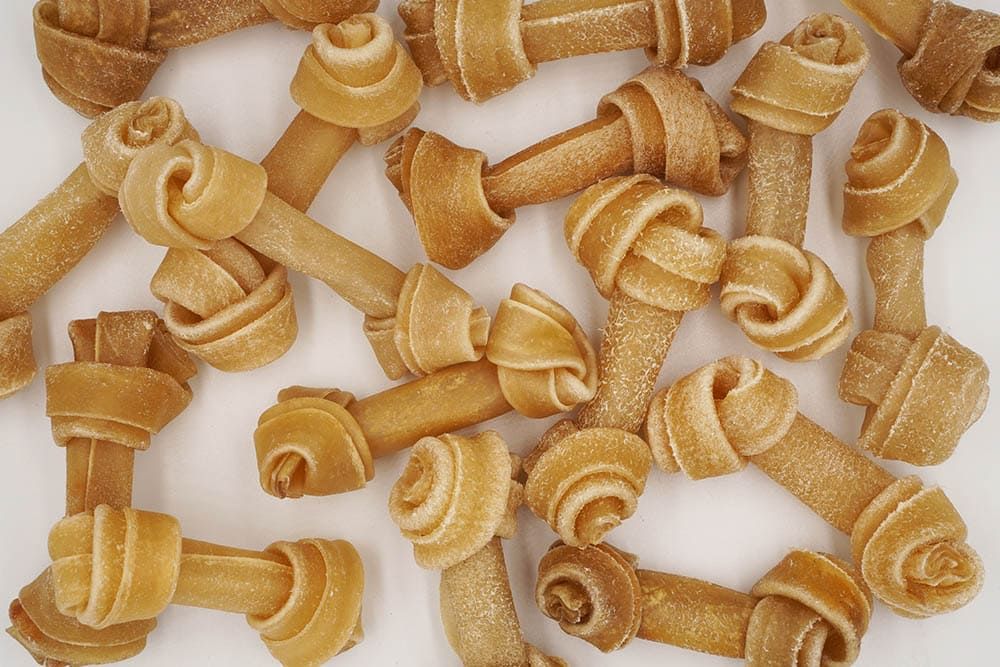
Rawhide is formed from the inner layer of the hide of cows and other animals. If you’ve ever seen a cowhide rug, then rawhide would be formed from the material toward the bottom of the rug that has been stripped of fat, hair, muscle, and other tissues, leaving only a leather-like hide behind. Rawhide is highly processed and goes through multiple stages of stripping, cleaning, bleaching, and pressing.
What Other Concerns Should I Have With Rawhide?
Concerns associated with rawhide other than intestinal obstructions include stomach upset that leads to diarrhea or vomiting, choking, and bacterial contamination. Choking is less of a risk with large dogs and puppies, but it is still a risk, especially if you aren’t picking up chunks of rawhide that are large enough for your puppy to swallow whole.
Contamination is a major risk with rawhide, and not just during the manufacturing process. Bacteria like Salmonella and E. coli are risks with rawhide, and if your dog is allowed to chew on a rawhide a little at a time over days, weeks, or months, then the risk of contamination increases each time your dog has access to the toy.
What Are Good Alternatives to Rawhide?
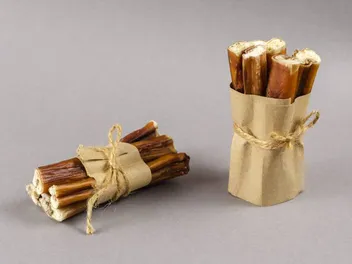
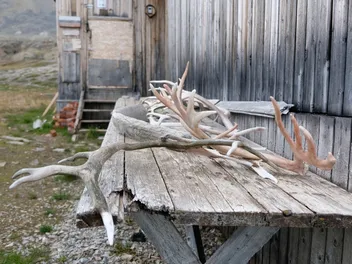
There are multiple types of rawhide alternatives that can be appropriate depending on the size, age, and chew level of your puppy. Nylon chew bones can be a good option for some dogs because they are fairly durable and designed to only come apart in very small ribbons of material, but none of it should be ingested. Consumable chew bones, various chew sticks, bully sticks, and Kong toys can be a good option, but dogs should always be supervised while chewing, and it’s important to remove large chunks of any chews once they become small enough to be swallowed whole.
There are some rawhide alternative products on the market that are made with safer materials or materials that are more easily digested, which can also be a great option to replace traditional rawhide chews for your puppy. But don’t be fooled, though. Chew safety depends primarily on your dog’s chewing habits, their size, and the size and type of the chew. A chew that is too small may be hazardous, as dogs will try to swallow it. Powerful chewers easily break off large pieces that can cause digestive issues if ingested or may lead to choking.

Conclusion
Generally speaking, rawhides for puppies are relatively safe when they’re a bit older, but there are better, safer options for your puppy to chew on. Rawhides come with some risks, like most chews and toys, and should be provided only under supervision. They should be replaced as they begin to tear up to prevent choking, intestinal obstruction, stomach upset, and bacterial contamination.
If you ever have concerns about the safety of a product your puppy is being offered, it’s a good idea to talk to your puppy’s veterinarian to ensure you are providing the best and safest option for your pup.
Sources
Featured Image Credit: Lek in a BIG WORLD, Shutterstock
Expert dog care, straight to your inbox
Vet-reviewed advice, training tips, and the best of Dogster. Free, and you can unsubscribe anytime.
By signing up, you agree to our Terms & Conditions and Privacy & Cookies Policy.
Brooke Billingsley spent 9 years as a veterinary assistant before becoming a nurse in 2013. She lives in Arkansas with her boyfriend, and loves all animals; currently sharing a home with three dogs, two cats, five fish, and two snails. She has a soft spot for special needs animals and has a three-legged senior dog and an internet famous cat with acromegaly and cerebellar hypoplasia. Fish keeping has become a hobby of Brooke’s and she is continually learning how to give her aquarium pets the best life possible. Brooke enjoys gardening and keeps a vegetable garden during the summer months. She stays active with yoga and obtained her 200-hour yoga teacher certification in 2020. She hosts a podcast focusing on folklore and myth and loves spending her free time researching and writing. Brooke believes that every day is an opportunity for learning and growth and she spends time daily working toward new skills and knowledge.
Join the conversation
Ask a question, share your story, or send private feedback.