5 Benefits Dogs Get from Chewing Bones or Chews: Vet-Reviewed Facts


In this article
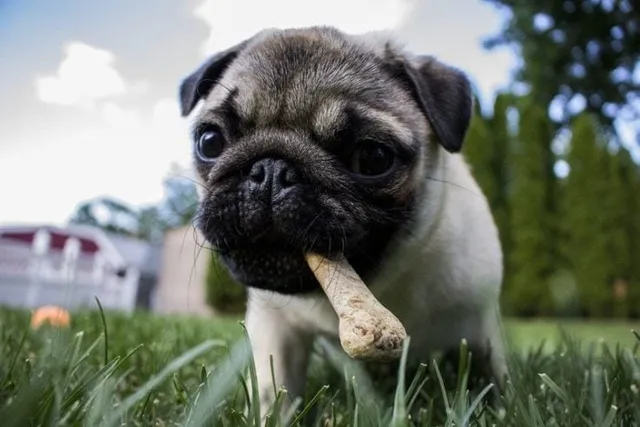
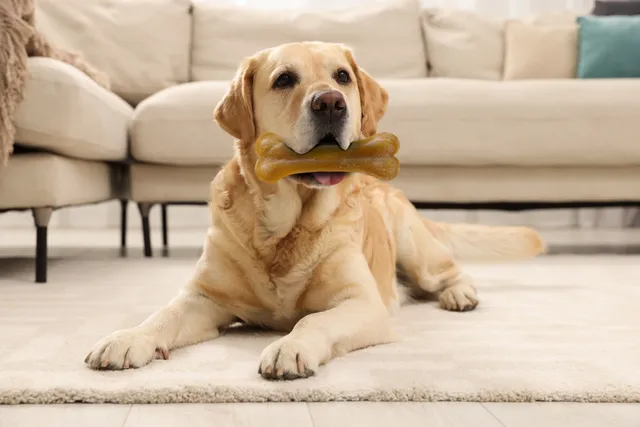
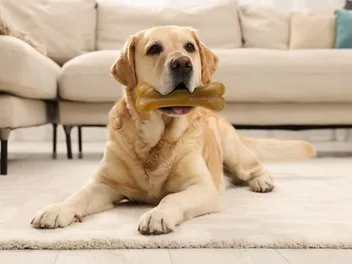
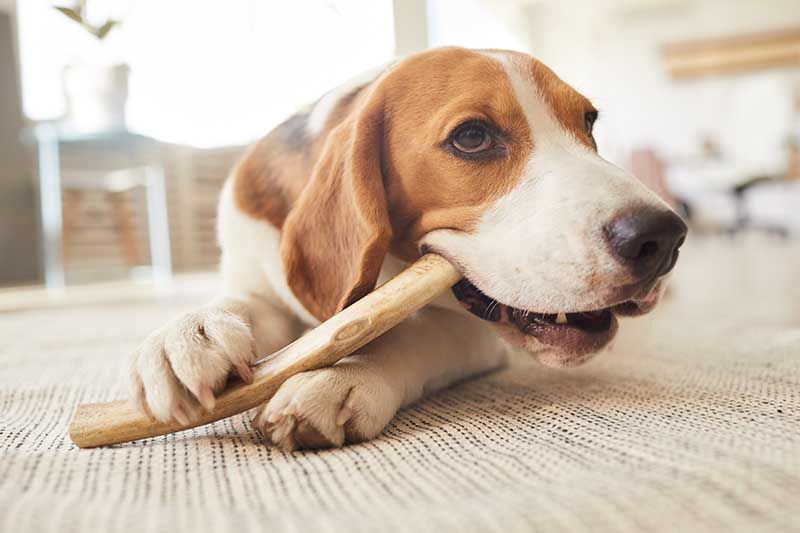
Dogs love to chew on things, which you and your shoes may have learned the hard way. Purchasing toys can help minimize the destruction of your shoes, but toys will only last so long between your dog’s paws. Providing bones or chews for your dog to chew comes with several benefits.
If you are curious about the benefits of bones or chews for your dog, this article takes a deeper dive into the subject. To spare your shoes and maintain your dog’s dental health, keep reading below.

The 5 Benefits Dogs Get from Chewing Bones or Chews
1. Chewing Boosts Dental Health
Chewing is good for your dog’s dental health since it can help create saliva, which can clean out your dog’s mouth with various antimicrobial properties. It also removes tartar from your dog’s teeth. This is especially true if you give your dog dental chews designed to care for its teeth.
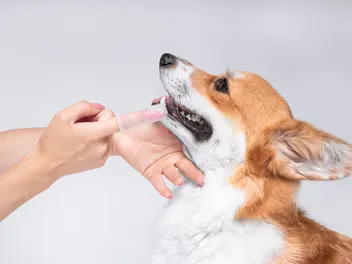
Of course, chews can never replace consistent toothbrushing. In addition to chews, be sure to routinely clean your dog’s teeth with a canine toothbrush and canine toothpaste.

2. It Can Be a Great Stress Relief for Your Dog
If you often come home to find that your dog has chewed up your cushions or other items, there is a good chance that your dog has separation anxiety. If you are wondering what the connection between those two things is, it is that dogs chew when they are stressed.
Chewing is a way that dogs can relieve their stress or anxiety. If there are stressors in your dog’s environment, such as your absence due to work, offering some chews may help manage their stress.
3. For Puppies, Chewing Can Help with Teething
Chewing is a big deal for puppies for many reasons, and one of the most prominent is teething. While your puppy is teething, they will experience some pain. They will likely try to manage this pain by chewing on things, so offering a chew is a great way to help them get through the teething phase.
Not to mention, chewing promotes the growth of teeth. By allowing your puppy to chew, you will be able to encourage it to develop strong adult teeth.

4. Chewing Can Keep Your Dog Entertained
As simple as it may sound, bones and chews can be great tools to keep your dog entertained. Dogs require physical activity to remain satisfied, but they also need mental exercises. Chewing is an excellent way for your dog to focus on an exciting task.
Bones and chews can also entertain your dog when you cannot. Whether you are cooking dinner, doing chores, or simply relaxing, chewing will be enough activity to keep your dog busy for a while.
5. Chews Can Curb Destructive Chewing Behavior
As mentioned, shoes, cushions, and other objects can quickly fall victim to your dog’s destructive chewing behavior. If you have bones and chews for your dog to chomp on, your more delicate household items may be spared.
Anytime you notice your dog chewing on something it shouldn’t, redirect its chewing behavior onto the chews. Soon, they will learn what they can chew on, and the objects in your house will be safe and sound.
If your dog is showing destructive chewing behavior, we suggest you speak to a vet.
How to Pick the Right Bone or Chew for Your Dog
Although bones and chews have significant benefits for your dog, picking the right kind is vital. Giving your dog something improper or unsafe to chew on could lead to an expensive veterinary visit.
Bones
When picking a bone for your dog, you should avoid anything but raw bones. Cooked bones are too dangerous to give your dog because the cooking process makes them weak. When your dog chews on a cooked bone, it can snap and splinter into dangerous shards. If your dog accidentally swallows one, it could cause a dangerous obstruction.
Although raw bones are safer, you still need to be careful with which ones you offer your dog. Any bone you give your dog should be about the same size as your dog’s head. Raw bones this size will have a smaller chance of being snapped and swallowed by your dog.
However, you should never give your dog unsupervised access to bones. Even if the bones are raw and sized properly to suit your dog’s safety needs, there is always a chance that your dog may snap a small portion of the bone off and swallow it. This can lead to disastrous health complications. Chews are a great alternative if you are uncertain about offering your dog bones.

Chews
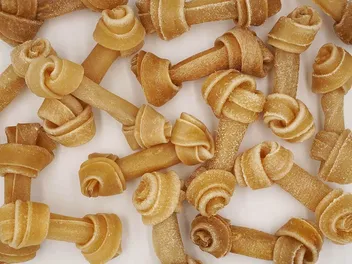
When picking out a chew, you must consider what is safest for your dog. Some chews may be better for large-breed dogs, while others may be better for small canines. When you find a new chew for your dog, monitor their chewing to ensure it is a safe option.
These are some of the following areas that you can use to evaluate a chew:
- How durable is it? Any chew must be strong enough to withstand intense chomping to guarantee that your dog will not accidentally swallow it. If it is too brittle, your dog may snap it and eat small, sharp pieces. However, a chew should not be so hard that it may crack your dog’s teeth.
- What is the size? If a chew is too small for your dog, they may choke on it. Any chew you give your dog should be too big for them to fit entirely in their mouth.
- What is it made of? Ingredients should play a vital role in your decision-making process. Natural, limited-ingredient chews are ideal. Anything with too many artificial flavors or colors may upset your dog’s tummy.
Conclusion
Bones and chews can promote dental health, relieve stress, and provide entertainment. Of course, some products are unsuitable for your dog, so it is vital to verify that anything your dog is chewing on is safe.
To pick the correct bone or chew for your dog, consider its durability, size, and how it is made. Once you have the perfect pick for your dog, keep a close eye on them as they chew and let the fun begin!
Sources
Featured Image Credit: SeventyFour, Shutterstock
Expert dog care, straight to your inbox
News, insights, expert advice, and everything dog.

No spam — unsubscribe anytime.
By signing up, you agree to our Terms & Conditions and Privacy & Cookies Policy.
How useful was this post?
Click a star to rate. You can leave written feedback afterwards. (We read all feedback.)
Pets are Jordyn’s passion, especially cats. Whenever she has the opportunity, she loves to learn about animals and share her knowledge with everyone. She is devoted to her mischievous tabby cat named Jack and works hard to buy him his favorite toys and treats. Discovering new ways to better care for her pet is always on the top of her to-do list, and she is eager to help pet parents everywhere who have similar pursuits. In her free time, she loves to write, read, and take long walks. She has a creative spirit, which often helps her to come up with funny cat names.