Can Dogs Sniff and Breathe at the Same Time? Canine Anatomy Explained


In this article
A dog’s sense of smell is indeed its strongest scent, but dogs do much more than sniff things. Dogs are practically superheroes when it comes to their noses. They can sniff out drugs, and cancer, and find missing people, all while breathing and sniffing simultaneously.
But does this mean that dogs have a superior sniffer? Let’s find out.

A Dog’s Sense of Smell
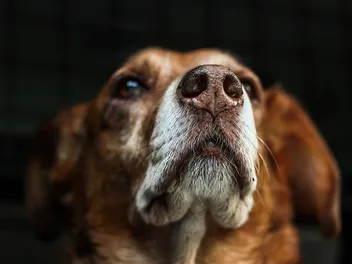
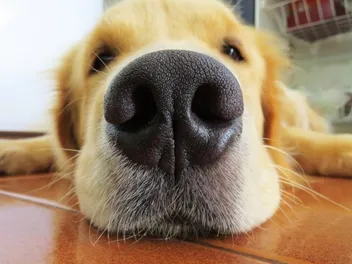
Dogs have unique olfactory senses thanks to their one-of-a-kind noses. They have over 100 million sensory receptors in the nose compared to humans, who only have 6 million.1 Plus, the part of the brain that processes this information is 40 times larger than the human brain.
So, it is no surprise that dogs can smell from 1,000 to 100,000 times better than humans. Even so, dogs have one more trick up their snout.
When humans smell, they inhale the air and scent through the same single air passage we use to exhale. This causes the scent to get expelled and lost during our exhalation. But dogs have a great advantage: they have two different air passages, and they can use one for breathing and the other for smelling. In other words, dogs can store a smell or scent in their nose even while exhaling!
If that advantage wasn’t enough, dogs also have a secondary and very specialized olfactory system used to detect certain chemical messages. Dogs have something called the Jacobson’s organ (the vomeronasal organ). This organ is located inside the nasal cavity, resting behind the incisors, and acts as a secondary olfactory sensor.
The Jacobson’s organ provides information normally deemed undetectable with the help of specialized receptor cells with nerves that lead directly to the brain.
All these advantages together are the reason why dogs can sniff out lung cancer, detect hidden drugs, find missing persons, and even help officers locate gasoline for arson crimes. Dogs can even sniff out human remains during archaeological digs.

How Sniffing Improves Canine Well-Being
For dogs, sniffing is another form of communicating and perceiving the world. Without the ability to sniff, a dog wouldn’t interact with other dogs or their environment in the same way. A dog couldn’t know when a bitch is in heat, when a prey animal is nearby, or when a predator is nearing the flock. Without sniffing, a dog becomes anxious, depressed, and frustrated.
Allowing your dog to sniff every nook and cranny on a walk might seem annoying, but it is excellent mental stimulation for your pup. Sniffing fills a dog with wonder and optimism. It brightens your dog’s world, allowing them to discover new joys and recover old ones.
Do Dogs Have the Best Noses?
Each dog breed has a different olfactory ability. The bloodhound is considered the breed with the best sense of smell. But even so, dogs lose first place to other animals.
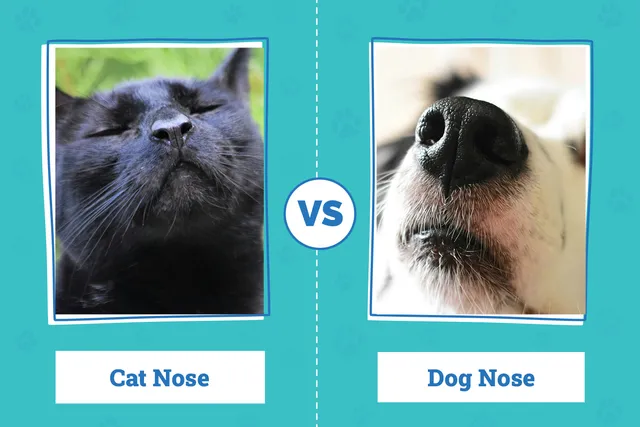
Cats have over 200 million sensory receptors in their noses, while some dogs can have 225 to 300 million smell receptors.
Bears also have keen senses of smell. Their big noses can sniff 2,000 times more than humans and seven times more than bloodhounds, allowing them to smell food sources from several miles away. Still, the bear will have to give first place to the elephant.
Elephants have more scent olfactory receptor genes than any other mammal. These giants have to have about 2,000 olfactory receptor coding genes, while dogs have only 1,000. Elephants are known to navigate great distances based on their sense of smell.
Other animals like polar bears, rats, mice, and insects have olfactory senses that greatly surpass the dog.


Conclusion
So, what makes a dog so special? Can you imagine training a bear to find a missing person? Or perhaps using an elephant to find drugs? We’re sure they could, but a dog's size and trainability make them useful in our society, and we are eternally grateful.
Sources
https://www.petmd.com/dog/behavior/5-dog-nose-facts-you-probably-didnt-know
https://vcahospitals.com/know-your-pet/how-dogs-use-smell-to-perceive-the-world
https://www.sciencedirect.com/science/article/abs/pii/S0168159118304325?via%3Dihub
https://www.akc.org/expert-advice/health/is-sniffing-a-dog-s-version-of-social-media/
https://www.nps.gov/yose/blogs/bear-series-part-one-a-bears-sense-of-smell.htm
https://www.nytimes.com/2018/06/19/science/elephants-smell-trunk.html
Featured Image Credit: Prostock-studio, Shutterstock
Expert dog care, straight to your inbox
News, insights, expert advice, and everything dog.

No spam — unsubscribe anytime.
By signing up, you agree to our Terms & Conditions and Privacy & Cookies Policy.
How useful was this post?
Click a star to rate. You can leave written feedback afterwards. (We read all feedback.)
Cassidy is a vet tech and professional pet sitter turned pet writer whose passion is all things animals, both domestic and wild. She’s had a multitude of pets over the years and loves writing about the animal-human bond. She and her husband now live in Wichita with a German Shepherd named Raven, two cats, Lucy & Strudel, and a few backyard chicks.