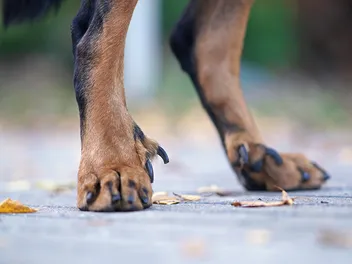
Can Dogs Be Left or Right Pawed? Vet-Approved Facts & Explanation


In this article
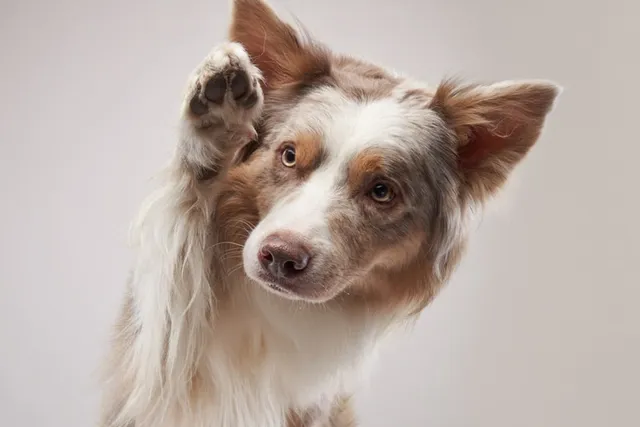
Everyone knows humans can be right-handed or left-handed, but have you ever wondered the same about your dog? As it turns out, some dogs prefer using one paw over the other, and some have no preference at all. A dog’s brain is structured similarly to a human’s, with each of the two hemispheres holding specializations, which researchers call “laterality.”
In this post, we’ll explore this topic in detail to better understand whether dogs are right-pawed or left-pawed.

What Is Laterality?
Before we look at particular studies on this topic, let’s define “laterality.” Laterality is the preference to use one side of the body over the other, such as a preference to use your right or left hand. In the medical sense, laterality specifies which of the brain's two hemispheres is dominant. The right hemisphere controls the left side of the body, and the left hemisphere controls the right side.

Are Dogs Mostly Right-Handed Like Humans?
Studies show that only 10% of humans in the world are left-handed, so does this apply to dogs as well?
The largest study of canine handedness from 2021,1 which tested 17,901 dogs, showed that of the dogs that showed a clear preference for one paw over the other, 58.3% of dogs were right-handed, and 41.7% of the dogs that showed a paw preference were left-handed. This makes left-handedness much more common in dogs compared to humans.
The task in this study was food retrieval from a plastic or cardboard tube that the dogs had to reach their paws into to get a treat from the end of the tube. 74% of the tested dogs showed a clear paw preference, while the other 26% showed no preference and used both paws equally, referred to as “ambilateral”. This is much higher than the percentage of ambidextrous humans which is only about 1% of the population. Interestingly, a preference to use their right paw was significantly higher in females than males and elderly dogs tended to be more right-pawed than younger dogs.

Other Ways to Measure Laterality in Dogs
Other studies have used different methods to measure laterality in dogs.
1. Kong Test
Researchers have also used the “Kong test” to conduct studies on this topic. The Kong test is a motor test that examines a dog's preference for holding a Kong toy stuffed with food. If you’re not familiar with the Kong toy, it is an ultra-durable, cylinder-shaped rubber toy with a hole in the bottom that you can fill with treats or goodies for enrichment.
When conducting this particular test, researchers examine how much a dog uses either the right paw or the left paw or if the dog uses both paws while holding the Kong to access the food inside, as this task requires a dog to hold the Kong still. Studies revealed that of dogs that showed a preference, there was a similar number of right-pawed and left-pawed dogs.

2. First-Stepping Test
Another method for conducting such studies is a test called the “First-Stepping Test.” This experiment involves observing which paw a dog leads with from a level-standing position. After observing multiple repetitions, the dog’s paw preference can be cataloged. This test is different from the Kong test because it is not food-motivated.
Unlike the Kong test, this study suggested a bias towards the right paw and was less affected by other factors such as the age, breed and sex of the dog. The researchers concluded that a dog’s lateralized behavior is likely strongly task-dependent.
3. The Food Dish Test
This laterality test uses food dishes filled with food or treats set at 45-degree angles to a dog’s left or right. The choice of dish was visually guided so this is more of a test for visual laterality than paw laterality, and it is thought that these are independent of each other in dogs. While the dog can eat from both dishes, what counts is which dish the dog goes to first. The results showed that over half of the dogs included in the study showed no preference, and the remaining dogs were almost equal in turning to the right or left dish.

Can Laterality Suggest a Dog’s Personality or Behavior?
Studies have found that dogs who scored as ambilateral from the Kong test appeared to be more playful and aggressive than dogs that showed left- and right-bias. The same study showed that dogs who scored as ambilateral from the First Stepping Test, showed more shyness-boldness traits and sociability but no aggressiveness. These findings indicate that paw preference can be linked to a dog’s personality or behavior, especially regarding traits relating to strong emotions.
It has also been shown that domesticated species, including dogs, with a left-limbed preference have a greater susceptibility to stress, and are more likely to show heightened fear and aggression. While these studies are an excellent starting point for understanding laterality in dogs, further studies are needed for more insights into animal welfare regarding paw preference. Of course, paw preference is far from the only determining factor in animal behavior; genetics, socialization, past experiences, and health all play very important roles.
So, Is Your Dog Right-Pawed or Left-Pawed?
If you are curious about whether your dog is right or left-pawed, you can conduct these same tests at home to give you a little indication of your dog’s paw preference. In addition to these tests, try holding a treat in a closed hand and study which paw your dog uses first to investigate.

Final Thoughts
Whether a dog is right-pawed, left-pawed, or ambilateral could help us understand some aspects of canine behavior, but further studies could reveal a wide array of findings that could help us better understand our pets. However, these studies seem to indicate that the percentage of right or left-pawed dogs is more evenly distributed compared to humans.
If you are curious, now you know the simple tests you can perform at home to determine your dog’s paw preference.
See Also:
Sources
Featured Image Credit: 9gifts, Shutterstock
Expert dog care, straight to your inbox
Vet-reviewed advice, training tips, and the best of Dogster. Free, and you can unsubscribe anytime.
By signing up, you agree to our Terms & Conditions and Privacy & Cookies Policy.
Rachel Giordano is a writer and musician living in Pensacola, Florida, with her partner and their two dogs, Aero, a Border Collie/Sheltie mix and Sophie, a Boston Terrier. Rachel holds a Bachelor of Arts degree in communication and loves writing about animals of all types. When she’s not writing about pets, she loves to write suspense/thriller novels. A musician by night and writer by day, she enjoys educating the public about the needs and requirements of animals, big and small.
Join the conversation
Ask a question, share your story, or send private feedback.