12 Vet-Verified Dog Brain Facts You'll Be Surprised to Learn



We’ve been trying to understand our four-legged best friends for ages. How smart are dogs? Do they understand what we’re saying to them? Do our dogs love us? Luckily, there has been a lot of research done on the brain function of dogs to help us better understand and care for them.
Let’s take a look at 12 fascinating facts about your dog’s brain that you may not know. Having this information will deepen your relationship with your pup and help you provide adequate stimulation for their level of intelligence.

The 12 Most Fascinating Facts About Dogs' Brains
1. A Dog’s Brain Is the Size of a Tangerine

You’ve most likely heard brainpower being associated with the size of the brain. A dog’s brain is roughly the size of a tangerine. While that’s a bit small when compared to a human brain, it does measure up quite well in the animal kingdom.
This means dogs may be smarter than most animals but they’ll never reach the same brain power as a human.
2. Dogs Have Emotions

Dogs are estimated to be as smart as human toddlers and have the ability to feel emotions. Now, you may think this means dogs can feel all the same emotions a human can, but that’s simply not known. Dogs do have chemical changes and areas in the brain that help them feel love, fear, anger, excitement, pain, disgust, and distress.
The more complicated emotions such as contempt and guilt are not thought to be in their repertoire. Be mindful of this when you are attributing human feelings to the way your dog is behaving as it can lead to misunderstandings.
3. Dogs Can Be Depressed

With dogs having chemical reactions in their brains that cause their emotions to change, that means they can also feel the effects of depression. This is why when your dog is having these types of issues it is best to take them to the veterinarian.
As dogs can feel depression and anxiety, proper medications, and behavioral and environmental management can also help treat them for it.
4. A Dog’s Brain Responds Positively to Rewards

You may think your dog gets excited when they are rewarded for a job well done thanks to the treats involved, but they are not just responding to the food itself. A dog’s brain is wired to respond positively to rewards and even the hand movements involved in praising your pet.
5. Dogs Aren’t Big Planners

One of the greatest things about dogs is their spontaneity. A dog’s brain is not designed to plan things out for the future. This is due to their prefrontal cortex not being as advanced as those of higher primates.
You may think your dog is planning on doing things, but in reality, they probably aren’t. They are just living in the moment.
6. Your Dog’s Brain Is Dedicated to Smells

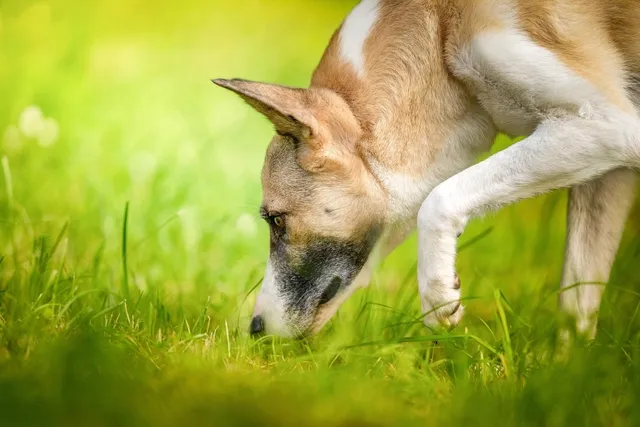
We’ve all witnessed how amazing our dog’s sense of smell is. With this amazing talent, it isn’t surprising that a large part of a dog’s brain is dedicated to smell and the association of those smells with memories. It’s this part of the brain, the olfactory bulb, that helps dogs be trained for work on rescue teams or bomb and drug detection.
The olfactory bulb of a dog is made up of up to 300 million receptors, vs 6 million for humans. Recent research has also shown that dogs have a very close relationship between parts of the brain for vision and smell and are now thought to see with scents.
7. Yes, Dogs Dream

Most dog owners have seen their dogs sleeping soundly while they kick their feet, whimper, or even bark. That’s because your dog can dream. The electrical activity that takes place in your dog’s brain is a great indicator that it can dream.
Additionally, Hungarian researchers have shown brain activity consistent with learning while they sleep. So it is important your pooch gets some quality shut-eye.
8. Your Dog Can Recognize You

Many believe dogs recognize their humans thanks to their amazing sense of smell. While that’s true, it’s not your dog’s only tool. Dogs can recognize human faces, especially those they are familiar with. Dogs react differently when seeing faces as opposed to everyday objects.
Dogs have even evolved to understand certain emotions or cues they see on your face.
9. Dogs Are Smarter Than Cats (Or So They Think!)

Dogs have more neurons in their brains than cats. Neurons are used to process information and are related to intelligence levels. The more an animal has, the better it is at thinking and understanding complex behaviors. When compared to cats, dogs have twice the amount of neurons they have.
This is why on average, people consider dogs the smarter of the two domesticated animals. However, the gloves are still off as the two species have different talents and intelligence can be measured in different ways.
10. Dog Intelligence Is Similar to That of a Toddler

Dogs can learn a lot. It has been shown that dogs can learn up to 165 words and even do a bit of math. Their levels in these areas are the same as that of a 2 to 4-year-old toddler. You’ll even notice that dogs show an eagerness for learning.
Due to this, it’s a great idea to use puzzles and interactive games when working with your pooch. Many dogs thrive on brain training as much as physical exercise. So if you are unable to get out and walk your dog today, swap to doing some fun training activities at home instead.
11. Dogs Can Experience Brain Freeze

Dogs enjoy a cool treat now and then. Unfortunately, just like us humans, your pooch can experience brain freeze if they eat something cold too fast. Brain freeze is only temporary but it may not feel the greatest for your dog. You’ve most likely had a brain freeze at some point and understand how it feels. It is the result of dilation of blood vessels when cold is felt by receptors in the mouth, to try and warm the area up. To avoid giving your pooch a headache, try to control how quickly they eat cold treats when you offer them.
12. Dogs Can Suffer from Age-Related Brain Issues

While it’s sad to realize, dogs don’t live forever. As they get older, your dog may begin to suffer from age-related canine cognitive dysfunction. This is very similar to what humans experience as they age. Your dog can also experience other brain-related problems such as tumors as they age. If you notice any changes in your older dogs' behavior or habits get them checked over by your veterinarian.
Conclusion
As you can see, there is a lot to learn when it comes to your dog’s brain. While they may not be as smart as a human, their brains give them the ability to work things out, be trained, and even show emotions toward their humans and situations. The next time you’re bragging to your friends about how smart your dog is, in the back of your mind, you’ll know science is on your side. See also:
Featured Image Credit: Mitchell Orr, Unsplash
Expert dog care, straight to your inbox
Vet-reviewed advice, training tips, and the best of Dogster. Free, and you can unsubscribe anytime.
By signing up, you agree to our Terms & Conditions and Privacy & Cookies Policy.
Melissa was born and raised in the mountains of East Tennessee where she spent her time writing in an old notebook and playing outside with her pets. As an avid animal lover, she has brought many into her home over the years. Currently, she is the mom of 5 fur babies. Her 2 cats, Princess and Pepper are total opposites who demand attention. Her dogs Jazzy, Whitey, and Demon are full of spunk and keep the entire family on their toes.
Beyond life as an animal mom, Melissa is a dedicated wife and mother to 2 children. Writing in her old notebook led her down the path of becoming not only a freelance writer but a published Indie author under the pen name, Rena Marin.
Join the conversation
Ask a question, share your story, or send private feedback.