Can A Dog Die From Separation Anxiety? Vet-Reviewed Facts


In this article
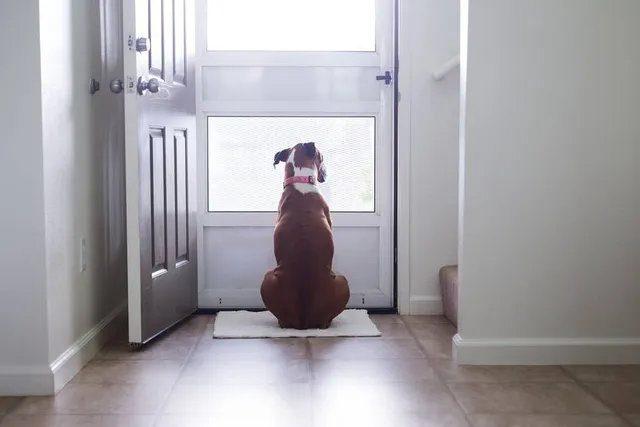
Separation anxiety should really be called separation distress because of its emotional impact on an animal. After all, we’re talking about a dog in agony because they are alone and apart from their owner. The condition causes other destructive and unwanted behavior that can worsen the problem and endanger your pet’s life.
Separation anxiety may not kill your pup. However, it can create risky situations and complications where your dog’s life is genuinely threatened. If you suspect your pet suffers from this condition, it’s imperative to seek treatment immediately from your vet. Besides, it’s cruel to prolong your dog’s misery needlessly.

Defining Separation Anxiety
Separation anxiety is the most common canine psychiatric disorder, affecting roughly 14% of dogs.1 It’s often accompanied by phobic behavior and fearfulness. Like other similar issues, it typically has environmental and genetic components.
Several things can trigger separation anxiety, such as the loss of another family pet or household member. Changing homes can also cause unwanted behavior, even if it’s a positive change like adoption. Typically, it occurs simply because a dog is left alone for long periods.
Research has shown that puppies less than 8 weeks old separated from their mother and littermates are more likely to develop behavioral issues.2 It’s worth noting that selling animals less than this age in the United Kingdom is illegal. Part of the reason may be a pup’s emotional maturity.
Dogs go through two fear-impact periods in their young lives that can have lifetime repercussions. One is between 8–12 weeks old and another at 7–14 months. It’s easy to understand why a puppy might be permanently scarred emotionally when undergoing drastic changes in their young life without the security of their mother and littermates.
Another surprising risk factor is the amount of daily exercise. Researchers found a compelling correlation between less activity and a greater chance of developing separation anxiety and noise sensitivity. Interestingly, it also influences these negative behaviors in rodents and people.

Signs of Separation Anxiety
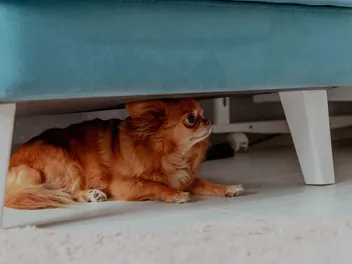
The signs of separation anxiety are unwanted behaviors that no pet owner would want to endure. They include destructive acts, like damaging furniture, clothing, and other household items. Some dogs scratch doors in an attempt to escape. They may howl and bark. Others engage in inappropriate elimination. All are signs of a highly agitated animal.
Separation anxiety can become dangerous on several fronts. Dogs chewing and ingesting foreign materials are at risk of gastrointestinal blockages. These are life-threatening conditions requiring emergency medical treatment. Poisoning is also a risk factor if an animal consumes toxic materials. Some pets may refuse to eat in cases of a long-term separation or a death in the family.
The other danger of separation anxiety is the relinquishment of the pet. About 3.3 million dogs end up in shelters annually. Roughly 22.3%, or 670,000, are euthanized. Sadly, behavioral issues like separation anxiety are one of the main reasons. It can also have far-reaching effects on all household members dealing with this devastating issue and its consequences.3
If your dog is showing signs of separation anxiety, we suggest you speak to a vet.
Diagnosis of Separation Anxiety
It’s crucial to nip this problem in the bud for the sake of your dog’s mental health. The signs we described are not unique to separation anxiety. Medical and other behavioral issues can cause similar indicators. That makes the correct diagnosis vital for treating the problem. Your vet will likely begin by ruling out health conditions behind inappropriate urination.
Incontinence can be caused by Cushing’s disease, diabetes, and urinary tract infections. Bloodwork and a history of your dog’s behavior can help eliminate medical causes. Another factor to remember is whether your pup is on medication that could affect urination. You must also consider your pet’s age. Senior canines may have problems with incontinence as they mature.
It’s helpful to determine if a pattern of unwanted behavior exists. Most destructive behavior associated with separation anxiety begins within 30 minutes of the owner leaving the home. You may find it helpful to hook up a webcam where your dog usually becomes destructive. It’ll be apparent if your leaving triggers the behavior.
Remember that canines often act up simply because they’re bored. That’s especially true with intelligent dogs that need daily mental stimulation. Destruction goes hand-in-hand with a bored pet. Giving your pup toys, particularly interactive products, may offer an easy solution.
Scientists realize the complexity of behavioral issues and their causes. Research has uncovered a genetic component with specific markers that can indicate the prevalence of some psychological disorders like anxiety. This groundbreaking work can have applications for more informed pre-breeding health testing for breeders.

Treatment of Separation Anxiety
Behavior modification techniques are usually the first approach when dealing with separation anxiety. One effective method is counterconditioning. This strategy teaches the dog to associate something positive with what they perceive as a negative situation. For example, you can offer your pup an interactive toy with a special treat, like a Kong filled with peanut butter or some of their canned diet, before you leave.
The toy and its tasty contents will occupy your dog and help them associate the treat with your leaving. It’s not going to work overnight. You must be diligent to ensure the lesson sticks. That’s part of what makes psychological issues challenging for pet owners. It takes time to modify your pup’s behavior.
Another technique involves teaching your dog to tolerate being alone. It’s a gradual process of leaving your pet and rewarding them for good behavior. It also takes time and effort. Remember that you’re relieving your pup’s distress at being separated. That should be enough motivation to keep up your hard work.
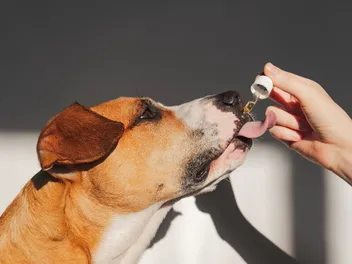
In severe cases, your vet may prescribe anti-anxiety medications. You may use them in conjunction with behavioral modification. However, it’s usually an option in extreme cases and not a go-to solution.
Prevention of Separation Anxiety
Prevention is always the best treatment for any health condition. Separation anxiety is no exception. Teaching your pup to be alone is an excellent start. If that’s impossible, check into a doggy daycare in your area. You can also explore the possibility of bringing your pet to work. Many companies are dog-friendly and realize the importance of this for their employees’ mental health.
We also suggest exercising your dog and feeding them, if applicable, before you leave. A good, long run and a full belly are just the things to encourage your pup to sleep while you’re away. Interactive toys are excellent ways to provide welcome mental stimulation for your pup. You can also try nose work games where your pet has to find hidden treats to occupy their time.
It’s imperative not to discipline your dog because of separation anxiety. Remember that there are genetic factors at work. Your pup isn’t trying to be spiteful. Your vet and a pet behaviorist can help you find a solution that works for your situation.

Before You Get a Dog
Pet ownership is a serious responsibility that no one should take lightly. Separation anxiety is a devastating condition for everyone. It is also preventable. We strongly urge anyone considering getting a dog to think carefully about their decision, particularly if they live alone and work outside the home. Consider your schedule and how much time you can realistically devote to a pet. Dogs are high-maintenance compared to other animals like cats. Most pups need at least an hour or more of activity daily. As lovable as they are, dogs aren’t the best choice for everyone.
Takeaway
If you can’t be sure you’ll have the time to devote to a pet, please reconsider your decision to get one.
Final Thoughts
Separation anxiety is challenging for you, your family, and your pet. While prevention is the best course of action, other ways exist to help you manage your dog’s condition. They require time and patience. However, if they can alleviate your pup’s distress, they’re worth the effort. Being alone doesn’t have to mean being lonely. Related Read:
Can You Leave a Dog in the Backyard While at Work? Facts & FAQs
Ask a Vet: Does Trifexis Really Kill Dogs or Is It a Myth? Facts Explained
Sources
https://www.ncbi.nlm.nih.gov/pmc/articles/PMC8879953/#B11-sensors-22-01556
https://bvajournals.onlinelibrary.wiley.com/doi/10.1136/vr.105789
https://springcreeklabradoodles.com/wp-content/uploads/2019/01/Critical-Periods-in-a-Dog-Life.pdf
https://www.sciencedirect.com/science/article/abs/pii/S1558787818302727?via%3Dihub
https://www.merckvetmanual.com/dog-owners/behavior-of-dogs/behavior-modification-in-dogs
https://www.rspca.org.uk/adviceandwelfare/pets/dogs/training/leftalone
Featured Image Credit: sophiecat, Shutterstock
Expert dog care, straight to your inbox
Vet-reviewed advice, training tips, and the best of Dogster. Free, and you can unsubscribe anytime.
By signing up, you agree to our Terms & Conditions and Privacy & Cookies Policy.
Since 2009, Chris has written on a variety of topics. Her motto with all of her writing is “science-based writing nurtured by education and critical thinking.” She specializes in scientific topics, with a special love for health and environmental topics, and of course, pets of all shapes and sizes.
Chris lives happily with her husband and three cats in the land of 10,000 lakes, writing, wining, and boating as much as she can. She and her husband, Norm, were awarded the State of Kentucky Colonel Honor for their restoration work at Mammoth Cave National Park.
Join the conversation
Ask a question, share your story, or send private feedback.