Green Dog Poop: 4 Vet-Verified Causes & Facts


In this article
It may not be a very glamorous topic, but it’s important for us as dog owners to keep an eye on the appearance of our dog’s poops. Your dog’s poop can tell you a lot about their health, like making you aware of the presence of intestinal parasites or digestive problems. If you’ve found yourself asking “Why is my dog's poop green?” The good news is that this is typically not cause for concern, but there are a few reasons that your dog’s poop might be green.

The 4 Causes for Green Dog Poop
1. Eating Grass
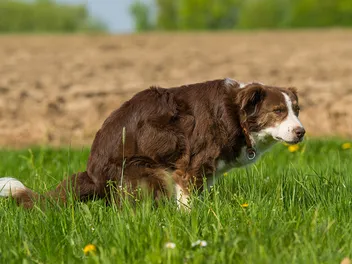
Although there’s a belief that if your dog is eating grass you should be concerned, this isn’t always true. Some dogs simply enjoy the taste of grass, or they may be bored and it’s accessible to them. Some dogs will eat grass if their stomach is upset, but this should only be a concern if your dog is regularly eating grass and then throwing up or having diarrhea.

2. Green Treats
Dog treats containing green dyes can lead to green dog poop. This can happen with artificial or natural dyes, so don’t count on natural dog treats to not cause green poop if they’re green in color. Greenies and other green-colored treats are often the culprits in causing green dog poop, especially if you feed them to your dog every day.
3. Toxin Exposure
Although green dog poop isn’t usually a major concern, this can be a cause for concern because many rodenticides and snail baits are green in color. If your dog has consumed mouse or rat poison that is green in color, then there’s a chance that you’ll notice green dog poop.
It’s absolutely essential to your dog’s safety that you always keep rodenticides and pesticides out of reach. If you suspect your dog has eaten any type of rodenticide or other toxin, you should immediately contact a pet poison hotline while you drive to the nearest veterinarian. This should be treated as a medical emergency.

4. Bile
Bile is a liquid produced in the liver. When bile is released from the gall bladder into the intestines it is a yellow-green color. Normally bile in its true form is not seen in the poop, but in some cases of digestive upset, it ends up there, causing a green stool.
When Should I Call My Vet?
If your dog is having digestive problems, then it’s a good idea to call your vet. This can indicate anything from parasites to nutritional deficiencies to intestinal obstructions. You should also head straight to the vet if there is any possibility that your dog consumed rat poison or other green toxins.
Even if you didn’t put anything out, there’s a possibility that your dog will find rodenticides that were left by previous homeowners or tenants, or that were put out by neighbors. Your dog may take three days or more to start showing signs of rodenticide poisoning. Even if your dog seems fine now, it’s worth getting them checked over. Rodenticide causes blood clotting problems that can be easily missed until your dog has lost a critical amount of blood.
The Perfect Poop
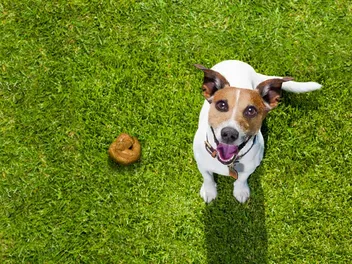
Pay attention to the four C’s when it comes to dog poop: color, consistency, content, and coating. A perfect poop will be a chocolate color but can be golden or darker brown. The “content” will likely be explored by your vet, but if you see anything abnormal, like rice-like white pieces, then they could have parasites. Mostly, you shouldn’t see much of anything inside the poop. The consistency will be a little firm. Finally, there won’t be a coating on healthy feces. The perfect poop for dogs is chocolate brown, slightly firm, and coating-free.

Conclusion
Green dog poop is rarely a cause for concern, but it can be something worth talking to your vet about. If your dog regularly has green poop because of the amount of grass they’re eating, then it’s best to talk to your vet about potential causes and remedies. If green dog treats are causing green dog poop, don’t worry. Any vomiting or poop with a runny consistency is a reason to head to your veterinarian, as is exposure to green toxins.
See also:
Sources
Featured Image Credit: SasaStock, Shutterstock
Expert dog care, straight to your inbox
News, insights, expert advice, and everything dog.

No spam — unsubscribe anytime.
By signing up, you agree to our Terms & Conditions and Privacy & Cookies Policy.
How useful was this post?
Click a star to rate. You can leave written feedback afterwards. (We read all feedback.)
Brooke Billingsley spent 9 years as a veterinary assistant before becoming a nurse in 2013. She lives in Arkansas with her boyfriend, and loves all animals; currently sharing a home with three dogs, two cats, five fish, and two snails. She has a soft spot for special needs animals and has a three-legged senior dog and an internet famous cat with acromegaly and cerebellar hypoplasia. Fish keeping has become a hobby of Brooke’s and she is continually learning how to give her aquarium pets the best life possible. Brooke enjoys gardening and keeps a vegetable garden during the summer months. She stays active with yoga and obtained her 200-hour yoga teacher certification in 2020. She hosts a podcast focusing on folklore and myth and loves spending her free time researching and writing. Brooke believes that every day is an opportunity for learning and growth and she spends time daily working toward new skills and knowledge.