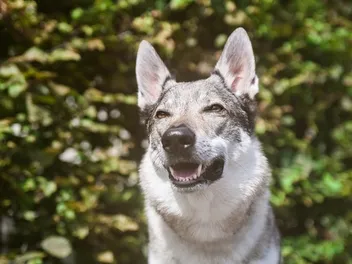
15 Snow Dog Breeds That Love Wintery Weather: Info, Pictures & Facts

Not all dogs are made to withstand freezing weather, though some breeds were specifically bred to thrive in such conditions. If you live in an area that experiences true winter, with its frigid temperatures and mountains of snowfall, you might want to consider adopting a dog that flourishes in the cold. Read on to learn more about snow dogs, including 15 of the winter-loving breeds that were built for surviving and thriving in even the most unforgiving climate.

How Are Snow Dogs Classified?
The major physical characteristic that makes a dog well-equipped for wintery weather is their thick fur coat. Snow dogs typically have dense undercoats and overcoats to help provide insulation from the cold weather. They might also have tough and flat feet to help them traverse snowy terrain and thick ears that help them retain heat. Additionally, all the breeds listed here have ancestors hailing from frigid regions of the world, though today, they’re found worldwide. Surviving and thriving in wintery conditions is practically coded into their DNA.
The 15 Snow Dog Breeds
1. Siberian Husky

Breed Overview
Origin:
Lifespan:
Group:
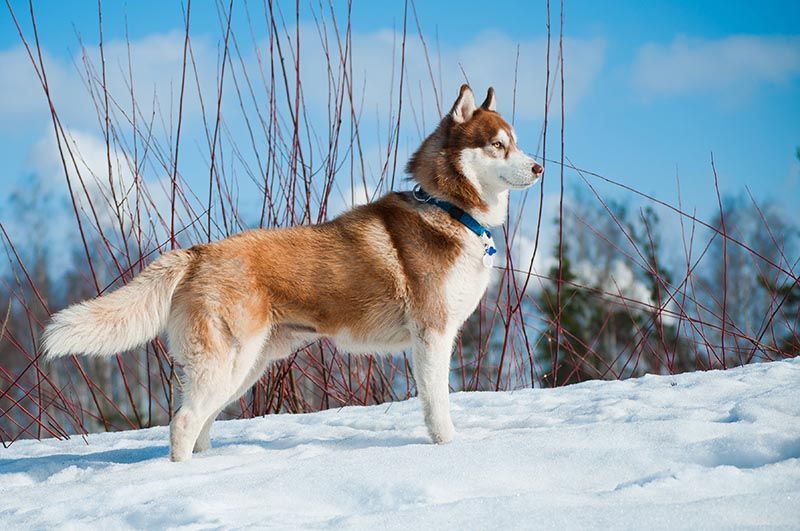
Siberian Huskies originated in the cold climate of Northern Asia and sports a coat thicker than most other breeds. Their erect ears and sickle-shaped tails are also great indicators that this breed has a northern heritage. They were first bred to be sled dogs by the semi-nomadic Chukchi people. They needed to expand their hunting grounds when climate changes arose, so they developed the Siberian Husky to help them haul loads across frozen wastelands in frigid temperatures.
2. Samoyed

Breed Overview
Origin:
Lifespan:
Group:
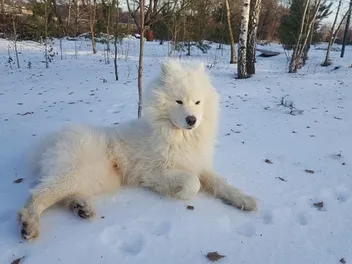
The Samoyed was initially bred by the Samoyede, a semi-nomadic group of people from whom they also took their name. The dogs were originally bred to herd reindeer and double as sled pullers when necessary. Their thick double coats are woolly to help insulate them against extreme temperatures. This breed is known for their sweet, upturned mouths, affectionately known as the “Samoyed Smile.” This trait is more than just an adorable physical feature, however; it's necessary to prevent icicle formation in frigid temperatures.
3. Alaskan Malamute

Breed Overview
Origin:
Lifespan:
Group:
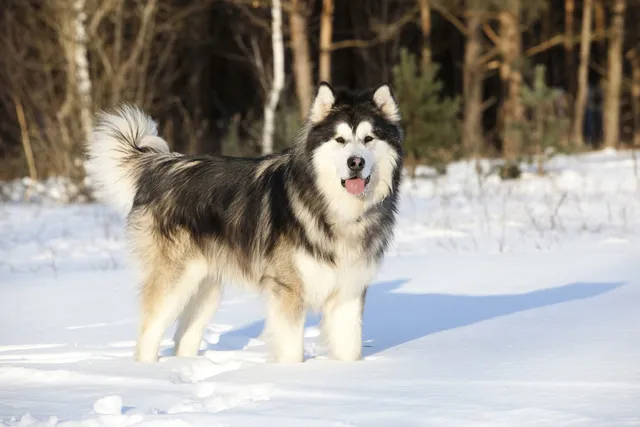
The Mahlemut tribe of northwestern Alaska originally bred the Alaskan Malamute. They were developed to work in packs to haul heavy sleds over long distances. Unlike some of the other sled dogs on this list, the Alaskan Malamute worked more as a freighter, carrying heavy loads at low speeds compared to light loads at fast speeds like the Siberian Husky.
4. Bernese Mountain Dogs

Breed Overview
Origin:
Lifespan:
Group:
Bernese Mountain Dogs are good-natured and calm dogs originally bred to drive cattle and guard farmyards, though they were also sometimes used as drafting dogs. Their thick double coats protected them from the frigid temperatures of their homeland, enabling them to do the work required of mountain farm dogs.
5. American Eskimo Dogs

Breed Overview
Origin:
Lifespan:
Group:
The American Eskimo Dog’s name is a misnomer: They did not originate in America, nor did the Eskimo peoples have anything to do with their formation. These dogs thrive in cold climates due to their thick double coats and small yet thick ears that enable them to retain their body heat in frigid temperatures.
6. Saint Bernard

Breed Overview
Origin:
Lifespan:
Group:
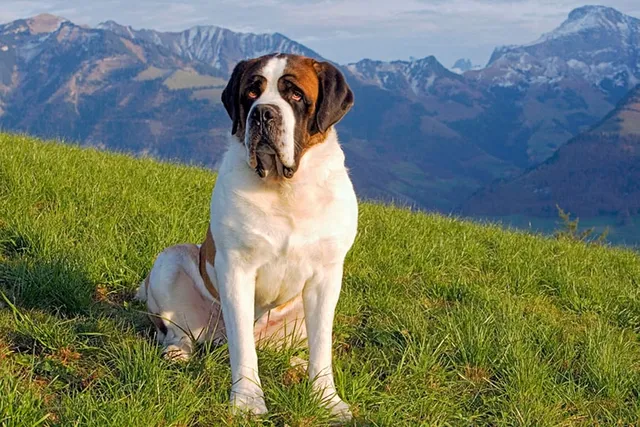
Saint Bernards have been used for centuries as search-and-rescue dogs, finding people buried in the snow. According to the Smithsonian Magazine, St. Bernards saved around 2,000 people in a 200-year span, not only by rescuing them from avalanches and snow drifts but also by keeping the injured warm by lying on top of them with their big bodies and thick coats.1 While many still work as avalanche rescue pups, their friendly and calm temperament makes them fantastic family companions.
7. Norwegian Elkhound

Breed Overview
Origin:
Lifespan:
Group:
The Norwegian Elkhound is one of Europe’s oldest breeds. These dogs acted as shipmates for the Vikings and guardians and herders for remote farms. They were also used to hunt large game like moose and wolves. Norwegian Elkhounds were bred to work outside in cold weather. Their smooth outer coats and woolly undercoats keep them comfortable in frigid temperatures.
8. Keeshond

Breed Overview
Origin:
Lifespan:
Group:
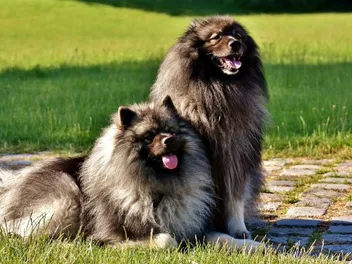
Keeshonds are fluffy coated dogs originally bred to patrol barges and riverboats in Holland. Their luxurious double coat consists of a coarse outer layer and a soft, downy undercoat that worked wonders for keeping them warm in Holland’s sometimes unforgiving wintery weather.
9. Finnish Lapphund

Breed Overview
Origin:
Lifespan:
Group:
The Finnish Lapphund was originally bred to herd and hunt reindeer over expanses of barren tundra. These dogs are highly sociable, likely due to the fact that they spent thousands of years huddling together with their owners for warmth on ferociously frigid evenings. They have a water-resistant and profuse double coat, with a longer topcoat and fluffy undercoat that keeps them dry and warm in unpredictable weather conditions.
10. Newfoundland

Breed Overview
Origin:
Lifespan:
Group:
Newfoundlands—also affectionately known as Newfies—are well-suited to winter, as the breed originated in Newfoundland and Labrador, a province on the east coast of Canada. Canadian fishermen originally used them for water rescues in the frigid Atlantic, so Newfies needed heavy, water-resistant coats to protect themselves from the icy waters.
11. Tibetan Mastiff

Breed Overview
Origin:
Lifespan:
Group:
Although no one knows when exactly the Tibetan Mastiff was developed, they’re generally considered one of the most ancient breeds. The earliest individuals were used as guard dogs for livestock in the mountainous regions of Central Asia. These giant pups are known for their ultra-thick and woolly coats and manes that they needed to keep them warm in the mountains.
12. Old English Sheepdog

Breed Overview
Origin:
Lifespan:
Group:
Old English Sheepdogs are instantly recognizable due to their long, thick, and shaggy coats and peek-a-boo hair that covers their eyes. Their double coats require much maintenance with at the bare minimum, a grooming down to the skin at least once a week. They were originally bred to herd sheep and cattle into the major city markets of England.
13. Great Pyrenees

Breed Overview
Origin:
Lifespan:
Group:
The Great Pyrenees was originally bred centuries ago for working with shepherds and herding dogs in the area between France and Spain known as the Pyrenees Mountains. They were expected to watch over the flock and deter dangerous predators like bears or wolves. Their thick, double coats are shockingly easy to care for, as they’re naturally dirt- and tangle-resistant.
14. Akita

Breed Overview
Origin:
Lifespan:
Group:
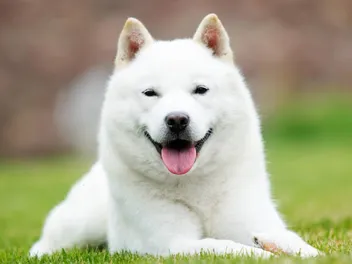
The Akita was originally bred in the mountainous regions of northern Japan. They have a plush and dense double coat that served them well while they hunted alongside their owners in the mountains, targeting Asian black bears, Japanese macaques, and rabbits.
15. Tibetan Terrier

Breed Overview
Origin:
Lifespan:
Group:
The Tibetan Terrier was built to withstand the extreme temperatures and climate in their homeland of Tibet. Their large and flat feet provide much-needed traction for traveling in the snow, and their thick, double coat offers warmth for frigid temperatures. This breed was originally bred to serve many purposes, including acting as good luck charms in the monasteries of Tibet, as mascots, as watchdogs, and as herding dogs.
Conclusion
Remember, although these breeds were developed to survive in freezing conditions, that doesn't mean they're immune to cold-related health problems like frostbite and hypothermia. You should still take steps to protect your snow dog from these issues, such as limiting time spent outdoors, utilizing canine coats and boots, or just staying inside until the weather improves. You should also ensure that they are drinking enough water (snow doesn't count!) and eating enough food to compensate for the energy burned keeping warm.
See also:
Featured Image Credit: otsphoto, Shutterstock
Expert dog care, straight to your inbox
News, insights, expert advice, and everything dog.

No spam — unsubscribe anytime.
By signing up, you agree to our Terms & Conditions and Privacy & Cookies Policy.
How useful was this post?
Click a star to rate. You can leave written feedback afterwards. (We read all feedback.)
Chantelle is passionate about two things in her life – writing and animals. She grew up on the prairies of Canada surrounded by animals and as an adult, she choose to share her home with five cats, two guinea pigs, and a bearded dragon. Chantelle, her husband, and their child take great pride in being great animal parents- the ones who spend a thousand dollars on wall-mounted cat shelves so that their cats can have an indoor jungle gym all year round. When Chantelle isn’t snuggling her cats on the couch or taking pictures of them being funny, she’s outside exploring in the Rocky Mountains, binging the same shows on Netflix over and over, and reading about whatever random topic pops into her brain.