15 Dog Breeds With Curly Tails: Info, Pictures & History

In this article
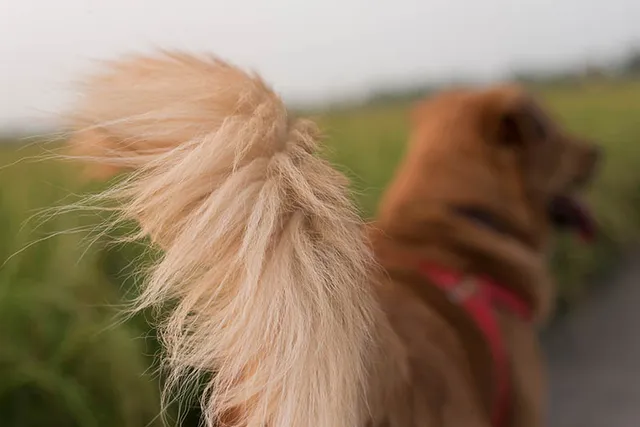
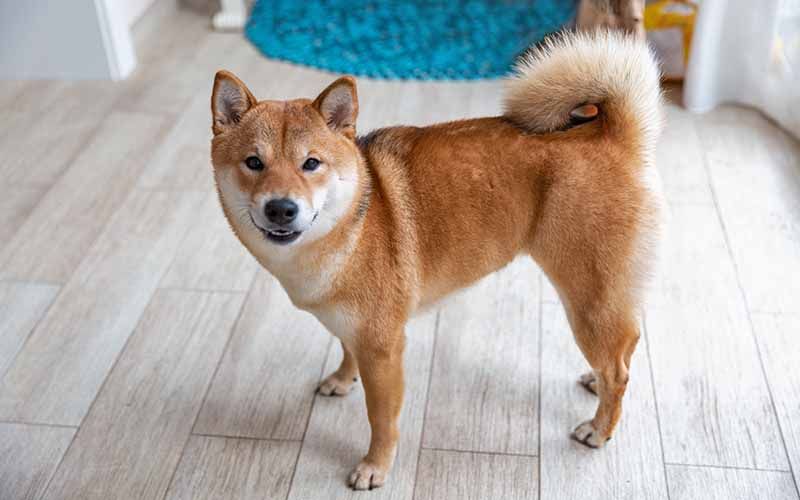
Curly tails on dogs are very cute, and there are quite a few breeds, common and rare, that have curly tails. Some of the curly-tailed breeds may be dog breeds you have never heard of or seen before, while others probably live in your neighborhood. Curly tails are caused by a dog’s genetics. Let us check out 15 curly-tailed dog breeds you might come across.

The 15 Dog Breeds With Curly Tails
1. Shiba Inu

Breed Overview
Height:
Weight:
Origin:
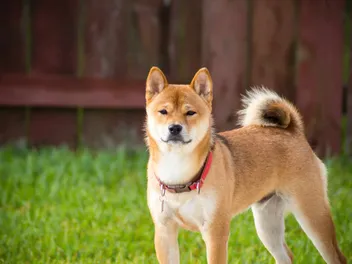
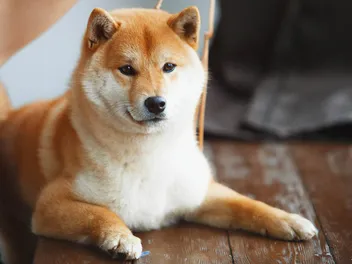
The Shiba Inu may not be a dog that you see every day in the US, but this breed is the most common companion dog in Japan. This breed originated in Japan and has been around since approximately 300 BCE. Like many dog and cat breeds, the breed nearly went extinct during World War II, but it was able to be saved. Shiba Inus are growing in popularity in the US, and they’re loved by many for their attentive, intelligent nature.
2. Akita

Breed Overview
Height:
Weight:
Origin:
The Akita is a large to giant breed that originated in Japan. The breed was developed in the 17th century, and thanks to their popularity in Japan throughout the centuries, they are often associated with myth, legend, and superstition. When children are born, the parents may be presented with an Akita figurine, which symbolizes a long life filled with happiness.
Akitas are extremely loyal dogs that will fiercely protect their people. They can be quite stubborn and aloof with strangers, and they require proper socialization from an early age.
3. Alaskan Malamute

Breed Overview
Height:
Weight:
Origin:
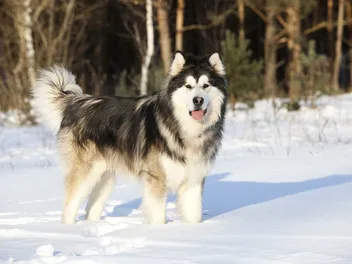
The Alaskan Malamute is often confused with the Siberian Husky, but this breed is much larger and stronger than its sled dog cousin. They were developed for hauling heavy loads at low speeds for long distances, while Huskies were developed for quickly moving lightweight loads.
The breed was developed in Alaska, and it was developed by the Mahlemiut, an Inuit tribe indigenous to the Kotzebue Sound in Northwestern Alaska. It is an old breed that was developed when Alaska was not part of the United States. The Malamute is a big softie, well known for their playful and affectionate temperament, as well as their loyalty. However, they can be strong-willed and stubborn, so they require an experienced dog trainer.
4. Samoyed

Breed Overview
Height:
Weight:
Origin:
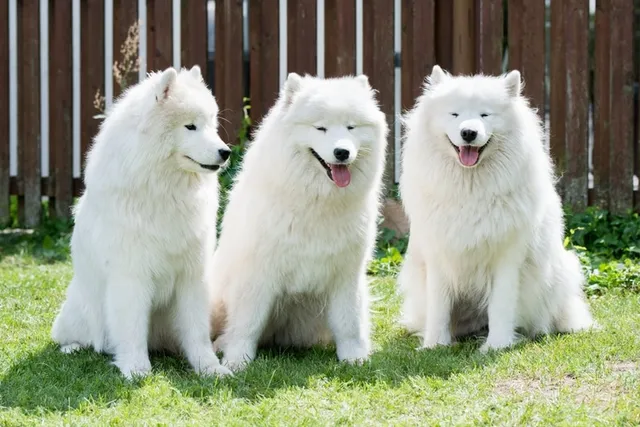
The Samoyed is another ancient breed that was developed in the Arctic. The Samoyedic peoples developed the earliest Samoyeds into dogs that earned their keep by working as watchdogs and hunters, especially of reindeer, which were a vital source of food and supplies to the Samoyedes. Eventually, the breed also became a herding dog as keeping livestock became more common.
It wasn’t until the 18th century that this breed was introduced to Europe. The first Samoyed was accepted into the AKC in 1906. This breed is known for its adaptability and gentle but friendly nature.
5. Chow Chow

Breed Overview
Height:
Weight:
Origin:
The Chow Chow is an ancient dog breed that has been depicted in Chinese artifacts as far back as 206 BCE, although it is suggested that the breed is far older than this. Long ago, they were companions to nobility and royalty in China. They grew in popularity over time, though, and were used for a variety of jobs, including hauling, guarding, and hunting.
Unfortunately, the Chow Chow even served as a food source when rations were low, due to their muscular build. An ancient nickname of the Chow Chow is “Edible Dog.” It wasn’t until the 1800s that this breed was introduced to the Western World, and thanks to Queen Victoria, they gained a boost in popularity quickly.
6. German Spitz

Breed Overview
Height:
Weight:
Origin:
The German Spitz is considered the oldest breed of dog within Central Europe, and evidence of this breed has been found in artifacts from multiple countries, making its original origin somewhat of a mystery.
This breed comes in three sizes: toy, medium, and large. In older times, the breed earned its keep as a guard dog and herder. The white coat color was especially sought after by shepherds since the white, fluffy coat made the dogs easy to distinguish from wolves and other predators. The German Spitz was introduced to the US in the 19th and 20th centuries as people immigrated from Germany to the US.
7. American Eskimo Dog

Breed Overview
Height:
Weight:
Origin:
The American Eskimo Dog is an adaptable breed that comes in three varieties: toy, miniature, and standard. The breed’s name itself is a misnomer, as the Inuit people had nothing to do with the development of this breed.
In the 19th and 20th centuries, German immigrants began bringing their German Spitz dogs to the US with them. As they began to settle into farming in the Midwest, the American Eskimo Dog was developed from the German Spitz. Early on, the American Eskimo Dog and German Spitz were actually the same breed of dog. During World War I, the name was changed to American Eskimo Dog to reflect a prejudice against all things German. This breed is known for being highly trainable and intelligent.
8. Keeshond

Breed Overview
Height:
Weight:
Origin:
The Keeshond isn’t a breed you see every day, but when you do spot one, you can’t miss them, thanks to their huge, fluffy coat. This breed originated in Holland and was used as a guard and companion dog on Dutch barges.
Although quite high maintenance by today’s standards, the Keeshond was considered to be a dog of the people. In fact, the breed was a symbol of the Dutch Patriots Party in the 18th century. This lively breed is loved for their friendly and outgoing nature, as well as their highly sociable temperament with animals and children alike.
9. Pug

Breed Overview
Height:
Weight:
Origin:
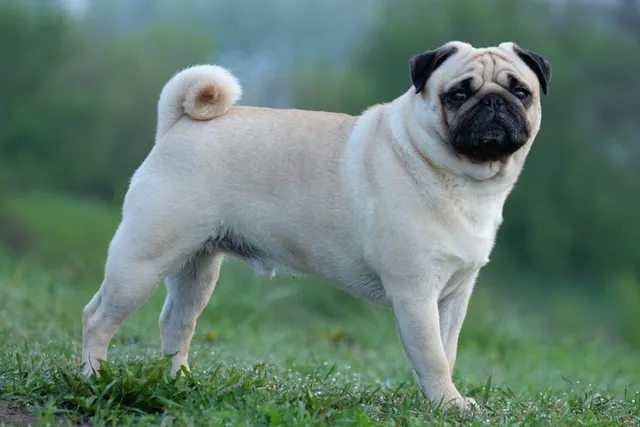
The Pug is a popular breed today, but this ancient breed has been traced back at least 2,000 years. Like their cousins, the Pekingese and Shih Tzu, the Pug was developed as a companion dog for Chinese royalty and members of the imperial court. This breed was jealously guarded, only being awarded to high-ranking people outside of the royal family as a gift.
Although a common breed, you might be surprised to know that the Pug breed actually goes by many names across the world, including Doguillo in Spain, Mopsi in Finland, and Mophond in Holland.
10. Pomeranian

Breed Overview
Height:
Weight:
Origin:
The Pomeranian may be a tiny dog, but this breed actually descended from the sled dog breeds that were developed in the harsh Arctic. Also known as the Zwergspitz, the Pomeranian is the smallest of all Spitz-type breeds. This breed has been around for a few hundred years, but it wasn’t until Queen Victoria’s reign that the Pomeranian became popular.
Queen Victoria also had a hand in developing the breed into what it is today, as she began working on breeding her dogs down from around 30 pounds to the tiny dogs we know today. It’s said that when Queen Victoria passed away in 1901, her favorite Pomeranian, Turi, was lying at the foot of her bed.
11. Basenji

Breed Overview
Height:
Weight:
Origin:
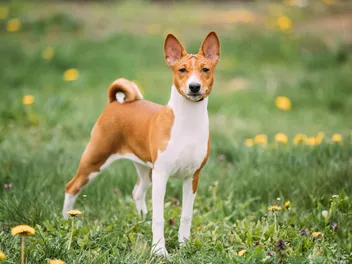
The Basenji is a top contender for being the oldest dog breed in the AKC. It’s unclear where the breed originated exactly, but we do know that Basenjis were brought to Egypt as gifts for ancient pharaohs as an already developed breed. They were loved by hunters for their fast running speed, excellent sense of smell, and strong eyesight. They’re athletic dogs that can jump high and are great dogs for agility competitions. Although this breed has been around for a very, very long time, it wasn’t introduced to England until 1895.
12. Finnish Spitz

Breed Overview
Height:
Weight:
Origin:
The Finnish Spitz, like the German Spitz, is a descendant of ancient Spitz-type dogs. Considered to be Finland’s most popular dog breed, the Finnish Spitz is known as Suomenpystykorva in their native country. These adaptable dogs are excellent bird hunters, often being used for flushing out gamebirds.
By 1800, the Finnish Spitz was in trouble, verging on extinction. Thanks to two Finnish enthusiasts, the breed was saved. In the 1920s, the breed’s nickname among its admirers was born: the Finkie.
13. Norwegian Elkhound

Breed Overview
Height:
Weight:
Origin:
The Norwegian Elkhound is uncommon breed in the US, but this breed has been around for thousands of years. An Elkhound was found buried with his Viking master, and an Elkhound skeleton was even found buried in a cave among Stone Age tools dating to between 5,000 and 4,000 BCE.
As the name implies, the Norwegian Elkhound was developed to hunt large game, primarily elk, but they were also used to hunt moose and other large game. They have a keen sense of smell and great stamina, allowing them to chase game across long distances and hold it at bay until the hunter arrives.
14. Bichon Frise
Breed Overview
Height:
Weight:
Origin:
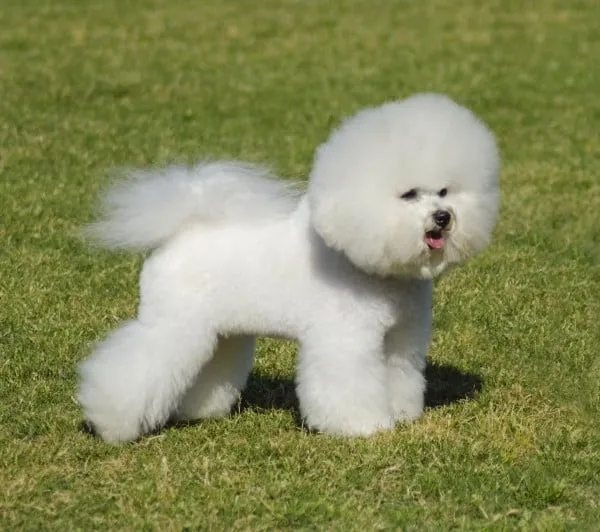
The Bichon Frise may be known for their fluffy, white coats, but there is a curly tail underneath that coat. This is an old breed that has been associated with European nobles since the 13th century. They were especially associated with the royal courts of France, Italy, and Spain.
During the French Revolution, many Bichons quickly found themselves homeless after their masters were killed. It was at this time that commoners discovered how bright and trainable the breed is, which started this breed’s job as a circus dog and street performer. Once again, World War I and World War II almost caused the breed to go extinct, but a handful of fanciers of the Bichon were able to save the breed.
15. Canaan Dog

Breed Overview
Height:
Weight:
Origin:
The Canaan Dog has been around for a long time, and there are some artifacts depicting dogs that look remarkably similar from as far back as 4,000 years ago. The breed originated in modern-day Israel, Palestine, and Lebanon, and the Canaan was prized for herding and guarding livestock. In 70 CE, the Romans took control of much of the Middle East, which left these dogs homeless.
This is an exceptionally hardy and intelligent breed, though, and the Canaan Dog survived as a feral breed in the Negev Desert until the 20th century. The dogs were captured and trained after the foundation of the State of Israel when they were needed to guard settlements and to aid the fledgling army.
Conclusion
If you’re charmed by dogs with curly tails, there is no shortage of dog breeds that could be right for you. Many of these breeds are ancient, including some of the more common breeds on the list. Make sure to thoroughly research any breed before settling on bringing a dog home, though. Some of these curly-tailed dogs can be quite a handful, so make sure you know what you’re getting yourself into!
Featured Image Credit: Sergiy Palamarchuk, Shutterstock
Expert dog care, straight to your inbox
News, insights, expert advice, and everything dog.

No spam — unsubscribe anytime.
By signing up, you agree to our Terms & Conditions and Privacy & Cookies Policy.
How useful was this post?
Click a star to rate. You can leave written feedback afterwards. (We read all feedback.)
Brooke Billingsley spent 9 years as a veterinary assistant before becoming a nurse in 2013. She lives in Arkansas with her boyfriend, and loves all animals; currently sharing a home with three dogs, two cats, five fish, and two snails. She has a soft spot for special needs animals and has a three-legged senior dog and an internet famous cat with acromegaly and cerebellar hypoplasia. Fish keeping has become a hobby of Brooke’s and she is continually learning how to give her aquarium pets the best life possible. Brooke enjoys gardening and keeps a vegetable garden during the summer months. She stays active with yoga and obtained her 200-hour yoga teacher certification in 2020. She hosts a podcast focusing on folklore and myth and loves spending her free time researching and writing. Brooke believes that every day is an opportunity for learning and growth and she spends time daily working toward new skills and knowledge.