
Pitbull Ear Cropping: Why Is It Done & Is It Cruel? (Vet-Approved)


In this article
View 8 More +Note: While people have different beliefs on the topic of ear cropping, we do not advocate this practice. This article is meant to explain and not encourage ear cropping.
Pitbull ear cropping is a controversial topic. Some people think that it’s barbaric and cruel, while others think that it is an acceptable procedure. While we don’t advocate ear cropping, we will take a look at a few of the reasons that it is done today.

What Is Ear Cropping?
Ear cropping is performed on Pitbulls when they are between 6 and 12 weeks old. This is often done by a veterinarian on an anesthetized dog. Unfortunately, especially in underground dog fighting rings, the ears of the dogs will be cut off by people using knives, razor blades, and scissors without the dog receiving any anesthetic. The ears will usually heal unevenly and look lopsided when this is done. Sometimes, the ears are cut so close to the head that the dog looks like they don’t have any. Performing this procedure unprofessionally on dogs that are over 12 weeks of age can cause lasting damage and extreme pain and force them into a longer recovery. Unprofessional procedures also mean the desired effect may not even take place once the ears heal. They can still flop and not stand up straight.
When this procedure is done properly by a professional, the floppy part of the ear, called the pinna, is cut off to make the ears stand up straight. The cut ears are then taped to a hard frame around the ears for several weeks so the ears heal in an upright position.
Finding a veterinarian to do this procedure may not be easy. This technique is not taught in veterinary school. Veterinarians who wish to perform this procedure will have to learn from other vets either by assisting in surgeries or watching them being done. That means there isn’t a universal way to do this, and one dog’s cropped ears may look different from another’s.

Natural Pitbull Ears
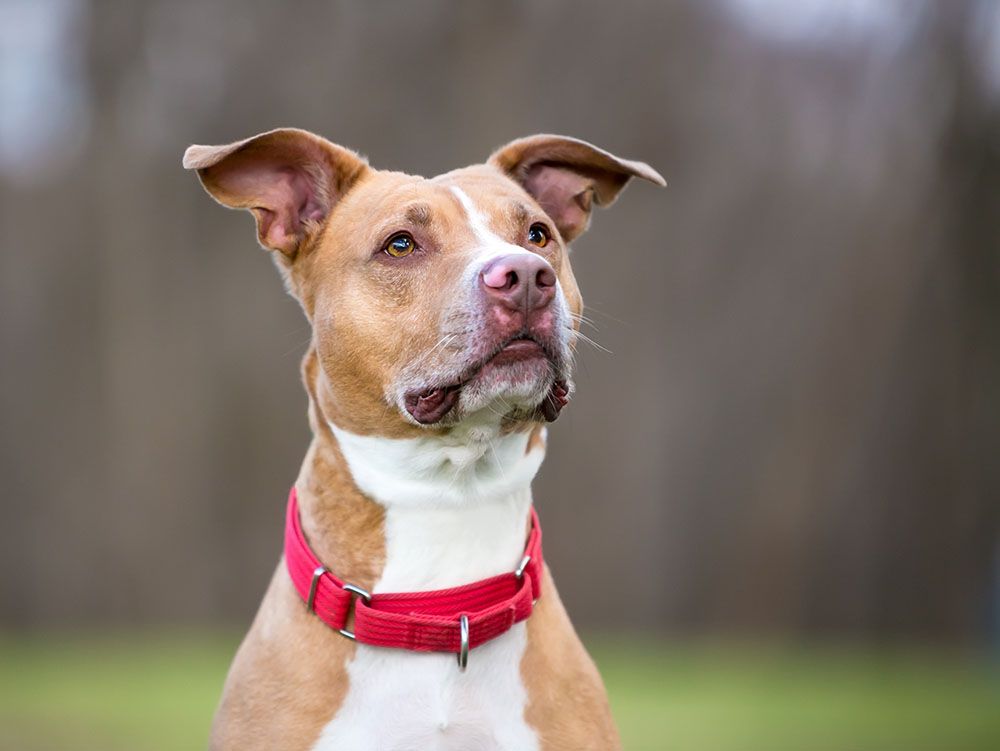
Pitbulls naturally have ears that resemble those of Labradors. The ears may become more erect as the dog gets older, and they have little curls at the top, giving the dog a happy, inquisitive look. Some people prefer the natural look of the ears.
Ear Cropping History
Ear cropping is said to have started in ancient Rome when dog fights would result in ear injuries. By cropping the ears, they could not be damaged as easily. Since ears are easy targets, they were often torn or bitten off, causing tremendous pain to the dog and causing them to lose the fight. Today, the practice is still used for this purpose even though dogfighting is illegal in many areas.
Ear cropping was also performed on working dogs that guarded livestock or hunted prey. If the dog may have to fight with a predator, cropping their ears was a way to avoid injury to them.
It’s also said that cropping would enable the dog to avoid ear infections, although this has not been proven to be true. Dogs can get ear infections whether they have cropped ears or not.

Why Is Ear Cropping Done Today?
The American Veterinary Medical Association opposes ear cropping. However, the practice is still done today for various reasons.
Appearance
Some people prefer the look of cropped ears and think that they make the dog look more aggressive. If they are using their Pitbull to try to protect themselves or their property, they may want a vicious-looking dog. Floppy ears won't always accomplish that look.
Cosmetic reasons are the driving force behind most ear-cropping procedures performed on dogs today. If the dog is a family pet, the historic reasons for getting the ears cropped are no longer necessary.
Breed Standard
When it comes to cropping ears, some Pitbull owners feel that they don’t have a choice. They think that ear cropping must be done in order to have a “true Pitbull.” The American Kennel Club (AKC) approves of ear cropping, stating, “The American Kennel Club recognizes that ear cropping, tail docking, and dewclaw removal, as described in certain breed standards, are acceptable practices integral to defining and preserving breed character and/or enhancing good health. Appropriate veterinary care should be provided.”
Of course, it is worth noting that the Pitbull has not been officially recognized as a breed by the AKC, so the argument of adhering to a breed standard really doesn’t apply.
Some dog shows won’t allow a dog to compete unless the ears are cropped. The AKC will allow dogs with cropped or uncropped ears to be shown, depending on the breed. For the American Staffordshire Terrier, cropped and uncropped ears are both accepted in the breed standard but uncropped are now preferred by the AKC.

False Beliefs
Dog owners believe that dogs with cropped ears have better hearing, fewer ear infections, and better ear health. None of these things have been proven to be true.
Sound is supposed to be better able to reach the ear canal of cropped ears without the pinna blocking any of it, enabling dogs to be more aware of predators. But floppy ears don’t block the ear canals of Pitbulls, and there’s no evidence of dogs with cropped ears being able to hear any better than those with uncropped ears.
Banned Practice
Ear cropping is banned in Australia, New Zealand, and parts of Europe. The practice is regulated in the United States in Connecticut, Illinois, Maine, Maryland, Massachusetts, New Hampshire, New York, Pennsylvania, and Washington State.
Controversy
Some people, including animal rights activists, equate ear cropping to torture and mutilation. Since the procedure is mainly done today for cosmetic purposes only, they don’t see any valid reason for ear cropping to happen at all.
Since the AKC is not opposed to ear cropping, it perpetuates this cruel and unnecessary practice, with those who support ear cropping arguing that if the AKC is for it, then it must be acceptable.
Crop Types
There are four different types of ear cropping:

Battle Crop
This is the shortest crop style and the ears sit close to the head. This is an aggressive look. While there are arguments for ear cropping saying that it keeps ear infections away, this style of the crop could cause more ear infections. The ear canal is exposed and has hardly anything to stop debris and moisture from entering.
This option doesn’t always result in erect ears either. With this style, the ears could flop over onto the head. There’s always a chance with any crop procedure that the dog’s ears won’t have the look that you desire.
Short Crop
These ears are left a little longer than the Battle style and look like two small points on each side of the dog’s head. Since Pitbulls have blocky heads, this style is a popular look.
Show Crop
Since there’s no guarantee that the ears will stand up straight after a crop procedure, the Show Crop is often selected because it has a high chance of producing erect ears. More of the ear is left in place and the ears look like two triangles on the dog’s head.
Long Crop
The Long Crop leaves the largest portion of the ears on the head while still giving them a pointed look.
Ear Cropping Pros and Cons
Deciding whether to crop your dog’s ears is, at the moment, a personal choice. At Dogster, we do not advocate ear cropping, and it’s important to consider the pros and cons of the procedure before making a decision.
Pros
Cons

Is Ear Cropping Cruel?
Ear cropping is widely considered to be a cruel and unnecessary procedure, particularly if it is performed in dogs older than 12 weeks old and by someone who is not a veterinarian. After 12 weeks, cartilage hardens, healing takes longer, and the procedure becomes riskier. This is often done by illegal dogfighters – without anesthetic – who want their dogs to be and look as mean as possible.
When done by a professional who administers anesthesia and pain medicine to a less than 12-week-old puppy, it's not quite as barbaric, as their ear cartilage is still soft and pliable, making healing faster and the chance of the ears standing higher. However, it is still an unnecessary surgery that provides no benefit to your dog.
Summary
At present, ear cropping is still legal in most US states, however, it is not a procedure taught in veterinary schools, and many veterinarians are reluctant to perform this surgery. Ear cropping is not beneficial to the dog, and can have long term health consequences and affect the way in which they express themselves, detect sounds, and are perceived by people and other dogs. Purchasing puppies with cropped ears will encourage breeders to continue to have the surgery performed, so if you are looking to adopt a pittie puppy, we suggest that you insist that your pup’s ears are left unaltered.
We love natural dog ears and don’t encourage ear cropping. However, it is also important to understand what is involved and why it is done, so that you can make an informed decision about what is best for your dog.
See Also:
Featured Image Credit: Mary Swift, Shutterstock
Expert dog care, straight to your inbox
News, insights, expert advice, and everything dog.

No spam — unsubscribe anytime.
By signing up, you agree to our Terms & Conditions and Privacy & Cookies Policy.
How useful was this post?
Click a star to rate. You can leave written feedback afterwards. (We read all feedback.)

Nicole has loved animals of all sizes her whole life so it's no wonder she has dedicated her career to helping them through what she loves best: learning, writing, and sharing knowledge with others. She’s the proud mom of two dogs, a cat, and a human. With a degree in Education and 15+ years of writing experience, Nicole wants to help pet parents and pets around the planet to live happy, safe, and healthy lives.