Will a Pitbull Be Good With My Kids? Temperament & Personality Traits


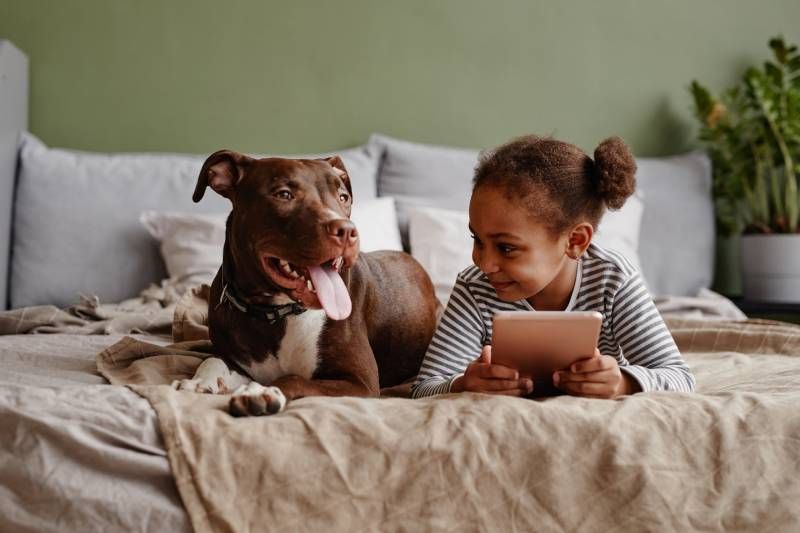
Pitbulls are often unfairly painted as being aggressive. Although there are certainly cases where these powerful dogs have inflicted life-altering, even fatal injuries, there is no evidence to suggest that they are more predisposed to aggression than any other breed. When trained and socialized properly, Pitbulls are loving, affectionate, and loyal dogs, so popular that they account for approximately 20% of the US dog population.1
Despite this, their reputation, however undeserved, makes some parents hesitant when it comes to bringing a Pitbull into their home. Of course, when the media is overrun with harrowing stories of Pitbull attacks, it’s hard to ignore. So what should you believe?
Are Pitbulls good with children? Are they safe to have around kids?
Keep reading to find out.

About Pitbulls
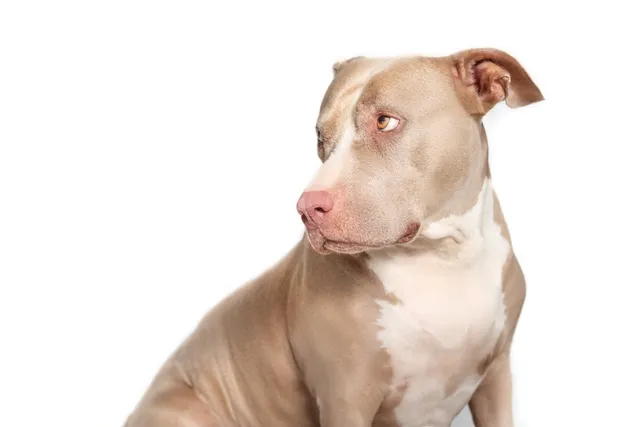
The Pit Bull was originally created in England for the barbaric sport of bull-baiting. They were the result of mixing several different dog breeds, including the English Bull Terrier, Staffordshire Bull Terrier, and Bulldogs, creating a medium-sized, strong, muscular dog.
When bull-baiting was outlawed in the 19th century, these dogs bred for the bull pits were often forced into dog-fighting rings. Their violent history, powerful jaws, and protective instincts have put them in a position of suspicion, and their variable genetics mean they often get blamed for attacks where the dog involved was of a bulldog/mastiff appearance.
At present, the American Kennel Club (AKC) does not recognize the Pitbull breed, partly due to their lineage, but largely because in some parts of the country, they are subjected to Breed Specific Legislation (BSL) that restricts or bans dogs that fit the “pitbull” description. To combat this, a separate kennel club, the United Kennel Club (UKC), was formed in 1898 with the specific intention of including the Pitbull.
Despite being illegal in all 50 states, sadly, dog fighting still does happen, but over the past few decades, the Pit Bull has been increasingly bred for good temperament, and not for their fighting skills. Although some fans of the breed choose them for their fearsome appearance, they are becoming more and more popular as family dogs.

Are Pit Bulls Dangerous?
Any dog, no matter the breed or size, has the potential to be dangerous, but some, due to their physical characteristics, have a greater capacity to cause serious damage if they bite. The dog breeds that are statistically known to be more likely to bite (eg, Chihuahuas, Dachshunds, Jack Russell Terriers) are not necessarily the most dangerous, due to their physical size and strength. Dogs like the Pitbull, Rottweiler, and Bull Mastiff may not necessarily be more aggressive, but due to their powerful jaws, a single bite from one of these dogs can be fatal.
Because Pitbulls are overrepresented in the pet dog population, they are also going to be overrepresented in dog bite incidents. That, combined with their high capacity to inflict severe wounds and their variable appearance, means that the Pitbull is statistically categorized as the most dangerous dog breed in the US. However, this does NOT mean that the Pitbull is inherently dangerous.
Just like any dog breed that was historically bred for fighting, there are genetic lines within the breed that are known to be more reactive and quicker to aggression. However, these traits are becoming less prominent, and generally speaking, the average Pitbull should be no more likely to attack humans or other animals than any other well-socialized dog.
Can Pitbulls be dangerous? Absolutely! They are large, powerful dogs with big, sharp teeth, and no child should ever be left alone in their company. But the same can be said for Labradors, Border Collies, Spaniels, Poodles… the list goes on. Young children and babies should ALWAYS be supervised around dogs, because even the most placid of pups can inflict serious damage if provoked, frightened, or in pain.
As Pitbulls are known to be loyal and protective of their families, it is also important to ensure they have been well socialized with other people, both for their safety and that of the dog.

Pitbulls and Kids
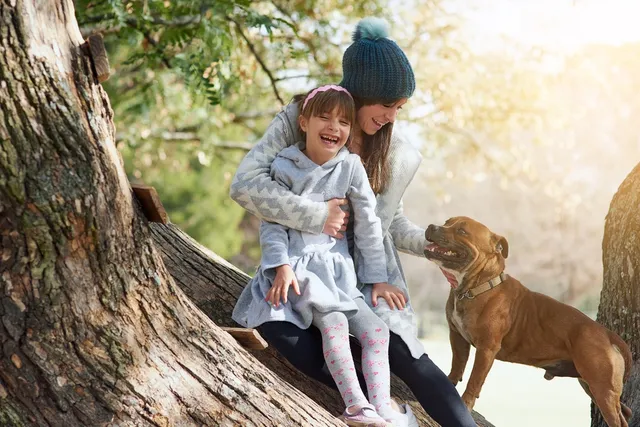
Pitbulls are known to be loving and affectionate family dogs, but as with any dog breed, you should socialize them early enough. Clear boundaries, consistent training, and early socialization are essential for any young dog, but especially for dogs that have
a higher physical capacity to cause injury, and
a genetic history of fighting or guarding.
Training and socialization should begin the minute your puppy comes home. Introduce them to the kids so they can learn to be comfortable around each other and eventually play with each other.
Socializing your Pitbull means allowing short supervised periods of interaction between the kids and the dog. Allow them to play with the kids, but always be on the lookout for any rough play or signs of aggression. Younger children need to be taught how to play with their canine family members, as they are at a physical disadvantage. Big puppies are more likely to view children as ‘litter mates’, and rough play, squealing, and shrieking can lead to a seriously over-excited dog, and that’s when accidents happen.
When your pup is small, mouthing and biting are going to happen, so it is essential that you intervene swiftly and decisively, and make sure the kids are not encouraging this behavior – a little nip might be cute when they’re only 8lbs, but it won’t be so cute when they’re pushing 80lb. Any biting or mouthing must be stopped with a firm and low “no!” – think of how an adult wolf would correct a cub. The ‘no bark’ is a useful tool for kids to practice, as their high-pitched voices are more likely to trigger excitement than act as a deterrent.
Have older children take charge of feeding. This places them in a leadership role for the puppy, encouraging the pup to see them as a provider, not a sibling.
Most importantly, always supervise play between kids and dogs, particularly when the dog is of a large breed like the Pitbull.
Pitbulls and Babies
While Pitbulls are typically great with kids, how well do they fare with babies? Do they even recognize babies, or are they indifferent to them?
Pitbulls aren’t inherently dangerous to babies, but there have been cases of Pitbulls – and other breeds – attacking newborns and infants, so introducing your dog to a baby should always be done with great care. There is a belief that some dogs feel jealous of babies and small children, and this may be true, but some dogs also see these helpless, tiny humans as something precious that must be protected and treated with the utmost care.
The sounds that babies make can often sound similar to squalling puppies or injured prey, and this can trigger different reactions from dogs. Dogs that get excited and worked up around high-pitched shouts, screams, or whistles may have a similar reaction to the cries of a baby, and an overly excited dog can be dangerous, even unintentionally, so it’s important to watch how your dog is reacting before allowing them near your baby. These sounds can also trigger a maternal, nurturing reaction; something that has often been seen in Pitbulls, so there is no ‘one rule fits all’ when it comes to dogs and babies.
Dogs in groups are more likely to exhibit pack-like behaviors, so extra caution should be taken if you have more than one dog in the home. As is the case with kids, no dog should ever be left alone with a baby, and you must ensure that dogs cannot access rooms where babies are sleeping.

Can Pitbulls Get Jealous of Babies?
Some Pitbulls may show signs of jealousy when a new baby enters the home, just as older siblings often do. This is more common in situations where the dog has been the ‘only child’ and is used to having all the attention. This sudden change can feel frustrating, threatening, or unsettling for your dog.
Signs of jealousy in Pitbulls include:
If you are seeing signs of jealousy, depression, or frustration in your dog, don’t ignore them. It doesn’t necessarily mean there is a risk of danger, but you may need to make a point of spending time with your dog so they don’t feel neglected. It is important, however, that your dog learns that the baby is a top priority and that they need to adjust to the change in the household dynamic. Don’t give cuddles, treats, or attention to your dog if they are acting out, but be sure to give them plenty of affection and positive reinforcement when they are being calm and patient.

Why Are People Scared of Pitbulls?
If this breed is so friendly and gentle, why are so many people scared of them? A few reasons explain the general fear of Pitbulls.
Pitbull Attack Statistics
Historically, Pitbulls have been responsible for almost 70% of all fatal dog bites in the US,3 and over half of these involved multiple dogs. So when you look at the statistics, you can understand why many people associate these dogs with danger. However, as we discussed earlier, Pitbulls also account for around 20% of the dog population, so it makes sense that they will be overrepresented in these figures.

Strong Bite Force
Pitbulls have a bite force of approximately 240 psi. This is easily enough to puncture your skin and leave a large wound. This strong bite is another reason that these canines are often considered dangerous and vicious (even though they don't have the strongest bite force, even among other dogs).
It is a common misconception that the Pitbull can lock its jaw when it bites, but this is just a myth, likely a reflection of the strength of their bite and their reluctance to let go.
Dog Fights
Pitbulls were originally bred to “bait” bulls, meaning they were often abused and starved to make them aggressive. They also have muscular bodies, making them quite powerful. Their proficiency at dog fights and other violent sports made them animals to reckon with. Unfortunately, this also permanently damaged their reputation.

Conclusion
Pitbulls can be great family dogs, but, of course, they need to be trained and socialized accordingly. Pitbulls can be extremely friendly and loving, but they are powerful and protective, and are better suited to experienced owners. Remember to socialize your dog the moment that they set paw inside your home.
Also, teach your dog to read your children's cues and vice versa to ensure that everyone's always on the same page. When it comes to dogs and children, teaching kids how to behave around dogs is just as important, if not more so, as teaching your dog. An animal behaviorist or professional dog trainer can also be helpful if you need a little more guidance.
See also:
Featured Image Credit: SeventyFour, Shutterstock
Expert dog care, straight to your inbox
News, insights, expert advice, and everything dog.

No spam — unsubscribe anytime.
By signing up, you agree to our Terms & Conditions and Privacy & Cookies Policy.
How useful was this post?
Click a star to rate. You can leave written feedback afterwards. (We read all feedback.)
Nicole has loved animals of all sizes her whole life so it's no wonder she has dedicated her career to helping them through what she loves best: learning, writing, and sharing knowledge with others. She’s the proud mom of two dogs, a cat, and a human. With a degree in Education and 15+ years of writing experience, Nicole wants to help pet parents and pets around the planet to live happy, safe, and healthy lives.