Pembroke Welsh Corgi vs Pomeranian: Key Differences & Similarities

In this article
The Pembroke Welsh Corgi and the Pomeranian are popular breeds. Although they have a few characteristics in common, they are quite different. The Pembroke Welsh Corgi is a few inches taller than the Pomeranian and a few pounds heavier, but both are energetic and make great companions. The AKC recognized the Pomeranian as a breed 46 years before the Pembroke Welsh Corgi was, but the Corgi is recognized as the more popular breed between the two, according to their AKC ranking.
Both breeds think they’re bigger than their small size and are not afraid to take on larger dogs. They are alert and vocal but are affectionate family dogs. Although they’re both beautiful breeds with wonderful qualities, one pup might be better suited to your family and lifestyle than the other, so let’s take a deeper look into each one.

Visual Differences

At a Glance

Pembroke Welsh Corgi Overview
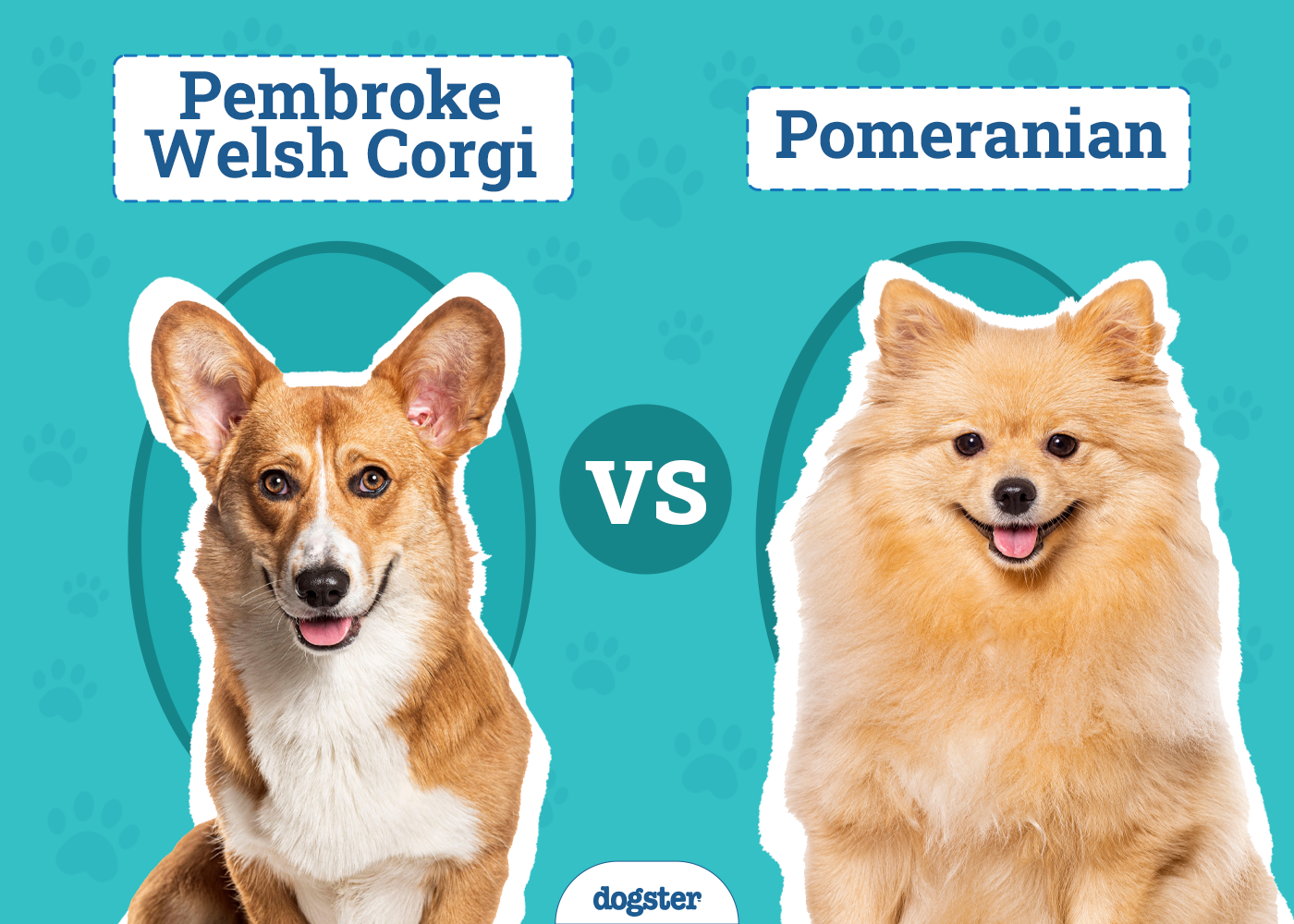
Pembroke Welsh Corgis have been recognized as a breed by the AKC since 1934 and are more popular than the Cardigan Welsh Corgi, which is the older of the two. They originated from the Pembrokeshire area in Wales and were bred for herding and guarding. They have short, weatherproof coats that come in red, fawn, sable, black, and tan, along with white markings. They have a foxy face, alert ears, a long body, and tiny legs with muscular thighs.

Personality / Character
These little dogs have affectionate personalities and make great companions. They are loyal, sensitive, and love interacting with their owners through play but won’t demand attention. However, they can be stubborn and strong-willed.
They often think they’re bigger than their short stature and will challenge anything that poses a threat, regardless of its size. Their intelligence, alertness, and fearlessness make them great watchdogs, but they enjoy barking, which can be problematic for families with babies or nearby neighbors. Socialized Corgis do well in families with children and can adapt to other pets if introduced properly.
Training 🎾
Pembroke Welsh Corgis are easy to train because they respond well to commands. They are energetic, alert, determined, and intelligent, which is why they’re commonly seen winning competitions at dog shows. However, their stubbornness and strong will can become obstacles during training, so it’s important to be firm and consistent with them. Due to their sensitive personalities, positive reinforcement is how they learn best, so give them lots of praise, pets, and treats during training.

Health
The Corgi is a healthy canine, but they are at risk for hip and elbow dysplasia, which can cause pain and lead to arthritis. Medication and surgery can help treat the condition. Corgis are also prone to patent ductus arteriosus, which is a heart condition that results in less oxygen in their blood.
Von Willebrand’s disease is another concern. It’s an inherited disorder that causes abnormal bleeding in Corgis because the blood cannot clot properly. All dogs are prone to certain health issues, so it is important to take them to the vet for routine examinations or if you notice any strange signs.
Care
Corgis are house dogs that don’t enjoy being kept outside because they’re sensitive to the heat and cold, even with their weatherproof coats. Their double coats need regular brushing to reduce shedding, but their grooming needs aren’t extreme. You can bathe a Corgi around once a month and trim their nails regularly to keep them short. Don’t forget to brush their teeth, too.

Suitable For:
Pembroke Welsh Corgis are suitable for families that can offer them plenty of mental and physical stimulation. As long as you exercise them daily, they can happily live in any environment, as long as it is protected from the heat and cold and full of love. Pembroke Welsh Corgis aren’t suitable for owners with allergies since they shed quite a bit and require frequent brushing.
Pros
- Great watchdogs
- Not demanding
- Easy to train when the right approach is given
- A healthy breed
Cons
- Sheds quite a bit
- Can be vocal

Pomeranian Overview
The Pomeranian has been recognized as a breed by the AKC since 1888, which was a few years before the Pembroke Welsh Corgi became recognized. They are classified as a toy breed and make great companions, especially to the elderly, but young children can make them feel a bit uncomfortable.
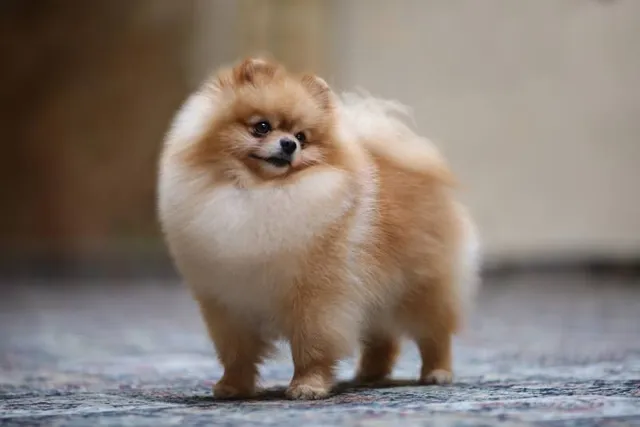
They originated from Pomerania in Northern Europe and have fluffy, medium-length, double coats that are straight. They come in a range of coat colors and markings, giving you plenty of options. The Pom is tiny and has a foxy face, alert ears, and a fluffy tail that curls over their back.

Personality / Character
The Pomeranian is alert and lively. They are great companions to the elderly since they become lap dogs as they age. They do well in families with children if they’ve grown up with them. However, they can become reserved if they’re introduced to new children or are adopted into a family with children later in their lives. They also do well in multi-pet households if introduced properly.
Pomeranians are great watchdogs who like the sound of their own voices. They’re independent and know what they like and don’t like, which can make them finicky eaters. It is important to be aware that Poms aren’t as sturdy as many other dogs and can be easily hurt by rough children and larger dogs. You’ll need to teach children to be gentle around them and consider if it’s safe to bring one into your home if you have large dogs that may hurt them unintentionally.
Training 🎾
This little pup loves to learn and is very intelligent, making them easy to train. Although tiny, they require and enjoy exercise in the form of walks and play. They do well in obedience and agility competitions and respond well to positive reinforcement. They don’t need long walks, so a 30-minute daily walk around the block will be more than enough. You can also play with and train them indoors, making them suitable for people who don’t have a yard.

Health
Pomeranians are considered a healthy breed, but they can get injured easily. To prevent them from breaking a bone or causing injury to their joints, train them not to jump on and off your bed or furniture. They can suffer from dry eye, distichiasis, and tear duct issues, so check their eyes regularly.
They’re also prone to collapsing trachea, which occurs when the trachea becomes too flexible and makes breathing difficult. Patellar luxation is also prevalent among Pomeranians, which can cause limping, and surgery might be required to rectify the positioning of the kneecap. As with all breeds, staying consistent with annual vaccinations and routine examinations will keep your dog healthy and catch any issues early on.
Care
Pomeranians have a lot of hair and are very fluffy but don’t require excessive grooming. They are moderate shedders and must be brushed at least once a week, so they aren’t the best option for people with allergies. Poms are sensitive to heat and cold, so never leave them outside for long periods. They need to have their nails trimmed, their teeth cleaned, and their ears checked regularly, and they should be bathed every 4 to 6 weeks to keep them looking good.

Suitable For:
Pomeranians are suitable for families, especially if the children are old enough to understand that they must be gentle and careful with the dog. They’re great for the elderly because they don’t require a lot of physical exercise, and a 30-minute walk is more than enough. They’re happy to stay indoors, don’t need a yard to run in, and are small, making them great apartment dogs.
Pros
- Come in a variety of colors and markings
- Excellent watchdogs
- Easy to train
- Don’t require a lot of exercise
- Easy to care for
Cons
- Tend to be finicky eaters
- Can bark excessively
- Aren’t suitable for people with allergies
- Can get hurt easily
Which Breed Is Right for You?

The Pomeranian and Pembroke Welsh Corgi are excellent dog breeds with many great qualities. Both breeds are easy to train, energetic, and want to participate in household activities. They’re considered healthy breeds, but they shed and tend to bark often. If you have a family with younger children and large, playful dogs, the Corgi might be a better option for you to consider because you won’t have to constantly worry about them getting injured accidentally as you would with a Pomeranian. However, if you are a single person who lives in a small space and is looking for a companion dog, the Pomeranian is an excellent option, thanks to their alert and affectionate personality. They’re also great for the elderly who can’t provide long walks and plenty of exercise, which a Corgi requires.
Featured Image Credit: (L) Natalia Fedosova, Shutterstock | (R) Jumpstory
Expert dog care, straight to your inbox
News, insights, expert advice, and everything dog.

No spam — unsubscribe anytime.
By signing up, you agree to our Terms & Conditions and Privacy & Cookies Policy.
How useful was this post?
Click a star to rate. You can leave written feedback afterwards. (We read all feedback.)
Keri-Beth is a freelance writer from South African who specializes in animals. She has grown up with a range of pets, volunteered at many shelters, and is highly passionate about pet care. Currently, Keri-Beth is raising two dogs - Benji, the Golden Cocker Spaniel, and Gracie, the Boerboel. With so much information out there, Keri-Beth has made it her questo to make pet care as easy and straightforward as possible for any pet parent in the world.
In her spare time, Keri-Beth enjoys photography, camping, and spending time with her husband, who is a professional drummer.