How Long Can a Dog Live With a Collapsing Trachea? (Vet Answer)

In this article
The “goose honking” cough that many dogs with tracheal collapse exhibit can be loud and alarming, making many owners wonder how long a dog with a collapsing trachea can live.
Unfortunately, there is no easy answer to this, as the truth is that it depends. With proper medical and environmental management, many dogs will live relatively normal and long lives, while others may experience a respiratory emergency that can cut their lifespans short. Since tracheal collapse is a progressive disease, it requires constant monitoring and treatment adjustments for a dog to live as comfortably as possible.

What Is Tracheal Collapse in Dogs?
Owners should know what a dog with a collapsing trachea is dealing with, as this may help them better understand why there is such variation in how long a dog can live with this condition.
The trachea is the windpipe that collects air from the nasal passages and mouth and sends it down to the lungs. It’s basically a tube formed of stacked cartilaginous C-shaped rings. The open part of the “C” is a thin membrane of tissue that completes the full circle. In a normal trachea, those cartilaginous rings are rigid to enable air to pass in and out without changing the diameter of the windpipe.
In a dog with a collapsing trachea, the rings have lost some of their rigidity due to deterioration, so they squish down and enable that membrane of tissue to dip into the airway when a dog breathes in. In severe cases, the rings squish so much that instead of breathing through the equivalent of a big open straw, dogs are essentially trying to force air into a straw that someone has chewed on until it is nearly flat. As you can imagine, this makes it difficult for dogs to get the air that they need into their lungs, which can lead to all sorts of troubles.

What Do Dogs With Tracheal Collapse Look Like?
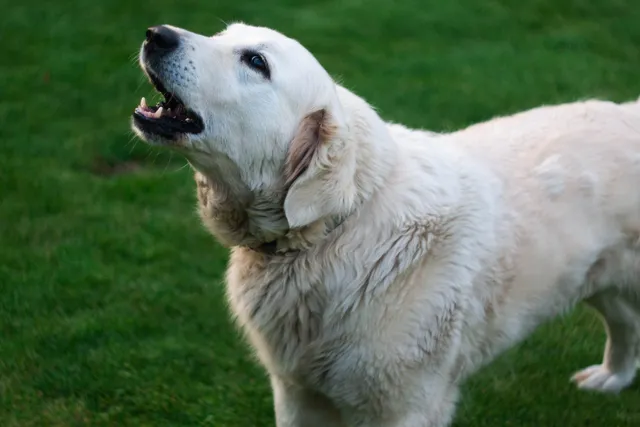
The most common and first sign that dog owners tend to notice is a deep, dry cough—one that sounds like a goose is in your living room. This cough typically gets worse with excitement, exercise, stress, heat, air irritants, or pressure on the neck. Some pups may progress to the point that they wheeze with every breath that they take in. Their gums and tongue can turn blue from difficulty breathing, and they may even collapse.
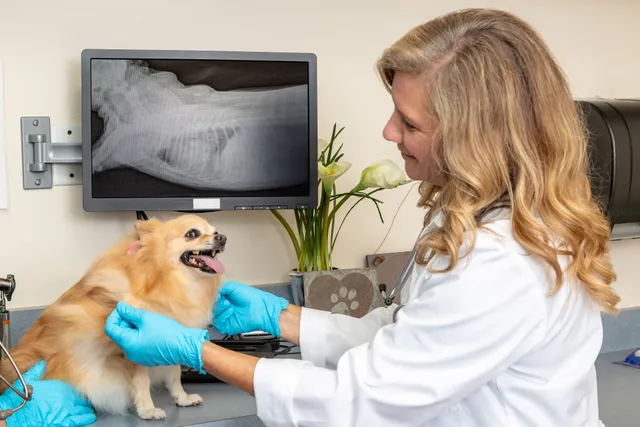
While any dog is susceptible to developing a collapsing trachea, it is thought of as a small breed problem, including Pomeranians, Yorkies, Mini Poodles, and Chihuahuas, to name a few. Since it is a progressive disease, you’re more likely to see it in middle-aged to senior pups, and it tends to get worse with time.
Being mainly a small dog issue, there’s likely also a genetic component involved in the cause, though this is still being studied. We do know that being overweight and having heart disease or some other form of respiratory disease typically makes collapsing trachea worse for a dog.
If you're concerned about your dog's health we suggest you speak to a vet.
What Is the Best Treatment for Collapsed Trachea in Dogs?
After your veterinarian diagnoses a collapsing trachea in your pup, they’ll provide you with a long list of ways to help manage it. Unfortunately, there’s no way to reverse the deterioration of the cartilage, but things can be done to help your dog (and you!) breathe easier.
These may include:
Any or all of these medications may be used as needed or more consistently, depending on the severity of your dog’s condition. Along with medications, making adjustments to their environment may help. Most of these are aimed at cutting back on your dog’s excitement and anxiety levels so they are less likely to have a severe episode.
These may include:
Even with proper medical management, some dogs may still continue to have the tell-tale cough, which is fine as long as they can avoid breathing difficulties and respiratory distress. Severe cases may require surgery, where stents are placed into the trachea to help hold it rigid. Be aware that having the surgery doesn’t mean the medical treatments are done. It’s more of a way to prevent severe issues from occurring, and continued medical management is still often needed.

What Is the Life Expectancy of a Dog With a Collapsed Trachea?
Every tracheal collapse case is different. Some pups will run through their lives fairly normally, just with a bit of a cough when the mail is delivered or when they go for a ride in the car. Other dogs may have a near-life-threatening emergency whenever the neighborhood cat crosses through their yard.
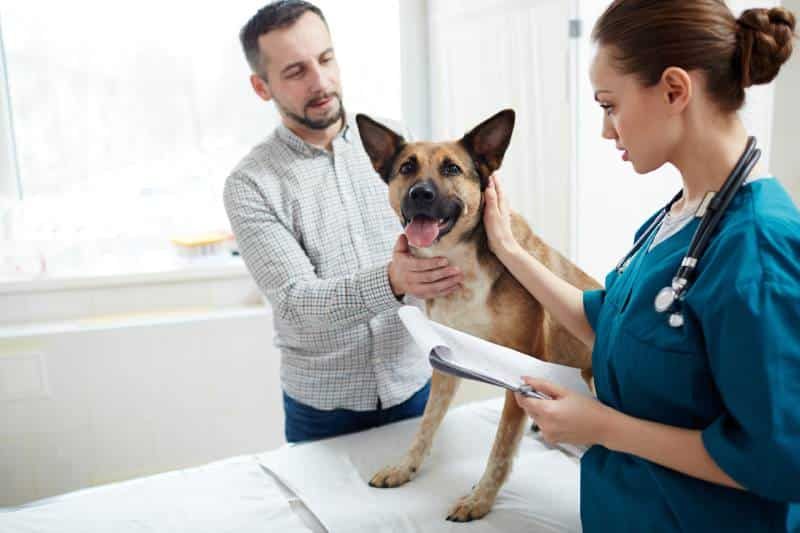
The variation in prognosis for a collapsing trachea means that it is vital to see your veterinarian. They will be able to evaluate your dog’s tracheal issues to determine the best management route and give you an idea of how comfortable your dog is and what to watch out for, should your dog take a sudden turn and experience respiratory distress.
Keep in mind that tracheal collapse is progressive, so while the signs may be mild now, they may get worse as time goes on. Therefore, be sure to have your dog regularly checked by your vet so adjustments to management can be made to keep them safe and happy.
How Do You Comfort a Dog With a Collapsed Trachea?
When it comes to collapsing trachea, managing your dog’s environment and lifestyle tends to be every bit as important as the medications that your veterinarian prescribes. Knowing and trying to avoid situations where your dog could be stressed or excited can go a long way toward keeping their breathing on an even keel, but you can’t cut out every trigger.
With this in mind, be sure you know how to calm and comfort your dog, to help them breathe more smoothly and efficiently. For some, this may mean providing them with a quiet, dark place where they can retreat until visitors are gone. For others, it may mean lap time while you gently stroke their neck. You know your dog best, so determining the best way to comfort them for those times that they need it may be crucial to avoiding a respiratory emergency.

Conclusion
Collapsing trachea in dogs is a progressive disease most commonly seen in small breeds. Excitement, stress, or using a collar can all bring on a deep, dry cough that can lead to wheezing and difficulty breathing in severe cases. Some dogs with a mildly collapsed trachea will have fairly normal lives, especially with proper management. Other, more severely affected dogs may have difficulty breathing with little stimulus and can be on the verge of a respiratory emergency on a regular basis. There’s no set time frame for how long a dog can live with tracheal collapse, but proper management and regular veterinary check-ups can help increase their quality of life.
Sources
Featured Image Credit: Pressmaster, Shutterstock
Expert dog care, straight to your inbox
News, insights, expert advice, and everything dog.

No spam — unsubscribe anytime.
By signing up, you agree to our Terms & Conditions and Privacy & Cookies Policy.
How useful was this post?
Click a star to rate. You can leave written feedback afterwards. (We read all feedback.)
Dr. Chyrle Bonk DVM (Veterinarian)
On top of caring for animals and writing for veterinary publications, Dr. Chyrle Bonk owns a small cattle herd! When she’s not busy with those things, she can be found somewhere enjoying the Idaho outdoors with her husband and two kids. Dr. Chyrle Bonk received her Doctor of Veterinary Medicine (DVM) from Oregon State University in 2010.
Chyrle has practiced in a mixed animal clinic for over a decade. She also writes for various veterinary websites and magazines, like Dogster!