Why Do Dogs Have Tails? Vet-Reviewed Facts & FAQ



In this article
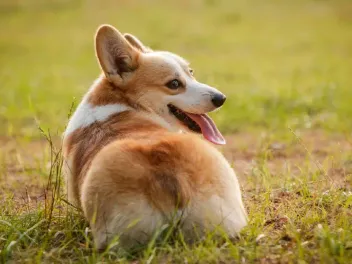
For dog lovers, few actions are more likely to bring a smile to their faces than the sight of a wagging tail. Whether long, fluffy, short, or stubby, dog tails come in many forms, but have you ever wondered why they exist in the first place? Over the years, humans have developed many theories, including that dogs use their tails for balance.
However, the most current explanation for why dogs have tails is that they serve as a communication tool. Dogs use their tails to communicate with each other, with humans, and to react to inanimate objects. Keep reading as we share the facts and answer frequently asked questions about why dogs have tails.

How Did Dogs Start Wagging Their Tails?

Although tail wagging is observed in wild canines like wolves, dogs are by far the most likely of their scientific family to perform this behavior. Dogs were domesticated from wolves, so when did dogs start wagging their tails?
Scientists believe that dogs began to be domesticated over 30,000 years ago. During this process, wild canines experienced physical and behavioral changes. Humans shaped the development of dogs by selecting desirable traits.
It is thought that tail wagging was one of the traits that became more prevalent as dogs were domesticated. One theory is that dogs adapted their behavior, wagging more, because it produced a desired effect on humans. In other words, the humans responded positively when the dogs wagged, so they kept doing it.
Another theory is that humans caused dogs to wag more simply as a side effect of selecting the friendliest and most social wild canines to interact with and breed. Although we don’t know precisely how and why dogs started wagging their tails, it certainly occurred during the domestication process.

Frequently Asked Questions
Does It Mean Something If a Dog Wags to the Right or the Left?
Surprisingly, the answer is yes! A study from 2013 found that dogs react differently to others, depending on which side they are wagging their tail.1 Wagging to the left versus the right is associated with different emotions in dogs. When dogs wag their tail to the right, they feel more positive. Wagging the tail to the left indicates possible wariness.

What Can My Dog’s Tail Tell Me About Their Feelings?
How your dog carries and wags their tail can be an important indicator of their current state of mind. For example, a dog holding their tail high and wagging it hard and fast is projecting confidence and a willingness to engage with another dog, possibly in an aggressive manner.
Dogs who hold their tails low and wag just the tip usually feel insecure or submissive. Tucking the tail hard between the legs is a common sign of fear in dogs.
Isn’t a Wagging Tail a Sign of a Friendly Dog?
This is a commonly held but not always accurate interpretation of a tail wag. A dog who is wagging their tail is simply indicating that they are prepared to interact with a person or another dog.
However, it doesn’t automatically mean the interaction will be friendly. You’ll need to rely on interpreting other body language from the dog to figure out if they’re friendly. For example, are the dog’s ears relaxed or pinned back? Are their muscles tense? Are their pupils dilated or small?

Conclusion
Dogs rely heavily on body language to communicate with each other, and tail wagging is just one of their tools. Scientists have learned that dogs can communicate by wagging their tails.
Learning to interpret the meaning of how and why dogs wag their tails in specific ways allows humans to interact safely with unfamiliar animals. It’s a helpful technique to prevent unnecessary bites or other injuries.
Sources
Featured Image Credit: ayorch, Shutterstock
Expert dog care, straight to your inbox
News, insights, expert advice, and everything dog.

No spam — unsubscribe anytime.
By signing up, you agree to our Terms & Conditions and Privacy & Cookies Policy.
How useful was this post?
Click a star to rate. You can leave written feedback afterwards. (We read all feedback.)
Elizabeth Gray is a lifelong lover of all animals great and small. She got her first cat at 5 years old and at 14, she started working for her local veterinarian. Elizabeth spent more than 20 years working as a veterinary nurse before stepping away to become a stay-at-home parent to her daughter. Now, she is excited to share her hard-earned knowledge (literally--she has scars) with the readers. Elizabeth lives in Iowa with her family, including her two furry kids, Linnard, a husky mix and Algernon, the worldʻs most patient cat. When not writing, she enjoys reading, watching all sports but especially soccer, and spending time outdoors with her family.