Foxhound vs Beagle: Vet-Reviewed Differences (With Pictures)


In this article
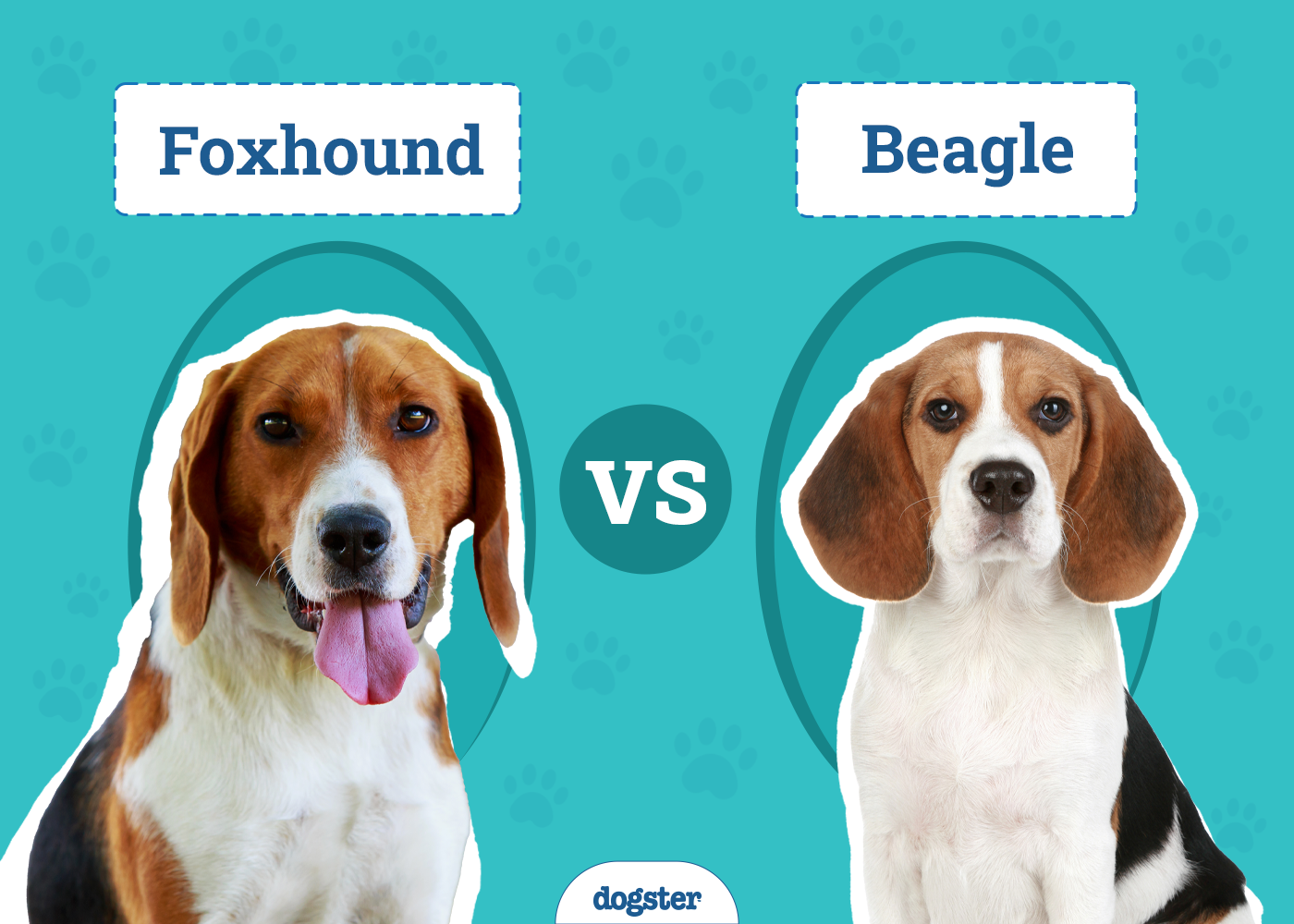
At first glance, the Foxhound and the Beagle look similar. They are both intelligent and loyal hunting dogs that can pose quite a challenge in training, given their selective listening when they detect a new scent. These two breeds also possess an array of qualities that make them wonderful companions for active families. In this article, we'll discuss the Foxhound and the Beagle to help you find the breed that's right for you!

Visual Differences

At a Glance
Foxhound Overview
There are two types of Foxhounds: the American Foxhound and the English Foxhound. They are relatively similar in temperament and physique, but the American is a little taller and more slender than their English cousin. The American Foxhound was imported from England in the mid-17th century for the purpose of hunting foxes.
They have a short coat with diverse colors, ranging from black and cream to beige, red, and white. They are famous for their sweet, pleading look, capable of melting the heart of any dog lover!
In addition, they are friendly, enduring, and loyal. They usually get along well with other pets when properly socialised, are generally in a good mood, and are highly energetic. Considering their need for plenty of daily exercise, they are not suitable for everyone. Also, Foxhounds make a loud bawling noise, which is perfect to indicate to their hunter owners that prey has been detected, but the howls can quickly become a nuisance to your neighbors!

Personality
Foxhounds are known to be gentle, tolerant, balanced dogs that are friendly with people and other pets, though you should be careful if you have cats and supervise all interactions. Foxhounds can develop friendships with cats, but extra vigilance is required if you introduce a new feline companion into your home with a full-grown Foxhound, given their strong hunting instincts.
Exercise 🐕
One thing that you need to keep in mind before adopting a Foxhound is that they need plenty of exercise. Otherwise, they may become bored, frustrated, and destructive. However, you don't have to be a hunter to provide them with the physical exercise and mental stimulation they need to thrive. Many Foxhounds benefit from at least an hour of daily exercise, along with play, scent-based activities, and mental enrichment, although individual needs vary.
Training 🎾
Foxhounds are not the easiest dogs to train and may be better suited to owners who are prepared for a breed with an independent nature and strong scent drive. They can be stubborn and have strong hunting instincts, which may pose a significant challenge when training them. Therefore, consistent training using positive reinforcement and starting early is essential. Do not hesitate to take obedience lessons with your Foxhound in order to perfect your training techniques.

Health
An amazing characteristic of Foxhounds is that they aren't particularly prone to major health issues. They can suffer from thrombopathy (a condition affecting the functioning of blood platelets), but it can be detected early by a simple blood test. By providing the proper care, food, and exercise, you can expect a Foxhound to live up to 13 years.
Care
Other points in favor of the Foxhound are that their coat is easy to maintain (regular brushing is enough to remove dead hair and keep their coat shiny) and that they have no specific dietary needs. However, due to their high exercise requirements, apartment living may be more challenging, though some Foxhounds can adapt if their physical and mental stimulation needs are consistently met. They will be happiest in the countryside with an owner who can give them all the attention, love, and exercise that they need to thrive.

Suitable For:
Foxhounds are great for active owners and families who enjoy spending time outdoors. They get along with children and other dogs but must be trained and socialized to live with cats since they have a high prey drive. They're also excellent hunting companions, and they benefit from access to a securely fenced area or other safe opportunities for regular exercise and exploration.
Beagle Overview
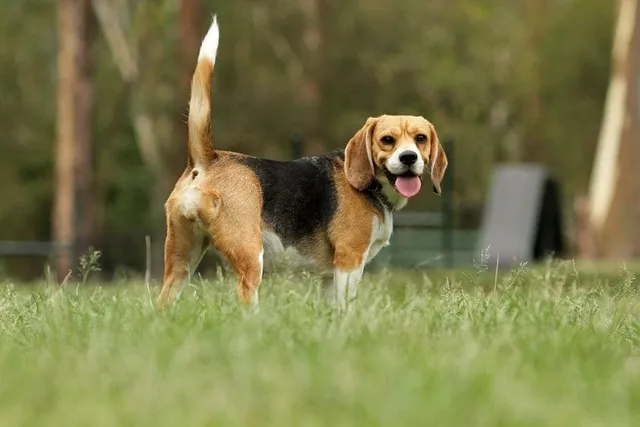
The Beagle is a hunting dog with origins in England that trace back several centuries, although the modern breed was refined during the 1800s. It was officially recognized by the American Kennel Club in 1885. At first glance, these cheerful and endearing dogs look like miniature Foxhounds. They have the same sweet, pleading expression and make excellent four-legged companions for the whole family. They are also famous for their distinctive howls, incredibly well-developed sense of smell, and stubbornness.

Personality
Beagles are kind and tolerant dogs and are particularly patient with young children. They love spending hours playing with their mini-humans, making them outstanding playmates. However, they are independent and stubborn and will stop at nothing when faced with an intriguing new smell detected during their walks, which is why they should be kept on a leash or in a securely enclosed area when outdoors. They were trained to hunt in groups, and they love having other pets around to keep them company.
Exercise 🐕
Just like the Foxhound, the Beagle needs plenty of physical and mental stimulation to maintain a healthy body and mind. A simple daily walk of fewer than 30 minutes will not be enough for these scent hounds, as they need at least 1 hour of daily exercise. The ideal situation would be to give them access to a fenced-in yard so they can roam and follow their noses as they please, in addition to a daily walk and playtime.

Training 🎾
Beagles are independent and stubborn, so training them requires special attention. Unlike other, more docile breeds, they are not likely to respond to your commands just to please you. Therefore, it is essential to focus their training on positive reinforcement, with the help of rewards such as treats (but not too many because these dogs tend to gain weight easily), praise, and stimulating games, like an obstacle course. Be consistent, patient, and firm at all times, and never resort to punishment at the risk of losing your pet's trust.
Health
Beagles have an average lifespan of between 12 and 15 years, similar to Foxhounds. However, they are predisposed to several inherited and breed-associated health conditions, such as epilepsy, hypothyroidism, patellar luxation, progressive central retinal atrophy, and other ocular and auditory issues.
Health concerns that may occur in the breed include epilepsy, hypothyroidism, patellar luxation, and certain inherited eye conditions.
Care
Despite their independence, Beagles love the company of humans and other furry friends. Their coat requires no more than a good brushing a few times a week, though they will benefit from daily brushing during heavy shedding seasons (twice a year). In addition, they gain weight easily, hence the importance of providing them with an appropriate diet and getting them enough daily exercise.

Suitable For:
Beagles make wonderful companions for active families with young children, and they can adapt to city life provided they receive sufficient daily exercise and mental stimulation, which for many Beagles is around an hour or more per day. However, they're happiest when they have a secure yard to roam and sniff around. They're tolerant of other pets and can develop strong friendships with them, but they may have trouble living with smaller animals like rodents or birds due to their prey drive.
Which Breed Is Right for You?

Foxhounds and Beagles are hunting dog breeds with countless qualities that make them smart, loving, loyal, and kind pets. However, when looking for a new pet, it's vital to consider their energetic natures and the individual needs of each breed.
Foxhounds are best suited to active homes where they can receive plenty of exercise and mental stimulation, often in environments with more space. As for Beagles, they can live in an apartment but will only thrive if they receive enough cuddles, exercise, mental stimulation, and playtime every day. With either breed, you'll need to invest a great deal of time, skill, and patience in their training.
Ultimately, you need to ask yourself the following question: Can your lifestyle and household meet the needs of the feisty Foxhound or the smaller Beagle, which may have somewhat different exercise and management needs? Only you know the answer!
Featured Image Credit: Top - Olga Aniven, Shutterstock | Bottom - 825545, Pixabay
Expert dog care, straight to your inbox
News, insights, expert advice, and everything dog.

No spam — unsubscribe anytime.
By signing up, you agree to our Terms & Conditions and Privacy & Cookies Policy.
How useful was this post?
Click a star to rate. You can leave written feedback afterwards. (We read all feedback.)
A biologist and science writer, Genevieve has a special fondness for capuchin monkeys, pumas, and kangaroos, which has inspired her to volunteer and work at wildlife rehabilitation centers in countries like Bolivia, Guatemala, Canada, and Australia. Now living as a Canadian expat in Argentina, she enjoys the sight of horses and cows outside her home office window every morning. Genevieve is the proud owner of three rescue dogs—Lemmy, Nala, and Pochi—and a lively kitten named Furiosa. She finds happiness and fulfillment in sharing her passion and extensive knowledge of animals with others.