Why Does My Dog Try to Lick My Ears? 4 Likely Reasons



We've all been ear-attacked by a dog or puppy in our lives—it's inevitable. If you bend down to greet them, you'll get a wet ear in no time. So, what seems to be the fascination with dogs licking our ears? Is there some secret goodie in there we don't know about?
There may not even be just one, but a combination of reasons your dog may lick your ears. Let's figure out what your dog is trying to communicate through this behavior.

Licking in Dogs
Dogs use their tongues to communicate in several contexts, including social interaction, exploration, and self-soothing behaviors. It's sometimes interpreted as one of their love languages. Both free-ranging and domestic dogs lick each other in social contexts, such as affiliative interactions, while they groom each other and nurture pups. Because they consider their humans part of their pack, it's no wonder they lick us, too.
So, if your dog fancies your ears, why might that be? They're probably not very hard to decode. Dogs wear their hearts on their sleeves—we just have to pay attention to the message.
The 4 Reasons Dogs Lick Your Ears
1. Your is Expressing Affiliative Behavior
One of the major reasons a dog licks you is probably the most obvious—they are expressing affiliative behavior. They often lick ears upon greeting you or if you are suddenly at eye-level with them. Dogs commonly seek contact with the face as part of social interaction.
They gladly give it to you without question because they want social interaction and the reinforcement of your attention. In showing us affection through licks, they are telling you that this partnership is definitely mutual. Isn't it sweet to think about how many ways our dogs show us appreciation?

2. Your Dog Likes the Scent or Taste of Your Ears
As gross as it may seem to us, dogs might like the scent and taste of our ears. Earwax is an oily substance that dogs may be drawn to due to its scent and chemical composition, creating a novel sensory experience. The inside of an ear offers a much richer flavor than licking a plain old cheek, after all.
Let's face it—it wouldn't be the worst thing that could happen. They've probably made you gag with how many gross things they're willing to put in their mouth. But if your dog comes in close for some kisses and gravitates towards your ears, it could be a "weird taste" thing.

3. Your Dog Is Looking for Social Engagement
There's no denying our pups rely on us for comfort. They can form strong attachment bonds with their family members, and it can be relaxing for them to engage in close social behaviors like licking. When we cuddle them back, well, that reinforces the behavior. This reassurance makes your dog feel secure and wanted.
On the opposite side, your dog might be trying to respond to changes in your behavior or emotional cues. We produce subtle changes in body language, tone, and even scent, which is why they are so in tune with our emotions. If they think you're upset or having a bad day, this behavior may be a form of social engagement or attention-seeking.

4. Your Dog Is Trying to Get Attention
Does all this ear-licking give you the giggles? They can tell it's a trigger of laughter, and your dog may continue the behavior because it leads to interaction. They might also think that, due to your reaction, you're ready to play. Your actions can reinforce their responses, so it's all fair game once you act happy.
If they get attention when they lick your ears, they're probably going to repeat the behavior. Whatever gets the gold, right?
Don't Punish Ear Licking
If your dog's licking is irritating you, the worst thing you can do is punish them or shoo them away because of it. There are ways to channel your dog's licking behavior without adverse reactions. If you want your dog to stop, you can try to redirect their attention. Since most dogs readily shift their attention to highly motivating stimuli like toys, play, or food, you can try to redirect them toward an appropriate behavior.
If they are trying to show social, attention-seeking, or learned licking behavior, the worst thing you can do is punish them. This response only causes confusion and may increase stress or anxiety. It can even lead to unwanted behaviors like nervousness or destructive tendencies.
Your dog should always feel safe with you as its owner. It's tempting to yell at them to get away when they invade your space. And it's equally essential for your dog to learn boundaries and manners. You can reach each goal harmoniously by using consistent, reward-based training and gentle redirection rather than overreacting to licking.

What Is Obsessive Licking?
Obsessive licking in dogs is a self-stimulatory behavior that could have many root causes. Usually, these dogs over-groom themselves and lick other random objects constantly.
If your dog exhibits these behaviors, licking themselves, objects, and other critters, you might want to figure out why. There are a few reasons for compulsive licking.
Generally, these problems include:
Dry skin and parasites can also be culprits, but they might not cause them to lick anything other than themselves. So, if your ears seem to be the target and not their skin, it's best to explore other avenues of possibility.
When to Worry
You shouldn't worry about your dog's licking tendencies unless the behavior becomes excessive, compulsive, or is associated with underlying medical or behavioral issues. If it is related to anxiety, discomfort, dermatologic disease, gastrointestinal issues, or other medical conditions, it might worsen over time. Be mindful of any accompanying signs.
Get them to the vet to evaluate if they start losing patches of hair or have skin irritation due to excessive licking, or if the behavior increases in frequency, intensity, or becomes difficult to interrupt.

Is Your Dog Licking Your Face Unsanitary?
Dog licking is really not much of an issue to us humans, but it does have its downsides. If you think about what your dog does with its mouth all day, it might not come as a shock that it's best not to have your canines lick your face.
If they do lick your skin, it's generally unlikely to cause issues in healthy individuals, as intact skin provides a protective barrier against most pathogens. However, the eyes, mouth, and ears have mucous membranes where bacteria can enter our systems.
Most pathogens are species-specific, but some can be transmitted between dogs and humans. Bacteria, parasites, and other infectious agents can occasionally be transmitted through saliva, particularly through mucous membranes or broken skin. Even if you have a dog that's indoors only, you don't always know what they pick up on their travels—even if it's only to the backyard.
Zoonoses are diseases that can pass between species, such as dogs and humans.
Some cross-illnesses you might contract are:
Final Thoughts
Most of the time, licking is no big deal at all. They are just engaging in affiliative or attention-seeking behavior. Especially if you just get home after being gone, they may intensify this behavior due to excitement. It's typically standard, expected behavior.
If your dog is lunging for your upper half, just make sure they keep away from your ears, nose, and mouth since their saliva can contain potentially transmissible diseases. That shouldn't stop you from accepting a sloppy kiss every once in a while, if you are comfortable, have good hygiene, and can avoid contact with mucous membranes or broken skin.
Next on your reading list:
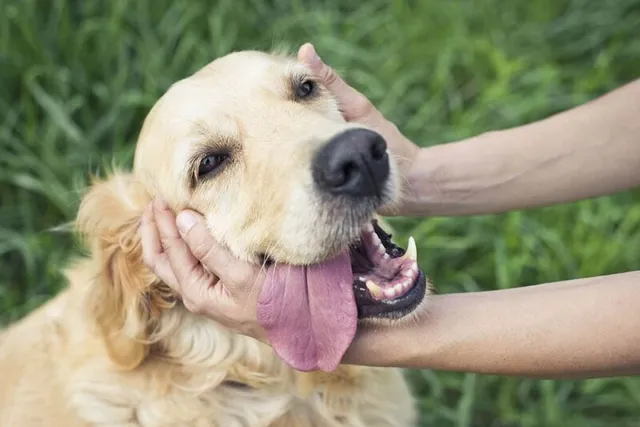
Featured Image Credit: Lazy_Bear, Shutterstock
Expert dog care, straight to your inbox
News, insights, expert advice, and everything dog.

No spam — unsubscribe anytime.
By signing up, you agree to our Terms & Conditions and Privacy & Cookies Policy.
How useful was this post?
Click a star to rate. You can leave written feedback afterwards. (We read all feedback.)
Ashley Bates is a freelance dog writer and pet enthusiast who is currently studying the art of animal therapy. A mother to four human children— and 23 furry and feathery kids, too – Ashley volunteers at local shelters, advocates for animal well-being, and rescues every creature in need. Her mission is to create awareness, education, and entertainment about pets to prevent homelessness. Her specialties are dogs and cats.