Why Do Dogs Play Fight? Reasons & When to Be Concerned


In this article
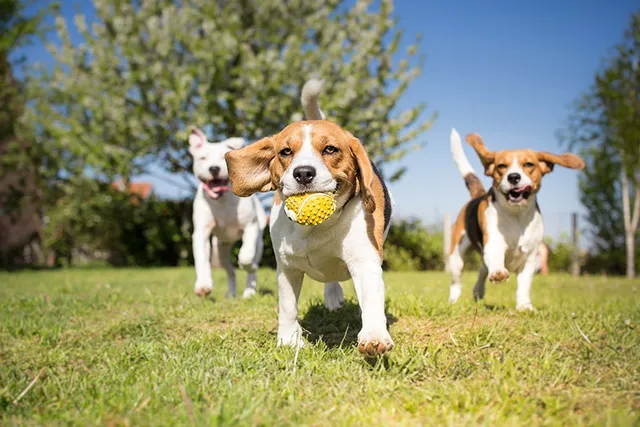
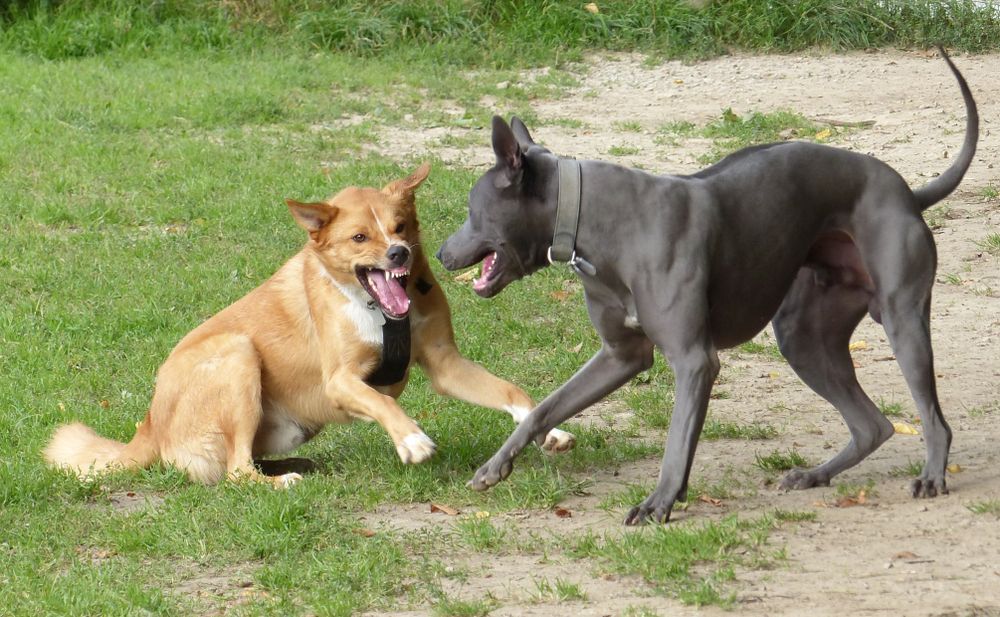
Our canine companions love to play with each other, and sometimes, this includes play fighting. But when our pups start to play a little rough, it can cause concern and make worry creep in. Is play fighting innocent, or is there reason to be concerned?
And why do dogs play fight anyway? Play fighting is a natural behavior for canines that begins at an incredibly young age, and in most cases, there’s no reason to be worried about it. However, play fighting can occasionally lead to a real fight. Here’s a look at why dogs play fight and when to be concerned.

Why Do Dogs Play Fight?
Why do dogs play fight anyway? What’s the point of all that tackling, growling, and wrestling? Here are all the reasons play fighting in canines occurs!
1. Instinct
Possibly the most significant reason for dogs to play fight is because of instinct. Play fighting is a behavior deeply rooted in instincts handed down from their ancestors, so when puppies begin engaging in this behavior, it’s only natural. Play fighting is a useful instinct because it enables a dog to learn a lot of important things they’ll need for later in life.

2. To Shape Social Skills
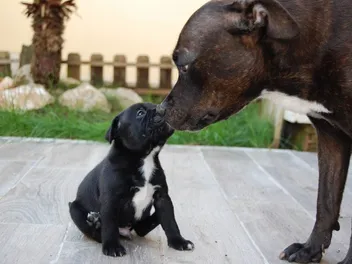
We all need to learn social skills when we’re young, and our pups are no different. Of course, the best way for a dog to learn how to interact with other dogs is to interact with other dogs. And play fighting allows them to do this. How does play fighting teach good social skills, though? Play fighting is incredibly useful for our pups because it teaches them how to interact with other dogs in a non-threatening and friendly manner. This seems ironic, considering it involves lots of roughhousing, but dogs engaged in this behavior learn things like when a nip is too hard or how to switch from being the dominant pup in the room to the submissive one when needed.
3. To Practice Body Language
One of the most significant ways dogs communicate is through body language, and play fighting allows a pup to learn how body language works by practicing body language cues. When you see puppies play bow to each other, giving each other tiny nips, or even baring their teeth at one another, they’re learning what all these body language cues mean and when to use them. This is useful for maintaining a friendly balance when socializing with other canines.

4. To Establish Boundaries
Sometimes, it seems our dogs have no sense of boundaries (after all, do we really need them to accompany us to the bathroom?). But canines do have boundaries (at least with one another), and play fighting helps them establish what those boundaries are. Body language comes into play again here as the use of it during play fighting teaches dogs when another canine is establishing a boundary and when to respect that.
5. Physical Stimulation
Of course, an obvious reason for play fighting is that it’s great exercise! When a pup engages in a round of play fighting, they burn off all kinds of excess energy, providing them plenty of physical stimulation. Exercise is essential for our dogs, and puppies usually have energy to burn, so play fighting is a fantastic way to let them get the exercise they need.

6. Mental Stimulation
Play fighting also provides a pup with plenty of mental stimulation, which is vital for their well-being. While play fighting, a dog needs to assess what their opponent is doing and what they will do next. They also need to adjust their fighting strategy once they figure out what their opponent will do. It’s a lot of thinking and strategizing, which keeps dogs mentally stimulated, which is something they need to stay healthy and keep from being bored!

When to Be Concerned About Play Fighting
Play fighting in canines is natural, and your pet should be allowed to do it under supervision. It’s always best that playmates are similar in size and energy levels to help ensure balanced play and reduce the risk of accidental injuries. You should step in if play becomes too intense or one sided.
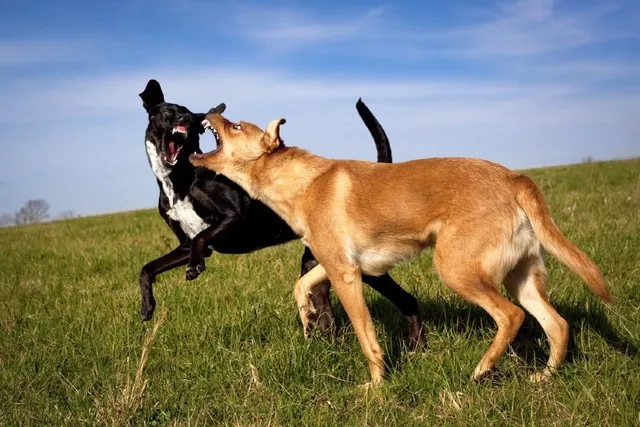
However, occasionally, play fights do turn into real fights. You’ll know the difference, though, by paying attention to the body language of the dogs involved.
Play fighting behavior involves:

In contrast, the body language and behavior in a real dog fight will look much different.
Real dog fighting behavior includes:
If you see any signs that a play fight has turned into a real fight, it’s time to break it up.
How to Stop a Real Dog Fight
The first thing to know is that real and aggressive dog fights don’t happen very often. However, if one happens between your pups at home or your pup and another at a dog park, here’s what to do.
1. Stay calm!
This is important because if you’re not calm, your dog will sense it, which could escalate the situation.
2. Distract the dogs.
Depending on the dogs involved and where you are when the fight occurs, a distraction could be you calling your pet’s name repeatedly, making a loud noise by banging objects together, spraying both dogs lightly with a hose, throwing a blanket over one of the dogs, or (if you know they won’t fight more because of this) pulling your dog’s attention away with a treat or squeaky toy.

3. Once the dogs involved in the fight are distracted, they’ll hopefully back off from each other.
If they do not, though, you’ll have to separate them. However, do not try separating them with your hands! If you do this, you run the risk of being bitten. Instead, place an object between them (baby gate, large stick, etc.) to create space. Once the two are separated, take your dog away from the other dog so they can calm down.
Conclusion
Play fighting in dogs is a perfectly normal canine behavior that is entirely instinctual. However, it can sometimes seem a bit alarming when one is watching it happen. As long as your dog and their doggie friends are clearly playing, though, letting them play fight is good because it teaches them important skills.
Real dog fights are rare but can happen on occasion. If your dog gets into a fight with another pup, carefully break the fight up and take your dog away.
Featured Image Credit: GeorgyL, Shutterstock
Expert dog care, straight to your inbox
Vet-reviewed advice, training tips, and the best of Dogster. Free, and you can unsubscribe anytime.
By signing up, you agree to our Terms & Conditions and Privacy & Cookies Policy.
Misty Layne lives out in the woods in small-town Alabama with her two Siamese - Serafina & Jasper. She also has an array of stray cats, raccoons, and opossums who like to call her front porch home. When she’s not writing about animals, you’ll find her writing poetry, stories, and film reviews (the animals are, by far, her favorite writing topic, though!). In her free time, Misty enjoys chilling with her cats, playing piano, watching indie and foreign films, photographing abandoned places, and catching up on her never-ending TBR list.
Join the conversation
Ask a question, share your story, or send private feedback.