Why Does a French Bulldog Get Skin Lumps? Our Vet Explains

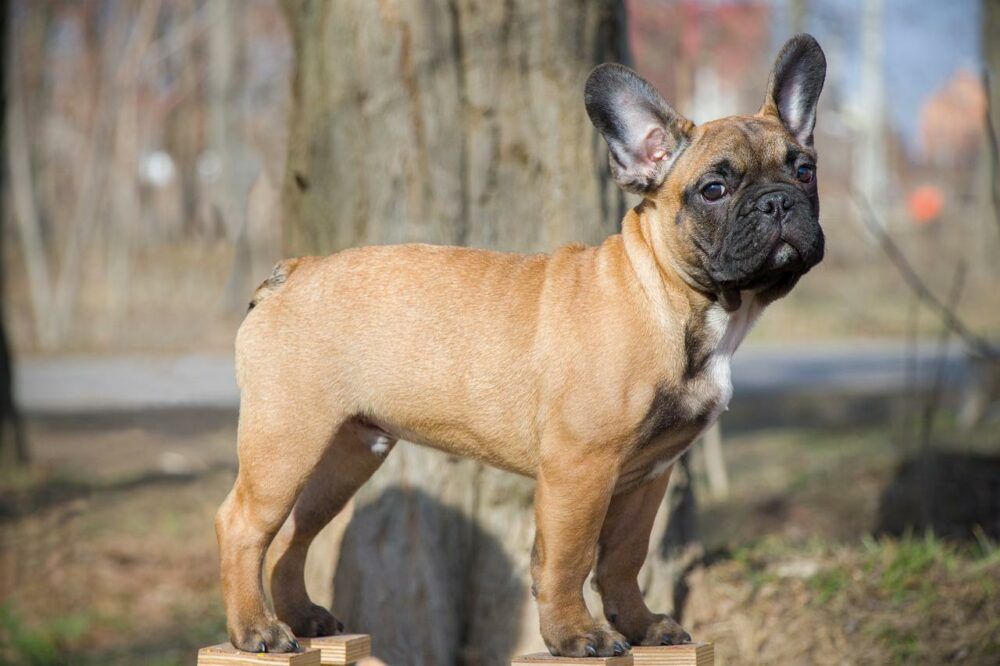
French Bulldogs are adored around the world for their cute little faces and playful personalities. They make wonderful companions and have become increasingly popular family pets. In fact, in 2022, they earned the number one spot on the American Kennel Club’s list of most popular dog breeds!
Just like many other purebred dogs, however, Frenchies have their issues. It is particularly common for these pups to develop skin lumps and bumps. You should always seek the help of a veterinarian to obtain an exact diagnosis, but we will discuss some of the most common culprits.

Common Causes of Skin Lumps in French Bulldogs
1. Atopic Dermatitis (Allergies)
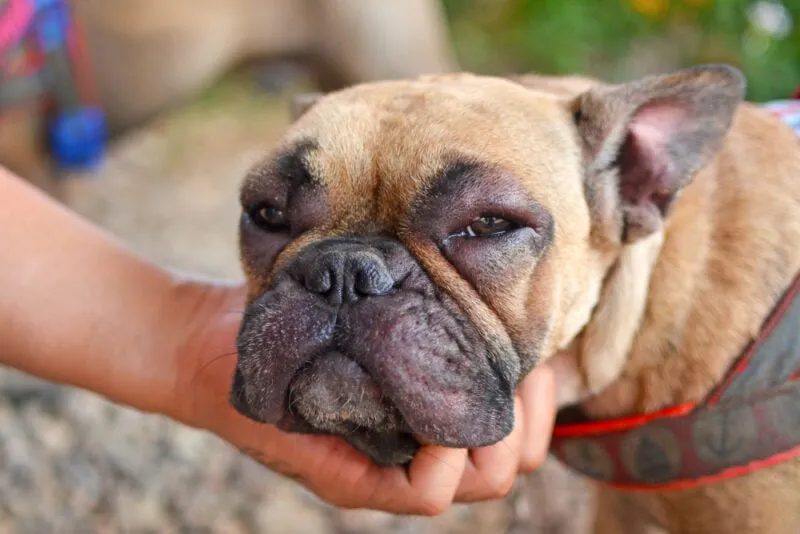
French Bulldogs are known to be at increased risk for atopic dermatitis (AD) compared to other breeds. The term AD refers to inflammation of the skin caused by an allergic reaction, usually to something in the environment.
Dogs with AD may develop hives or rashes on their paws, legs, or under their belly (areas that contact grass, carpets, etc). When scratching at affected area(s) they often break the skin, creating opportunities for bacteria to enter and cause infections. This results in more itchiness and perpetuates the itch-scratch cycle.
Treatment involves:
- Providing itch relief (e.g., topical medicated spray or cream, oral medication)
- Preventing further self-trauma (e.g., clothing to protect against scratching)
- Addressing skin infections
- Identifying the offending allergen(s) when possible, and avoiding them or starting a hyposensitization program (e.g., allergy shots)
Affected dogs should not be used in breeding programs because AD is known to be a genetically inherited condition.
2. Demodecosis
The term demodecosis refers to an infestation with Demodex mites. It is a type of mange but, before you panic, not the kind that is contagious to people (that’s Sarcoptic mange).
It is normal for a small number of Demodex mites to be present on a dog’s skin at any given time. However, in some pups with immature or compromised immune systems, the mites reproduce unchecked, and their numbers get out of control. This leads to hair loss and inflamed, red, bumpy skin.
French Bulldogs are reported to be at increased risk for juvenile-onset demodicosis (the type that occurs in dogs less than two years old).
Treatment involves killing the mites, addressing secondary skin infections, and managing any underlying medical conditions that may be affecting the immune system.
Dogs who have been diagnosed with generalized demodicosis should not be used in breeding programs because their offspring are likely to be affected as well.
3. Skin Fold Dermatitis
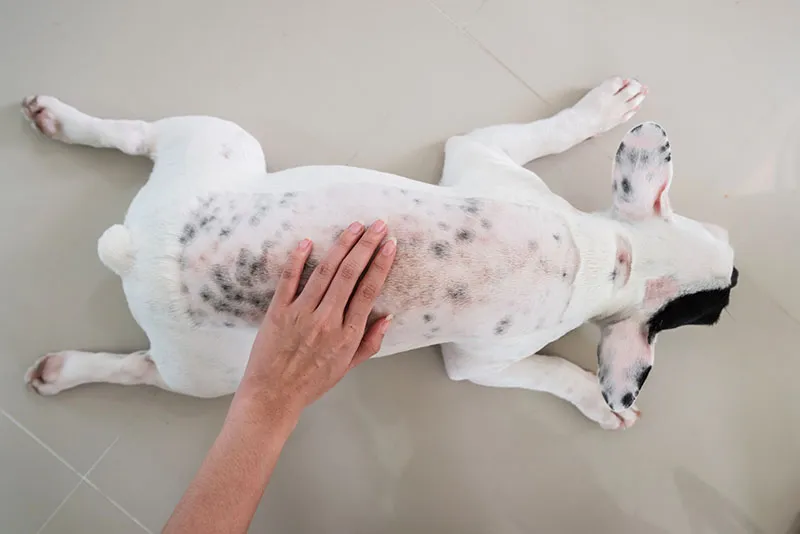
Frenchie wrinkles might be adorable, but their skin folds also trap warmth and moisture, creating a perfect breeding ground for yeast and bacteria. Overgrowth of these microbes leads to dermatitis, a fancy word for irritated and inflamed skin. Affected skin folds are itchy and when your pup scratches they can break the skin and cause scabbing.
Your veterinarian will likely recommend a medicated ointment to treat the infection and soothe the skin. In some cases, a course of oral antibiotics or anti-yeast medication may also be required. It is a good idea to pick up a cone or some protective clothing if your dog is scratching a lot!
To prevent the infection from coming back, it is important to clean all of your pup’s skin folds regularly (especially the ones on their face and around the base of their tail). Remember to only use products that are specifically designed for dogs. Ask your veterinarian for a recommendation.
4. Chin Acne

Frenchies, like other short-coated breeds, are prone to getting pimples on their chin. Chin acne is basically a bunch of localized bacterial infections in the skin. It is more common in young dogs because their immune systems are not fully mature.
Like skin fold dermatitis, treatment involves topical (and sometimes oral) medication. If your pup is scratching at their chin or rubbing it on the ground, they may need to wear a cone for a few days until the medication starts working.
To prevent chin acne from coming back, use stainless steel food and water bowls and wash them (with soap) after every meal. Your veterinarian may also recommend cleaning your pup’s chin once or twice per day with a prescription antiseptic soap, antimicrobial spray, or medicated shampoo.
5. Interdigital Cysts
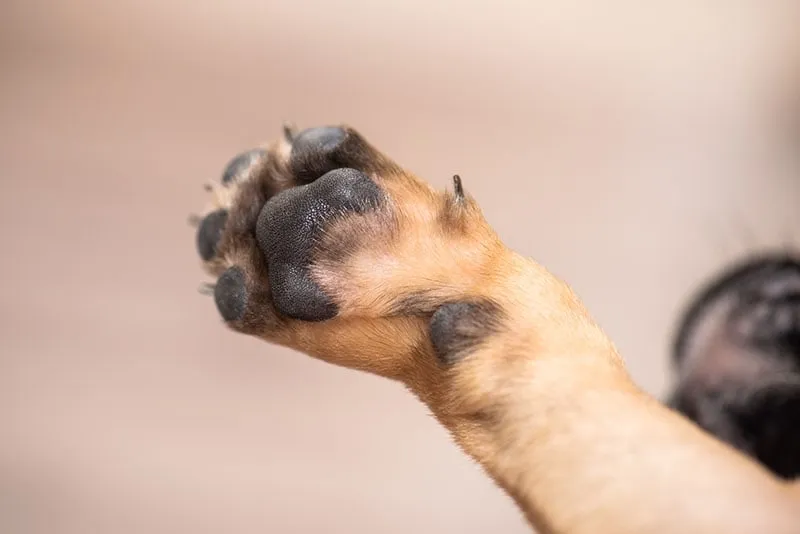
More accurately called interdigital furuncles, these are painful lumps that form between a dog’s toes. They are areas of deep infection caused by an inflammatory response to keratin, which occurs when hair shafts get pushed into the skin (basically what happens when you get an ingrown hair).
They are common in short-coated dogs, like the bulldog breeds, and often affect pups with underlying conditions affecting their immune system (e.g., atopic dermatitis).
Treatment involves addressing the infection, calming inflammation, and managing underlying conditions to hopefully reduce the risk of recurrence.
New modalities like fluorescence biomodulation (e.g., Vetoquinol’s PHOVIA® System) are very promising! Studies like this one have shown that it can promote healing and may reduce the need for long courses of medication (like antibiotics). Ask your veterinarian if this technology is available at a clinic near you.
Final Thoughts
We have reviewed some of the most common skin conditions affecting French Bulldogs. Some of them, like chin acne, are relatively simple to treat. Others may require long-term management (e.g., atopic dermatitis).
If you notice any new lumps or bumps on your Frenchie’s skin, it is a good idea to have them checked out by a veterinarian so you know what you are dealing with and can come up with an effective treatment plan together.
Sources
Featured Image Credit: ElfinFox, Pixabay
Expert dog care, straight to your inbox
News, insights, expert advice, and everything dog.

No spam — unsubscribe anytime.
By signing up, you agree to our Terms & Conditions and Privacy & Cookies Policy.
How useful was this post?
Click a star to rate. You can leave written feedback afterwards. (We read all feedback.)
Dr. Sharon Butzke DVM (Veterinarian)
Sharon has been drawn to animals for as long as she can remember. She was raised in Ontario, Canada and fulfilled her childhood dream when she obtained her Doctor of Veterinary Medicine (DVM) degree from the Ontario Veterinary College in 2009. Since then, she has worked in a variety of small animal clinics, with a focus on cats and dogs. She loves sharing her knowledge and empowering people to take the best possible care of their pets! Sharon currently resides in British Columbia with her husband, daughter, and a loveable Great Dane named Parker.