Get

In Your Inbox

Dogster is reader-supported. When you buy via links on our site, we may earn an affiliate commission at no cost to you. Learn more.

What Is Canine Acne? Signs & Care Guide (Vet Answer)

Share

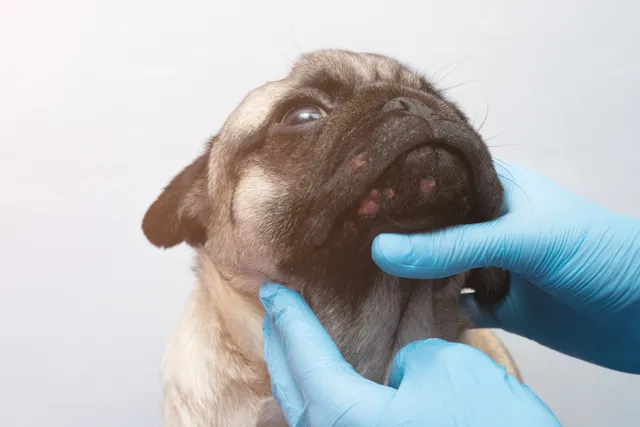
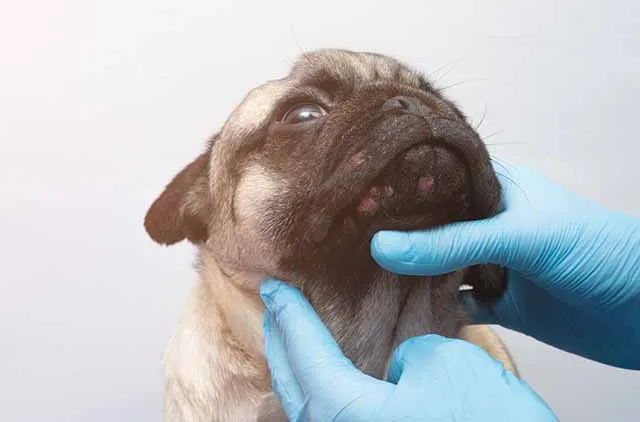
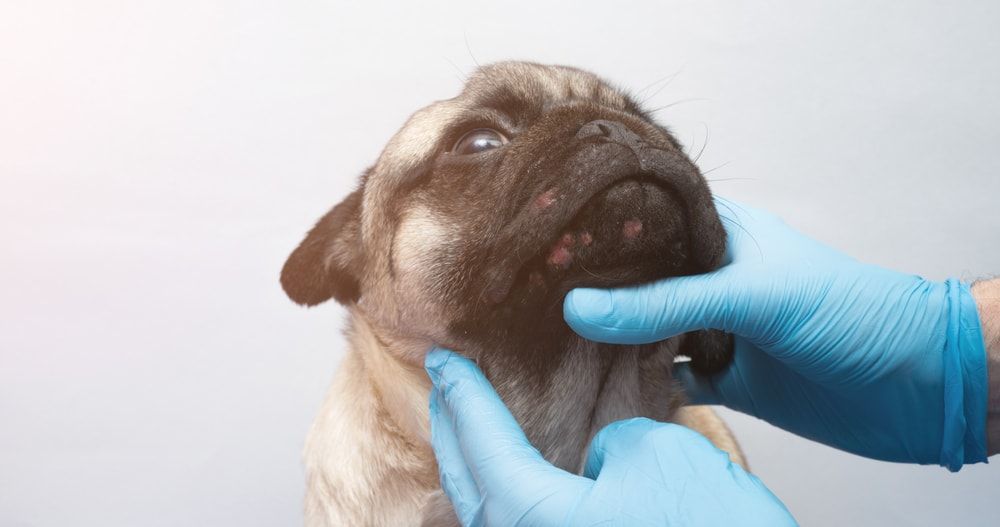
pug dog with red inflamed wounds on his face

Most people have experienced a pimple or two over the course of their lifetimes. But can our favorite canines experience the same thing? If you’ve ever noticed a red bump appear on your dog’s face, you likely were left wondering if dogs ever get acne too.

Indeed, dogs can suffer from acne on their faces, just like their human companions. Canine acne is a common skin condition in dogs which is usually not serious and can easily be treated. Read on to learn more.

dogster paw divider

What Is Canine Acne?

Canine acne is an inflammatory condition of the lips and skin of a dog’s muzzle (the area around the mouth and nose). In mild cases, canine acne can appear as red bumps or pimples on the skin, similar to human acne. In severe cases, dogs can present with severe inflammation covering the entire surface of the skin around the muzzle, leading to pain and permanent scarring if not treated.

Pimples around a dog’s muzzle may be due to folliculitis or skin inflammation resulting from short hairs of the muzzle pushing below the skin’s surface. In severe cases, a dog’s acne may also be due to furunculosis when the hair follicles themselves become inflamed, infected, and painful.

While most early cases of canine acne are considered non-infected inflammation, if left untreated, the condition may progress to more severe inflammation and secondary bacterial infections.

Similar to human teenagers, canine acne is common in young dogs and is especially common in short-coated breeds that may be more susceptible to short hairs burrowing below the skin.

Dog with Canine Acne
Dog with Canine Acne (Image Credit: Benischio, Wikimedia Commons CC BY-SA 4.0)

What Are the Signs of Canine Acne?

Canine acne commonly appears as small red bumps or pimples around the chin, skin around the mouth, and lower lips of a dog. Aside from pimples, other signs of canine acne may include painful or itchy skin, generalized swelling of the muzzle area, or hair loss around the muzzle.

When left untreated, some cases can progress to become more severe, resulting in the pimples and swellings becoming larger, more inflamed, and/or oozing with pus.

Some dogs with canine acne may be seen itching or rubbing their muzzles, especially if there is an underlying allergy to food or something in the environment. Many dogs are not bothered by their mild acne, while others may become uncomfortable or painful.

If you suspect your pet is suffering from canine acne, you should contact your vet directly for an assessment. They can provide you with more information and a care plan.

If you need to speak with a vet but can't get to one, head over to PangoVet. It's our online service where you can talk to a vet online and get the advice you need for your dog — all at an affordable price!

PangoVet_Mention-in-Content Savings V1

What Are the Causes of Canine Acne?

While the exact underlying cause of canine acne is not fully understood, there are several important factors that can play a role. Much like human acne, a variety of factors can trigger a case of canine acne.

Possible causes include the following:
  • Genetic predisposition: Shorthaired breeds, such as Boxer, Doberman Pinscher, English Bulldog, German Shorthaired Pointer, Great Dane, Mastiff, Rottweiler, and Weimaraner, tend to develop canine acne at higher rates than other breeds. Other breeds not mentioned can still develop canine acne, but these breeds have been found to be most at risk.
  • Trauma to the skin: Damage to the skin of the muzzle region can occur from repetitive itching/rubbing due to an underlying allergy or simply from rough play.
  • Age: Canine acne most commonly occurs in young dogs between the ages of 6 months to 1 year old (i.e., the teenage period for dogs).
  • Environmental irritants: Some dogs’ skin can react when exposed to certain irritants such as plastic food and water bowls, shampoos, etc.

Similar to humans, the exact underlying cause of a dog’s acne may not be identified, and in many cases, canine acne may result from a combination of internal and external factors.

doberman with his owner in the garden
Image Credit: liaoxh1981, Pixabay

If you believe your dog is showing signs of canine acne, it is important to visit your veterinarian to have your dog’s skin evaluated. Your veterinarian will typically conduct a physical examination and thorough history regarding your dog’s environment, diet, behavior, and other details.

Since other inflammatory skin conditions can present, like canine acne, your veterinarian may collect skin samples to rule out other possible causes.

Other potential causes of inflamed skin around the muzzle can include:
  • Demodex mites: A parasite causing demodicosis
  • Pyoderma: A bacterial infection
  • Malassezia: A yeast infection
  • Ringworm: A fungal infection
  • Puppy strangles: An uncommon skin condition seen in dogs less than 6 months old
dogster paw divider

How Do I Care for a Dog with Canine Acne?

In most cases, canine acne can easily be managed with proper treatment.

Your veterinarian may recommend a variety of treatment options, including:
  • Topical medication to manage inflammation or infection, such as benzoyl peroxide, antibiotics, or steroids
  • Oral medication to manage inflammation or infection, such as oral antibiotics or steroids
  • Long-term management for underlying allergies, such as a prescription hypoallergenic diet

The treatment goals of canine acne are to reduce existing inflammation, treat any infection, and prevent future irritation or trauma to the skin in order to limit recurrence. Depending on the severity of the acne and the potential causes, your veterinarian may prescribe your dog several medications to achieve these goals.

feeding dog at home
Image Credit: RossHelen, Shutterstock

In some severe cases, your veterinarian may prescribe antibiotics to clear a secondary infection or prescribe a short course of steroids to help reduce inflammation and discomfort for your dog. It is important to follow your veterinarian’s treatment plan carefully, especially when certain medications like oral antibiotics and steroids are prescribed as stopping treatment early can lead to recurrence, drug resistance, and other issues.

In some cases of canine acne, your dog may have environmental allergies or food allergies contributing to its condition, especially if your dog is rubbing or itching its face. In cases in which there may be an underlying allergic cause, your veterinarian may recommend specific dietary changes (e.g., a strict hypoallergenic food trial), allergy testing, allergy medications (over-the-counter or prescription), and supplements to support the skin.

Since chronic allergies can be a frustrating condition to deal with as a pet owner (and for your dog), it is important to closely follow your veterinarian’s advice to avoid further frustrations and prolonged discomfort for your dog.
dogster paw divider

Frequently Asked Questions (FAQs)

Is there anything I can do at home to help my dog’s acne?

If you suspect your dog is suffering from canine acne, it is important to visit your veterinarian to have its skin evaluated for an appropriate treatment plan. However, you might be wondering what you can do to prevent canine acne from occurring or recurring, especially if you have a dog who is predisposed to the condition.

There are several things you can do to prevent canine acne:
  • Keep your dog’s skin clean and dry, especially around its muzzle. If your dog’s skin becomes dirty, gently wash your dog’s face with a mild canine-specific shampoo and gently pat the area with a clean towel after bathing.
  • Avoid using plastic bowls and instead, use food and water bowls made out of stainless steel or ceramic. Plastic materials tend to cause more irritation to the skin than other materials.
  • Monitor your dog’s diet as poor nutrition can contribute to skin and hair coat problems, while food allergies can lead to itchy and inflamed skin. Follow your veterinarian’s dietary recommendations, especially if they recommend hypoallergenic food for your dog.
  • Monitor lesions on your dog’s skin and consult your veterinarian if you see any unusual lesions, especially if they seem to be worsening or irritating your dog.
  • Avoid the temptation to “pop” any pimples you find on your dog. Squeezing the red bumps can lead to more inflammation or, worse, a secondary bacterial infection.
  • Avoid using skin products intended for human acne. Many of these products are far too strong for your dog’s skin. Consult your veterinarian for appropriate over-the-counter products or prescription options).

What if I don’t do anything for my dog’s acne?

For mild cases of dog acne, you may wonder if any treatment is actually necessary. While it is possible that minor cases of folliculitis can eventually resolve on their own, most cases of dog acne usually require some form of treatment.

Depending on the severity, treatment may be mild, like routinely washing and drying your dog’s face or applying a topical product to lesions. In more severe cases with deep skin infections (known as pyoderma), a course of oral antibiotics is often required.

bath foam to a Golden Retriever dog
Image Credit: 135pixels, Shutterstock

dogster paw divider

Final Thoughts

Canine acne is a common skin condition in dogs that is usually not serious. However, if left untreated, the condition can worsen, become infected, become uncomfortable or painful, and lead to permanent scarring. If you see signs of canine acne in your dog, it is important to monitor the lesions closely and consult your veterinarian should the lesions persist.

Related reads:


Featured Image Credit: Yekatseryna Netuk, Shutterstock

Want content like this delivered to you?

Sign Up For Our Newsletter

News, insights, expert advice, and everything dog

* By submitting, you agree to our Terms & Conditions and Privacy & Cookies Policy.


How useful was this post?

Click on a star to rate (you can leave written feedback after clicking submit)

Help us improve Dogster for pet parents!

Your feedback really matters.

What did you like about this post? Also how can we improve it?

Join the conversation

Leave a Reply

You’re very welcome to leave a comment or question. Please know that all comments must meet our community guidelines, and your email address will NOT be published. Let’s have a positive and constructive conversation.


Talk With A Vet Online

Peace of mind,
anywhere, anytime

Affordable vet advice

The Crate Setup Most Dog Owners Get Wrong (And How To Fix It!)

Most people assume that if their dog hates the crate, the crate is the problem. So they try a bigger one, a different...

1,500 Beagles Rescued from Wisconsin Lab Farm – Here’s Where They’re Going

You may remember that a few weeks ago, we reported on a tense situation at Ridglan Farms, Wisconsin, a facility infamous for housing...

Dogster’s Weekly Photo Contest Winners: Window Watchers (May 11, 2026)

Every week our team gets the privilege of sorting through our readers photos to choose what dogs will win this weeks contest! See...

Can a Relationship Work When One Person Doesn’t Like Dogs? Tips & When to Walk Away

For dog owners, a partner who doesn’t like dogs isn’t a minor quirk to overlook. Dogs aren’t a hobby you can scale back...

More related

What Are Water Rescue Dogs? Purpose, Types & FAQ

Water rescue dogs are vital for saving lives and assisting in aquatic emergencies. Trainers teach these special dogs to perform rescue missions in...

How to Stop a Dog From Eating Cat Poop From the Litter Box: Vet-Approved Reasons & Tips

If you’re the unlucky owner of a silly dog that seems to enjoy eating your cat’s poop, you’re likely at your wit’s end....

5 Dog Training Rituals: Vet-Approved Tips to Help Your Pup Learn

Dogs thrive with routine and predictability in their life, which is why training rituals can be beneficial. Rituals are predictable for dogs because...

Pomeranian Health Problems: 8 Common Concerns

Pomeranians are an adorable dog breed. They are tiny, energetic, loving, and great lap dogs. As one of the most popular breeds in...

Keep reading

What to Do With Leftover Dog Food? 6 Great Ideas

No one wants to deal with leftover dog food. Perhaps your dog has passed away, or maybe your pet just doesn’t like the type of food you bought. Most people don’t buy more food than their dogs can typically eat,...

Open canned pet food

Can Dogs Eat Calamari? Vet-Verified Nutrition Facts & Risks

Calamari is an Italian word for squid, which is exactly what calamari is. You can find calamari in most seafood restaurants, and it’s a favorite among many seafood lovers. If you bring your pooch to a seafood restaurant that allows...

Can Dogs Eat_calamari

Can Dogs Eat Brussels Sprouts? Vet-Verified Nutrition Facts & Tips

When it comes to Brussels sprouts, it seems that you either love ‘em or you hate them, there is no in-between. There are people out there who adore this veggie and could eat them with every meal. Then again, some...

Can Dogs Eat Brussels Sprouts

Can Dogs Eat Corned Beef? Vet-Verified Safety & Nutrition Facts

Corned beef is a popular salt-cured meat that’s consumed in a variety of forms. Some people buy corned beef from their local deli and make sandwiches. Corned beef is also popular at certain times of the year, such as Saint...

can dogs eat corned beef?

Can Dogs Drink Milk? Vet Verified Nutrition Facts & FAQ

Many dogs are always looking to share whatever foods you happen to be eating at meal or snack time. Whether it’s a sandwich, a cupcake, or even a glass of milk, they always seem to be there to pick up...

Can Dogs Drink Milk

6 Food High in Magnesium for Dogs: Vet-Reviewed Facts & FAQ

Like humans, dogs require essential minerals and vitamins to function. Magnesium, along with calcium, phosphorus, and potassium, is an essential macromineral. It’s important for bone formation, muscle, and nerve function. Magnesium must be included in the diet in sufficient amounts...

dog eating in a food bowl

Can Dogs Eat Duck? Vet-Verified Health Benefits

It’s hard to resist when your dog is begging for a scrap or two from your dinner plate. But before giving your pet any people food, you should be sure that it’s safe to do so. Some human foods are...

Can Dogs Eat_Duck

7 Best Dog Food Can Lids in 2026 – Reviews & Top Picks 

If your dog eats a wet food diet and you don’t use the whole can at once, the last thing you want is the leftovers stinking up your fridge! Instead of using cling film or aluminum foil every time, there...

ORE Pet Can Cover

Love Dogs? So Do We! Join the Dogster Community

Stay informed with expert pet care insights delivered straight to your inbox! Discover professional guidance on animal behavior, feeding tips, trusted product picks, and much more.


Sign up for the Dogster Email Newsletter