Pancreatic Cancer in Dogs: Signs, Causes & Care (Vet Answer)

In this article
Anyone who has watched a friend or family member face pancreatic cancer understands the fear associated with this diagnosis. Unfortunately, dogs can also get pancreatic cancer, and similarly to people, it does not usually have a good prognosis. Thankfully, it does not occur commonly in our canine friends.
In this article, we will discuss the different types of pancreatic cancer that affect dogs, signs that should prompt concern, and options for treatment of the two most common types of tumors (insulinoma and adenocarcinoma).

What Is Pancreatic Cancer?
The pancreas is a small organ located in the abdomen, very close to the stomach and the beginning of the small intestine.
The pancreas has two main functions:
Pancreatic cancer can affect either endocrine or exocrine cells. The word cancer refers to uncontrolled reproduction of abnormal cells, which may group together to form a tumor. The term also implies malignancy, meaning that the abnormal cells spread throughout the body (called metastasis).
There are three types of endocrine pancreatic tumors in dogs, all of which are malignant:
Insulinoma (most common)
Gastrinoma
Glucagonoma
There are two types of exocrine pancreatic tumors in dogs, but only one is malignant:
Adenocarcinoma (most common, malignant)
Adenoma (benign)
Overall, insulinoma is the most common type of pancreatic cancer in dogs, followed by adenocarcinoma.
If you are concerned about the health and well-being of your pet, seek veterinary advice for the best course of action.
What Are the Signs of Pancreatic Cancer?
The signs of pancreatic cancer depend on which cells are affected. This article will focus on the two most common types of pancreatic cancer in dogs: insulinoma and adenocarcinoma.
Insulinoma
Insulinomas, as the name suggests, secrete the insulin. This hormone is normally released in response to a rise in blood sugar (glucose), which happens after eating. Insulin tells body cells to take up the sugar, thereby lowering the amount in the bloodstream, which should prompt the pancreas to stop releasing insulin until it is needed again.
Insulinomas constantly release insulin, regardless of the dog’s blood sugar level. This leads to hypoglycemia (low blood sugar), signs of which include:
- Extreme tiredness
- Weakness
- Incoordination
- Shaking
- Muscle twitches
- Seizures
- Loss of consciousness
As insulinomas grow, hypoglycemic episodes occur more often. Over time, affected dogs will lose weight and have less energy.
Adenocarcinoma
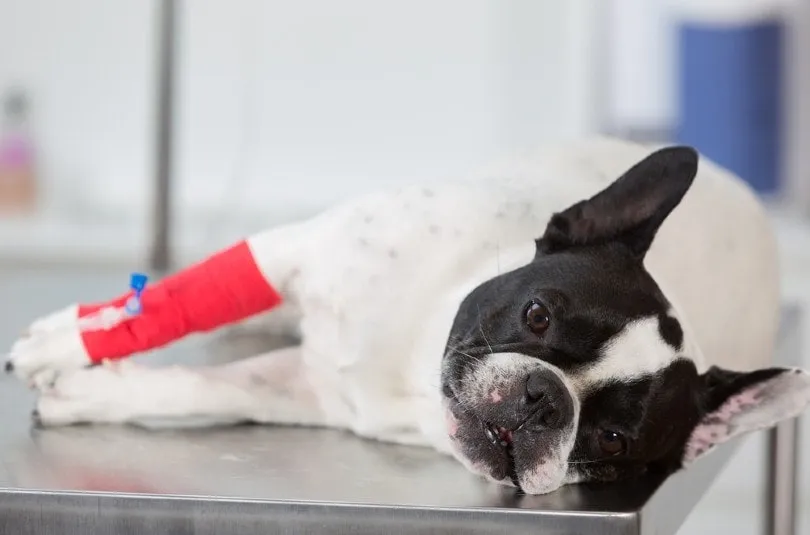
Signs of adenocarcinoma are rather non-specific and may include:
- Decreased or no appetite
- Vomiting
- Weight loss
- Low energy and/or weakness
- Pale-colored, soft, greasy-looking poop due to exocrine pancreatic insufficiency (EPI)
Jaundice (yellowing of the white part of the eyes and skin) may be noticeable if the tumor is blocking the common bile duct.
In many cases, by the time they are diagnosed, adenocarcinomas have already metastasized (spread) to other parts of the body, including the liver, small intestine, lungs, and bones. This may result in seemingly unrelated signs, like difficulty breathing or limping.
If you are concerned about the health and well-being of your pet, we recommend getting in touch with a vet for guidance.
What Are the Causes of Pancreatic Cancer?
Pancreatic cancer is typically diagnosed in middle-aged and older dogs, but the cause of this disease is unknown. As with many cancers, it is likely a combination of genetics, environmental, and lifestyle factors.
Though a specific reason has not been identified, certain breeds seem to be at higher risk for insulinoma, though a specific reason has not been identified:
- Labrador Retrievers
- Golden Retrievers
- German Shepherd Dogs
- Irish Setters
- Boxers
Adenocarcinoma is diagnosed more frequently in female dogs, and the following breeds may be at increased risk:
- Labrador Retrievers
- Airedale Terriers
- Cocker Spaniels
- Boxers
As with insulinomas, we do not know why some dogs are more likely to be affected than others.

How Do I Care for a Dog With Pancreatic Cancer?
The treatment options for this disease depend on the exact type of cancer and how advanced it is at the time of diagnosis. In some cases, treatment may simply be palliative until humane euthanasia becomes the kindest choice.
Your veterinarian will discuss the options for your specific pup, but here is some general information about the current treatment of the two most common types of pancreatic cancer:
Insulinoma
Surgery is often recommended to remove part of the pancreas, which immediately reduces the amount of insulin being secreted. This may be followed by chemotherapy. For some dogs, frequent feeding of a special diet and medications may be used to help manage blood sugar levels.
Adenocarcinoma
Due to the non-specific symptoms associated with pancreatic adenocarcinomas, they are often diagnosed late in the course of the disease, which limits the options for treatment. Surgery is sometimes attempted but, unfortunately, often unsuccessful. Surgery is not recommended if the cancer is known to have already metastasized (spread). To date, chemotherapy and radiation therapy have not been shown to be helpful.

Frequently Asked Questions
How is pancreatic cancer diagnosed?
As with any health concern, your veterinarian will start by collecting a thorough history and examining your pup from head to toe. While insulinomas present with fairly specific clinical signs, other types of pancreatic cancer can look similar to other conditions, like pancreatitis (which may be suspected at first because it occurs more often in dogs).
When investigating pancreatic disease, the following tests can be helpful:
- Bloodwork
- Diagnostic imaging, including radiographs (x-rays), ultrasound, and/or computed tomography (CT) scan to look at the pancreas and screen for metastasis (cancer spread)
- Fine needle aspiration (FNA) to collect samples of abnormal tissue so it can be examined under a microscope
- Exploratory surgery of the abdomen to physically look at the pancreas and other organs; if a tumor is found, the surgeon may be able to remove all or part of it and submit samples for testing
Your regular veterinarian may be able to offer some of these diagnostics, but in some cases, they may refer your pup to a veterinary oncologist (cancer expert) at a specialty hospital.
Is pancreatic cancer curable?
Unfortunately, there is currently no cure for pancreatic cancer in dogs.
How long can dogs live with pancreatic cancer?
In the case of insulinomas, especially if they are identified early, a combination of surgery and medical therapy may help dogs live for a year or more after their initial diagnosis. Without surgery, survival time is much shorter (usually only a few months).
Sadly, dogs identified in late stages of pancreatic cancer (particularly adenocarcinoma) are often euthanized shortly after their diagnosis.
Conclusion
While pancreatic cancer is rare in dogs, learning that your pup is one of the unlucky ones is heartbreaking. Sadly, this type of cancer does not usually have a good outcome.
Your veterinarian will discuss the options available to you based on your dog’s specific diagnosis and how far the disease has progressed. They can help keep your pup comfortable for as long as possible and offer guidance when the time comes to consider humane euthanasia.
There are some helpful tools available to help you assess and monitor your dog’s quality of life, such as this resource from Ohio State University. Many of us can use some extra support when facing such a devastating diagnosis, so please do not be afraid to reach out for help! Your veterinarian may be able to provide recommendations for professional counseling and grief support in your area.
Related Reads:
Soft Tissue Sarcoma in Dogs: Treatment, Causes & Prevention (Vet Answer)
Palliative Care for Dogs: 8 Vet-Approved Ways to Make It Comfortable
Sources
https://www.atlanticcoastvet.com/site/blog-long-island-vet/2021/07/30/pancreatic-cancer-dog
https://veterinarypartner.vin.com/default.aspx?pid=19239&id=4952990
https://www.pethealthnetwork.com/dog-health/dog-diseases-conditions-a-z/insulinoma-dogs
https://www.pethealthnetwork.com/dog-health/dog-diseases-conditions-a-z/hypoglycemia-dogs
https://vetspecialists.co.uk/fact-sheets-post/canine-insulinoma-fact-sheet/
https://www.cancer.gov/about-cancer/understanding/what-is-cancer
Featured Image Credit: Roger costa morera, Shutterstock
Expert dog care, straight to your inbox
News, insights, expert advice, and everything dog.

No spam — unsubscribe anytime.
By signing up, you agree to our Terms & Conditions and Privacy & Cookies Policy.
How useful was this post?
Click a star to rate. You can leave written feedback afterwards. (We read all feedback.)
Dr. Sharon Butzke DVM (Veterinarian)
Sharon has been drawn to animals for as long as she can remember. She was raised in Ontario, Canada and fulfilled her childhood dream when she obtained her Doctor of Veterinary Medicine (DVM) degree from the Ontario Veterinary College in 2009. Since then, she has worked in a variety of small animal clinics, with a focus on cats and dogs. She loves sharing her knowledge and empowering people to take the best possible care of their pets! Sharon currently resides in British Columbia with her husband, daughter, and a loveable Great Dane named Parker.