Soft Tissue Sarcoma in Dogs: Treatment, Causes & Prevention (Vet Answer)


In this article
Soft tissue sarcomas are a category of tumors that originate from muscle, connective, or nervous tissue in dogs. The tumor arises from an abnormal, uncontrolled overgrowth of cells. They can be found in any location in the body that houses these cell types. They are commonly seen in or on the skin. They are malignant tumors and they are thought to account for 15% of skin tumors in dogs1.
They are relatively aggressive in nature and if left untreated, can have devastating effects. Early detection and diagnosis give a better chance of a good prognosis for your dog.

What Are Soft Tissue Sarcomas in Dogs?
Soft tissue sarcoma is a general term for a group of soft tissue tumors that arise from different types of soft tissue in the body.
Common types of soft tissue sarcoma include:
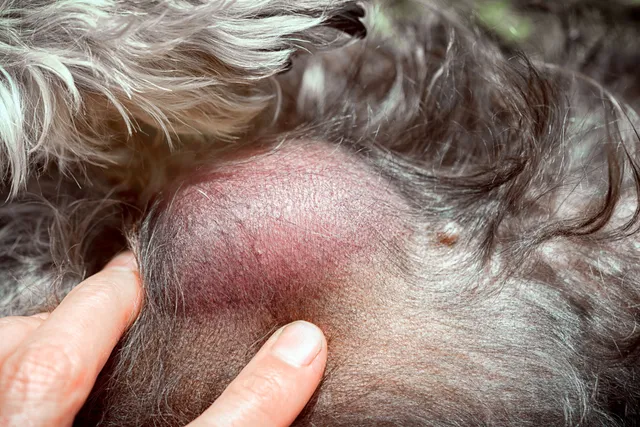
As demonstrated by the list above, there is a wide range of cell types affected by soft tissue sarcomas. The general appearance is usually that of a round tumor, however, they are locally aggressive which means they can easily invade surrounding tissues. This poses an issue when attempting to remove the tumor as regrowth in the affected area is very common.
Soft tissue sarcomas are graded to define their severity and ability to spread. The grading system is as follows:
- Low (1)
- Intermediate (2)
- High (3)
The higher the grade, the higher the chance of metastatic disease.

What Are the Signs of Soft Tissue Sarcoma in Dogs?
Signs of soft tissue sarcomas largely depend on the location of the tumor and the cells it is originating from. As both of those things can vary greatly, the clinical signs vary greatly too.
If in an external location, there is usually a palpable mass present, but this is not always the case.
- Tumors located on limbs may cause lameness or limping. Depending on the size of the tumor it may obstruct the movement of the limb or cause loss of function of the limb.
- Tumors in the chest area may cause exercise intolerance, breathing difficulty, breathlessness, or cough.
- Tumors located in muscle tissue can cause pain or swelling and loss of function of the muscle.
- Tumors associated with the abdomen, which involve or impinge on the digestive tract, may cause diarrhea, vomiting, constipation, blood in feces, reduced appetite, and weight loss.
- Tumors associated with the nervous system may cause paralysis, loss of function, loss of sensation, muscle wastage, and pain.
- Tumors affecting the organs of the urinary tract can result in difficulty passing urine, urine infections, blood in urine, and pain when passing urine.
- Oral tumors in the mouth may cause decreased appetite, dental problems, hypersalivation, halitosis, and pain when eating.
If you’re concerned about your pet’s well-being, we recommend consulting a veterinarian.
What Are the Causes of Soft Tissue Sarcoma in Dogs?
The exact cause of soft tissue sarcoma is often complicated. As with lots of other types of tumors, there are multiple factors that contribute to the development and progression. There is usually a mixture of contributing factors, some genetic and some environmental.
For the majority of soft tissue sarcomas, there is no direct cause identified. The exception to this is injection site soft tissue sarcomas in cats. These are tumors that develop in areas where a cat has recently been injected, usually with a vaccine. The most common sites are the interscapular region or the flank. These tumors appear as firm hard subcutaneous masses and they don't tend to be moveable when palpated.
Research indicates that the following factors contribute to the development of a tumor:
- Genetics
- Breed
- Age
- Environment
- Body weight and size
- Hormone exposure
- Injury/trauma
- Chronic inflammation
Dog breeds that are thought to be genetically predisposed include:

Diagnosis of Soft Tissue Sarcomas in Dogs
Your vet will take a full clinical history from you and perform a physical exam on your pet. If there are any lumps or masses apparent, they will perform tests on them to determine the type of cells present. A fine needle aspiration can be carried out. This is when a needle is inserted into the mass to catch a sample of the cells which can be examined under a microscope.
A full excisional biopsy can be done for a larger sample of cells. This is usually done under general anesthesia. The sample is sent away to an external lab for a histopathology examination. More information can be gained from taking a biopsy sample, but it is a more invasive procedure.
Other tests your vet needs to carry out may include X-rays. Depending on the area of suspicion, X-rays of the chest, abdomen, and limbs can be taken. An ultrasound scan of the abdomen can be performed to search for primary masses or metastatic disease. Ultrasound can also be used to guide internal biopsies without performing surgery under general anesthesia. This will also allow for staging of the tumor which is helpful in determining the best treatment and prognosis.
Routine blood and urine tests are often done to assess white and red blood cell counts and organ function. In some cases, advanced imaging such as CT and MRI are required.
How Do I Care for a Dog with a Soft Tissue Sarcoma?
Treatment for soft tissue sarcomas largely depends on the type of tumor present, the grading of the tumor, and its location in the body.
Treatment options include:
Surgery: This is the most common option for soft tissue sarcomas. This gives the best chance of complete removal of the tumor. The grade of the tumor does influence the success of the surgery to a certain extent. Grade 1 tumors are the simplest to remove surgically and if complete excision is carried out, recurrence is rare. Grade 2 and 3 tumors can still be surgically removed although there is more chance of local spread, and it is more difficult to achieve complete excision.
Soft tissue sarcomas can pose a problem when considering surgical removal as they have tendril-like structures that spread out into the surrounding tissues. This makes complete excision challenging as any parts of the tumor left in situ will regrow. Wide margins are required for removal so even if the mass appears relatively small, it may be a complicated operation to achieve sufficient surgical margins. Radiation therapy may be used in combination with surgery to ensure the tumor has gone. Follow-up surgeries may also be required.
Chemotherapy: Chemotherapy can be used alone or in combination with radiation therapy or surgery. It is more likely to be used for dogs with higher-grade soft tissue sarcomas as the chance of metastatic disease is higher in these cases.
Radiation therapy: Some tumors are inaccessible via a safe surgical route. Some may be too large to remove or too well established in vital structures. The dog may not be a suitable surgical candidate. In these cases, radiation therapy can be used. Radiation therapy is often used to slow down the growth of the tumor as opposed to removing it completely.


Frequently Asked Questions (FAQ)
What are the first signs of soft tissue sarcoma in dogs?
The most common initial symptom of a soft tissue sarcoma is the presence of a soft tissue mass. It is usually seen underneath the skin. The mass can vary in size, and it may not be obvious to the owner for a while. Other early signs relate to the type of tumor and the location so can differ dramatically. Lots of signs are non-specific so it makes identification difficult.
Do soft tissue sarcomas spread quickly in dogs?
The rate of growth and spread of the tumor depends on the grading. The higher the grade, the more chance of the tumor spreading quickly. Lower-grade tumors grow slower and are generally less disruptive.

Can soft tissue sarcomas be fatal in dogs?
Soft tissue sarcomas that are low or intermediate grades, that are identified early on, and can be surgically removed with good margins, have an excellent prognosis. If complete excision with adequate margins is successful, this is usually curative. Unfortunately, soft tissue sarcomas can progress to a malignant form which can spread around the body and cause serious health problems resulting in death if left untreated.
Conclusion
Soft tissue sarcomas can occur anywhere in the body where soft or connective tissue is present. The prognosis for soft tissue sarcomas depends on their grading. Surgical removal of grade 1 or 2 tumors generally has a very good prognosis. Chemotherapy and radiation therapy can be used to improve prognosis following surgical excision.
Vigilant monitoring is required after removal and regular checkups with your vet are necessary to check for recurrent masses.
Sources
Featured Image Credit: Chris Shafer, Pexels
Expert dog care, straight to your inbox
Vet-reviewed advice, training tips, and the best of Dogster. Free, and you can unsubscribe anytime.
By signing up, you agree to our Terms & Conditions and Privacy & Cookies Policy.
Dr. Emma Chandley BVM MRCVS (Veterinarian)
Dr. Emma is a experienced vet who is happy to share her knowledge and expertise about dogs with readers. With a focus on surgery, she is eager to engage in discussions on all topics related to animal care. Dr. Chandley graduated from The Royal Vet College and since graduation has worked in general practice in Great Britain. Her credentials include a postgraduate certificate in Small Animal Surgery and recognition as an Advanced Practitioner. She is also passionate about expanding her knowledge in clinical pathology, animal behavior, nutrition, and clinical pathology.
Join the conversation
Ask a question, share your story, or send private feedback.