Glucosamine for Dogs: Our Vet Explains the Usage, Dosage, Side Effects & FAQ

In this article
Glucosamine is a popular nutraceutical product that is marketed to have many health benefits for dogs, especially for joint health as well as potential inflammation and pain in our arthritic four-legged friends. While it has been widely recommended and used in veterinary medicine for a couple of decades, new, emerging information is causing it to have mixed reviews in the veterinary world, and there is dispute as to whether it provides a true benefit.
Here, we'll discuss the use of glucosamine in dogs, more information on how it’s given, and what to expect.

What Is Glucosamine?
Glucosamine itself is a natural product in the body that is an amino sugar. Some common brands of products that include glucosamine for dogs are Dasuquin, Cosequin, Glycoflex, Restor-A-Flex, Cani-Flex, and Arthrisoothe Gold, among many others.
Glucosamine is theorized to help with the structure and function of joints and may be used as an aid in the treatment of osteoarthritis (OA). This health condition occurs when a dog’s joint cartilage degenerates, which can lead to pain and inflammation in the joint. Some claims for glucosamine are that it may potentially decrease this inflammation and pain, slow down the process of cartilage degrading, and increase the stimulation of new cartilage.
Despite the fact that there have been various studies with glucosamine, most or many have not demonstrated an actual improvement in joint health. In addition, there is not a hard and fast set recommendation of what dose of glucosamine is needed to potentially work.
As mentioned, glucosamine is a nutraceutical. In veterinary medicine, a nutraceutical is defined as a non-drug product that is made in a purified or extracted form which aims to improve the recipient’s health. It’s important to note that in the United States, a nutraceutical is not considered a drug or medication by the Federal Drug Administration (FDA). Because of this, they do not regulate it as vigorously as medications, which can mean that they don’t require proof of efficacy or safety of the products.
In addition, the quality can vary widely, and the label of certain products may not accurately reflect the contents. One way to combat this last point is by using products with a NASC (National Animal Supplement Council)1 seal on them; this is an attempt to ensure that what is on the label is actually what you are getting.1

How Is Glucosamine Given?
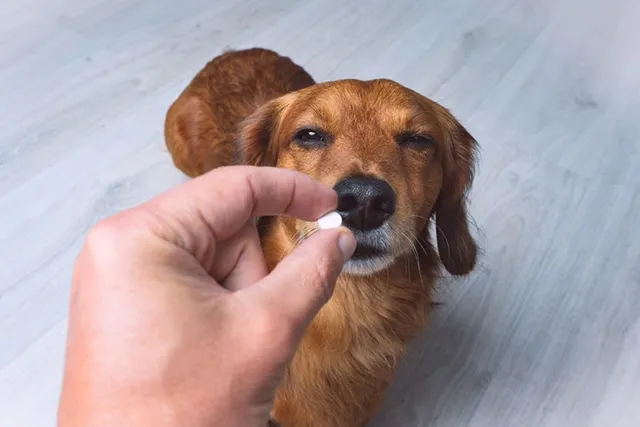
This product is given by mouth (orally) and available in a variety of options such as tablets, capsules, powders, and liquids; it is even present in some types of treats and dog food. As each brand will have varying instructions based on their formulation, you’ll want to follow their individual instructions. Glucosamine may be given with or without food, but if given on an empty stomach and mild gastrointestinal signs occur, you could try giving food with future doses.
Typically, it’s very common to see once or sometimes twice daily dosing with a specific amount based on a dog’s individual weight. Sometimes, there may be a recommended initial dose when starting that then changes to a maintenance dose. When being used, it’s often recommended that doses be given for at least 2 months before determining if there is any improvement seen.
As always, it’s important to follow the label’s directions as each brand and formulation will have its own instructions. Generally speaking, and unless otherwise noted, a product should be kept at room temperature, away from moisture, out of direct light, and away from children and pets.
Special Considerations
Many veterinarians recommend 20 milligrams of glucosamine per pound of your dog’s weight. However, glucosamine is rarely considered effective on its own, and owners should look for products that pair it with ingredients such as chondroitin (a common pairing) or additional items like green-lipped mussel (e.g., Yumove), Boswellia extract (e.g., Nutraquin), methylsulfonylmethane (MSM) (e.g., Cosequin).
Karyn Kanowski, an in-house veterinarian for Dogster says, “These ingredients tend to have something of a synergistic effect with glucosamine. I have my dogs on Yumove, and I personally think they are effective.”
Although scientific research has proven inconclusive on the efficacy of glucosamine in humans and pets, there is enough anecdotal evidence from both dog owners and vets to suggest that these sorts of nutraceutical combinations are worth trying. Most products will take at least 6 weeks to reach therapeutic levels, so be prepared to give it a couple of months before deciding if they are working for you and your dog.
With the exception of the very few individuals that may have allergic or adverse reactions to these ingredients, there is very little risk of these products causing harm, and they may help reduce or even prevent the progression of osteoarthritis in your pet. Vets also recommend starting large breed and active dogs on joint support at a younger age, around 3–4 years old, to provide additional support to joints under more-than-average strain.
Glucosamine for Dogs Dosage Chart
| Dosage | Weight | Size | Age |
| 250–400 mg | 5–20 lbs | Small | 9 months and older |
| 500 mg | 20–45 lbs | Medium | 1 year and older |
| 1,000 mg | 45–90 lbs | Large | 1 year and older |
| 1,500 mg | 90+ lbs | Giant | 2 years and older |
What Happens if You Miss a Dose?
If you miss a dose, there are a couple of options. One would be to give it as soon as you remember, and then the subsequent doses would be given at the recommended intervals from this new start time.
Alternatively, if so much time has passed that it is closer to the next regularly scheduled dose, you may opt to wait until that next dose is due and give it normally as the instructions recommend. Even if a dose was missed, do not double the dose, or give more than the original amount in a single sitting.

Potential Side Effects of Glucosamine
While glucosamine supplements for dogs are generally considered to be safe, overdoing it is a possibility. In fact, the Pet Poison Helpline found that an overdose of glucosamine joint products usually only manifests with diarrhea, but liver failure could occur in rare cases. Other potential side effects could include potential vomiting or excess gas.
In addition, because many glucosamine products are commonly made from the shells of shellfish, it’s important to monitor for allergic reaction signs should your dog have a reaction to these or other listed ingredients. Signs of a reaction could include vomiting and diarrhea, itchiness, hives, ear and skin conditions, or in extreme cases trouble breathing.
If you have any questions, you can also chat with a vet online for advice on the best course of action.
Frequently Asked Questions (FAQ)
How effective is glucosamine?
While there are various studies with some mixed results, there is limited information and the overall weight of research shows that glucosamine is not supportive of its claims. Because the current information and scientific evidence does not align with solid improvement, some have suggested caregiver placebo effects as a reason why some owners may be convinced that their dog is improving on it.
Regardless, with science, it’s important to continue to follow the consensus of well-carried-out studies and integrate new information with what we thought we knew. Veterinarians will continue to follow the science as the basis of their recommendations, so it’s important to have ongoing conversations with your dog’s doctor as data can change.
Can I use a human glucosamine product for my dog?
This is not recommended as there may be variation in the dosing as well as additional ingredients in the human formulations that may not be safe for dogs. Furthermore, the palatability of dog products is typically tailored to our canine friends' tastebuds rather than a large capsule meant for a human to swallow!
What are some of the other products on the label of glucosamine supplements for dogs?
Most often, products with glucosamine that are marketed for dogs are also given with other ingredients as a combination product. For example, a common combination is glucosamine and chondroitin. Chondroitin sulfate is also a component of cartilage and is theorized to also help in joint health. A sampling of other dietary supplements that may be included with glucosamine could include methylsulfonylmethane (MSM), omega-3-fish oil, green-lipped mussel, boswellia, hyaluronic acid, manganese, and the list goes on and on. While this article is focused on glucosamine and its effects, it’s important to not lump all of the supplemental ingredients in the same category as glucosamine. Research and results with different ingredients may be limited and can also have a range of outcomes, some of which may show more positive improvements for joint health, while others may not.
Conclusion
Glucosamine is a nutraceutical supplement that markets itself as potentially helping with arthritis, pain, and overall joint health. While it is readily available and it may not hurt your dog to partake, keep in mind there is limited evidence that it may actually help them. Whether you are concerned about preventing arthritis or if your dog is showing signs of it, a conversation with your veterinarian about the best ways to help your dog is your best bet for your pooch’s overall health. See also:
Hygroma in Dogs: Our Vet Explains the Causes, Signs & Treatment
Ursodiol for Dogs: Our Vet Explains the Usage, Dosage & Care
Sources
Featured Image Credit: Yekatseryna Netuk, Shutterstock
Expert dog care, straight to your inbox
Vet-reviewed advice, training tips, and the best of Dogster. Free, and you can unsubscribe anytime.
By signing up, you agree to our Terms & Conditions and Privacy & Cookies Policy.
Dr. Rachel Ellison DVM (Veterinarian)
Dr. Rachel Ellison lives on a mountain in Utah with her husband, daughter, and son, as well as their animal menagerie— a Bernese Mountain Dog, a Bengal/Siamese mix, and an orange tabby cat, as well as numerous chickens. During her free time, she enjoys being with those she loves, cooking and baking, reading, hiking, sharing her knowledge about cats, and exploring nature and the world around her.
Join the conversation
Ask a question, share your story, or send private feedback.