Evans Syndrome In Dogs: Signs, Causes, Diagnosis & Care (Vet Answer)


In this article
Your dog was weak and collapsed at home, so you raced them to the veterinarian's office. After extensive tests, your veterinarian tells you your dog has Evan's syndrome. What is this uncommon condition, and what does it mean for your dog?

What Is Evan's Syndrome in Dogs?
Evan's syndrome is an autoimmune condition characterized by the destruction of a dog's red blood cells and platelets. Separately, these conditions are known as immune-mediated hemolytic anemia (IMHA) and immune-mediated thrombocytopenia (ITP). Sometimes, the immune system goes haywire and starts destroying these vital blood components.
According to the Veterinary Specialty Center in Illinois, there are two forms of Evan's syndrome: primary and secondary. The primary form of Evan's syndrome is more common than the secondary form.
With primary Evan's syndrome, there is no identifiable cause for the immune stimulation and subsequent autoimmune destruction of red blood cells and platelets. In secondary Evan's syndrome, something stimulates the immune response that leads to immune-mediated hemolytic anemia and thrombocytopenia, such as a new medication.
What Are the Signs of Evan's Syndrome in Dogs?
Dogs with Evan's syndrome often present with symptoms of anemia (low red blood cells) or thrombocytopenia (low platelets). They might be weak, sometimes to the point of having difficulty standing. Their gums could be pale due to the lack of red blood cells. In other cases, the dogs have evidence of icterus (a yellow color) on their gums or even the sclera of their eyes from red blood cell destruction.
Because the red blood cells carry oxygen throughout the body, anemic dogs tend to have an elevated heart rate (tachycardia) and potentially an elevated respiratory rate (tachypnea). Their pulses might be weak and thready. When your veterinarian auscultates your dog's heart and lungs, they might detect a new heart murmur.
Dogs with thrombocytopenia could have evidence of bleeding or bruising. Your veterinarian might check areas like the lower belly for evidence of bruising.
You might also notice blood in your dog's urine or stool. You could see bright red blood, but a dark, tarry stool relates to Melena. The urine is sometimes a dark brownish color.
If you suspect your dog might be suffering from underlying health issues or is experiencing any of these signs, you should contact your vet.
What Are the Causes of Evan's Syndrome in Dogs?
Primary Evan's syndrome occurs with no known cause. It may also be referred to as idiopathic. Potential causes for secondary Evan's syndrome include:
- Cancer, such as hemangiosarcoma
- Infections, such as Ehrlichiosis
- Vaccinations
- Some medications, such as certain antibiotics
Typically, the immune system recognizes the body's cells and doesn't target them for destruction unless there's a problem with the cell. Unfortunately, your dog's immune system doesn't react normally in Evan's syndrome. It mounts an attack against the red blood cells and platelets. Organs such as the spleen filter out these damaged cells.

Diagnosing Evan's Syndrome in Dogs
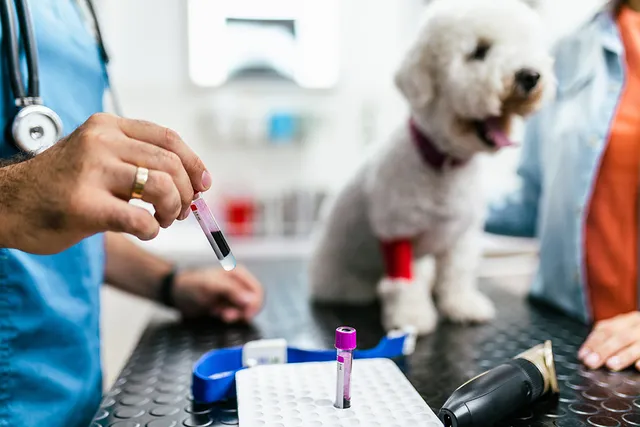
Your veterinarian will generally start with a physical exam and blood work. In addition to finding platelets and red blood cells in lower numbers, your veterinarian or a pathologist can look at a blood smear. They're looking for spherocytes, a red blood cell with an abnormal shape.
Other blood work changes that a veterinarian might see include:
Your veterinarian might check for clotting factors, such as with a PT/PTT test. They'll also check for immune-mediated hemolytic anemia (IMHA) to see if the blood auto-agglutinates.
Your veterinarian will also start looking for an underlying cause. Radiographs (X-rays) and ultrasounds are valuable diagnostic tools. Because Evan's syndrome is sometimes linked to tick-borne disease, your veterinarian will likely run an in-hospital SNAP test that checks for certain tick-related diseases, such as:

How Do I Care for a Dog With Evan's Syndrome?
Your veterinarian will first need to ensure your pup is stable. Your dog could be placed on IV fluids and receive blood or platelet transfusions.
Your dog will need immunosuppressive medications. Your veterinarian might even need a combination of these medicines:
- Steroids like prednisone
- Cyclosporine
- Azathioprine
- Danazol
Because it can be hard to screen for every tick-borne disease in our dogs, your veterinarian might prescribe doxycycline for your anemic dog if your canine has an illness caused by ticks.
Your veterinarian will need to treat any underlying health issues contributing to the condition, such as removing a tumor or administering chemotherapy.
Without enough oxygen-carrying capacity, because the red blood cells are being destroyed, your dog might need to put on supplemental oxygen, such as in an oxygen cage.
Most dogs need round-the-clock care and monitoring during the first few days of treatment, especially since they could develop disseminated intravascular coagulopathy (DIC).
Your veterinary team will monitor your dog, checking for certain things, such as:
- Heart rate
- Respiratory rate
- Gum color
- Capillary refill time
- Temperature
- Urine and stool color
They'll also regularly check for evidence of bruising on your dog.
Your dog will likely take immunosuppressive medications for an extended period, and relapses are possible. Dogs with Evan's syndrome must be monitored carefully. They should not be vaccinated unless necessary, as stimulating the immune system can trigger a relapse.

Frequently Asked Questions
Is Evan's syndrome in dogs expensive to treat?
Evan's syndrome can be pretty expensive to treat. Treatment plans are usually thousands of dollars since your dog needs constant monitoring and stabilization. That estimate includes blood transfusions, ultrasound, and regular blood sample evaluations.
Why does a dog with Evan's syndrome have a heart murmur?
A heart murmur can indicate a structural abnormality in dogs. In the case of Evan's syndrome, it is likely related to the elevated heart rate causing turbulent blood flow through the heart.
Conclusion
Evan's syndrome can be quite scary to manage as it is a life-threatening condition. Your veterinarian will perform a variety of diagnostics while working to stabilize your dog. Ultimately, it is a condition that requires intensive care and management.
Sources
Featured Image Credit: OLESYA BOLTENKOVA, Shutterstock
Expert dog care, straight to your inbox
News, insights, expert advice, and everything dog.

No spam — unsubscribe anytime.
By signing up, you agree to our Terms & Conditions and Privacy & Cookies Policy.
How useful was this post?
Click a star to rate. You can leave written feedback afterwards. (We read all feedback.)
Dr. Samantha Devine DVM (Veterinarian)
Dr. Samantha Devine is a practicing veterinarian who enjoys caring for animals and sharing her knowledge with pet owners. Preventative care, ranging from nutrition to vaccination, is her specialty and passion!
With over 12 years of veterinary experience, Dr. Devine has extensive knowledge to share about small animal medicine, horses, aquatic species, and even zoo animals. She has also been writing for online pet sites for most of that time.