My Dog Is Having Seizures: When Should I Put Them Down? Our Vet Answers


In this article
No matter what the form they take is, it's scary when your dog has a seizure. If your dog is having frequent seizures, you might be wondering if you should consider euthanasia. Let's consider some quality-of-life considerations if you have a pet dealing with regular seizures.

When Is It Time to Put a Dog Down if They Have Seizures?
You're probably here because you're asking: should I put my dog down if they have seizures? That's a hard question to answer because it depends on your lifestyle, your dog's specific underlying condition, and your dog's response to therapy.
If your dog is well-controlled with seizure medication or if the seizures are relatively infrequent, you likely don't need to worry about euthanasia at this point.
On the other hand, if your dog is still having seizures with anticonvulsant medications or has an underlying issue like a brain tumor that is impacting other areas of their life, you need to consider the Quality-of-Life scale. Abbreviated HHHHHMM, the Quality of Life scale created by Dr. A. Villalobos looks at several areas you should evaluate when considering euthanasia:

Another consideration is the type of seizures your dog is having. Short seizures that your dog cones out of quickly are less likely to cause problems than sustained seizures, a condition referred to as status epilepticus. Dogs in status can rapidly become hyperthermic, with an elevated body temperature that can affect the internal organs.
There's also the emotional toll seizures have on you and your family. They can be traumatizing for some owners, and dogs can become aggressive in the post-seizure or post-ictal phase.
Finances are also something to keep in mind. Some seizure medications, hospitalizations, and emergency treatment can become quite expensive. For some families, you may need to consider the financial impact of your dog's seizures and whether you can keep going with therapy.
The University of Missouri lists several risk factors associated with a poorer prognosis of your dog having seizures, including:
If you are concerned about the health and well-being of your pet, seek veterinary advice for the best course of action.
Treatments for Seizures in Dogs
There are several treatments for seizures.
Most veterinarians will use one or more anticonvulsant medications to treat seizures:
Seizure management can take other forms. Does your dog get stressed and then have a seizure? Anti-anxiety medications may help take the edge off stressful events.
If an infection causes seizures in your dog, therapy will be geared toward treating that infection, such as antibiotics or antivirals to treat underlying bacterial or viral meningitis, respectively. If your dog is actively seizing, your veterinarian may prescribe rescue medications, such as diazepam, which are given rectally.
However, if your dog doesn't respond to the initial therapy, your veterinarian may seek additional testing, such as an MRI. You may be referred to a neurologist. If your dog continues to have seizures even with medication management, it is likely time to consider their (and your) quality of life.
Frequently Asked Questions (FAQ)
Are dogs suffering when they have seizures?
Your dog is unconscious when they have a seizure, but they can hurt themselves during convulsions. In addition, long-lasting seizures can cause internal organ damage as your dog's body temperature increases. A seizure lasting more than 5 minutes is considered a medical emergency

Do seizures damage a dog's brain?
Seizures can cause changes in your dog's brain. In addition, sustained seizures can lead to hyperthermia and permanent brain damage.
Conclusion
If your dog has seizures, work with your veterinarian to try and identify the cause. Your veterinarian will be with you every step of the way to help keep your pet comfortable and will work with you if it comes time to assess your dog's quality of life.
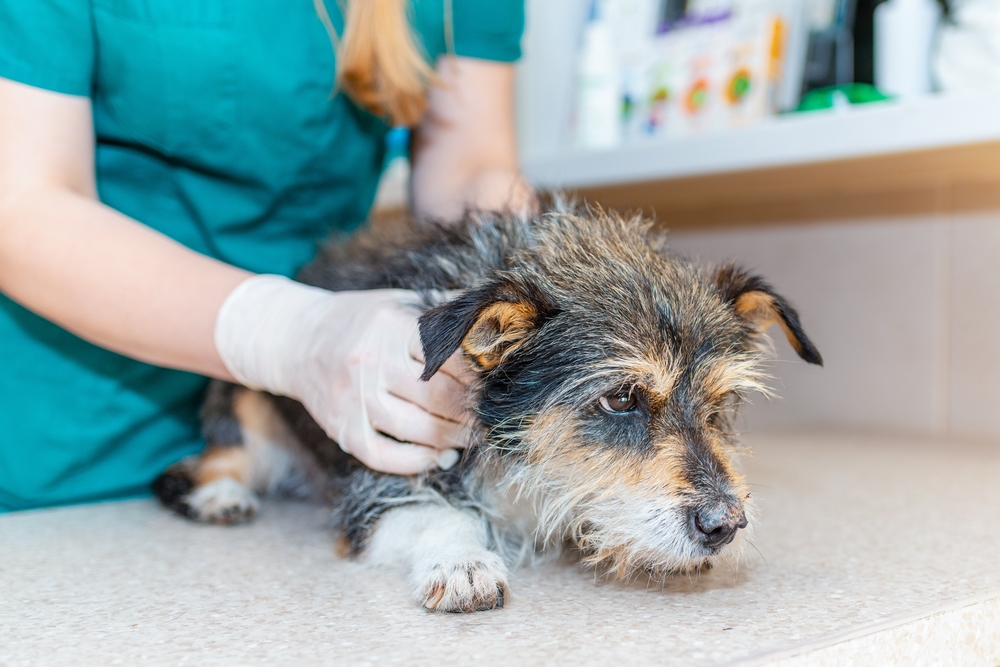
Featured Image Credit: Zontica, Shutterstock
Expert dog care, straight to your inbox
Vet-reviewed advice, training tips, and the best of Dogster. Free, and you can unsubscribe anytime.
By signing up, you agree to our Terms & Conditions and Privacy & Cookies Policy.
Dr. Samantha Devine DVM (Veterinarian)
Dr. Samantha Devine is a practicing veterinarian who enjoys caring for animals and sharing her knowledge with pet owners. Preventative care, ranging from nutrition to vaccination, is her specialty and passion!
With over 12 years of veterinary experience, Dr. Devine has extensive knowledge to share about small animal medicine, horses, aquatic species, and even zoo animals. She has also been writing for online pet sites for most of that time.
Join the conversation
Ask a question, share your story, or send private feedback.