8 Bernese Mountain Dog Health Problems to Watch For: Vet-Verified Facts & FAQ

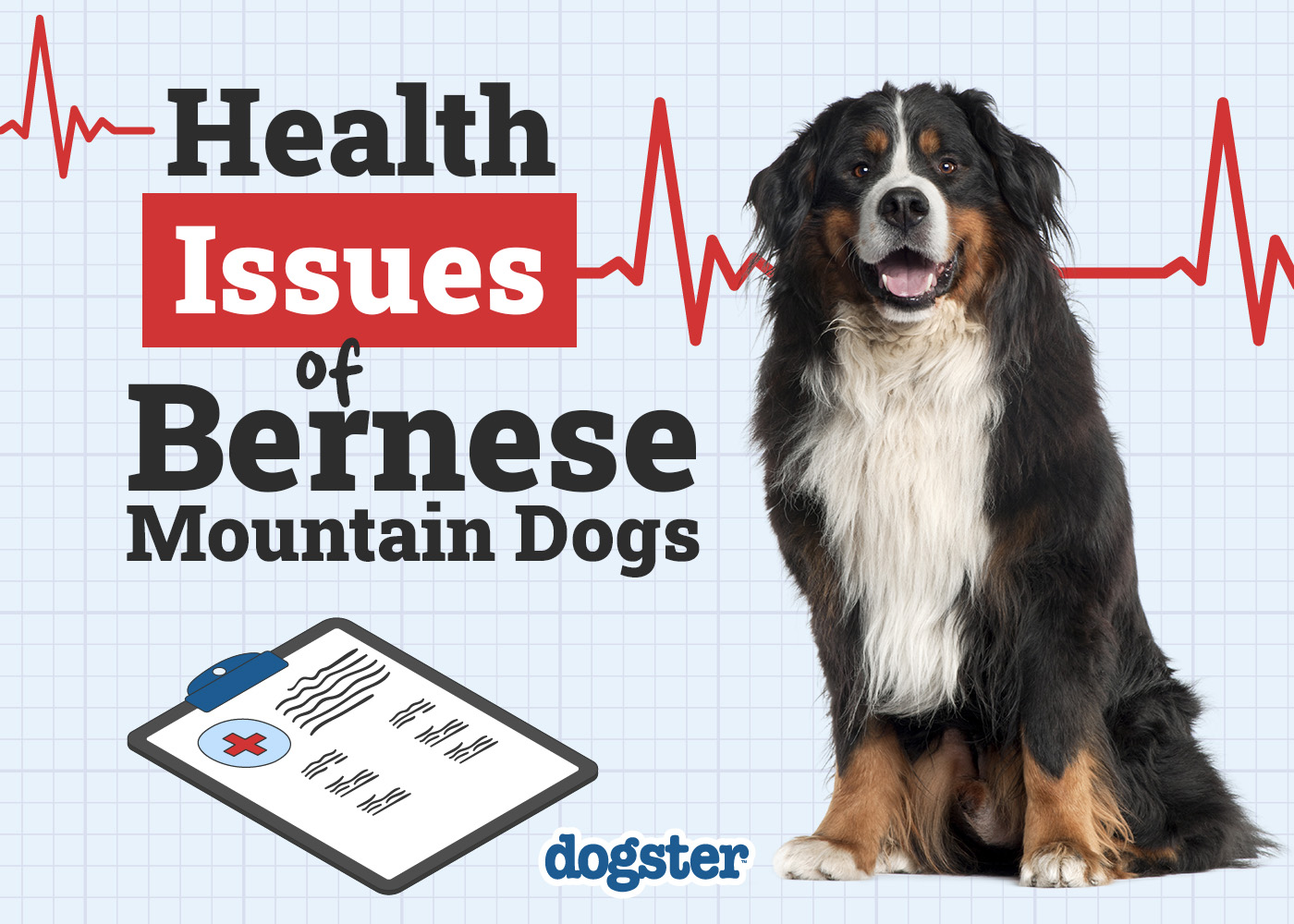
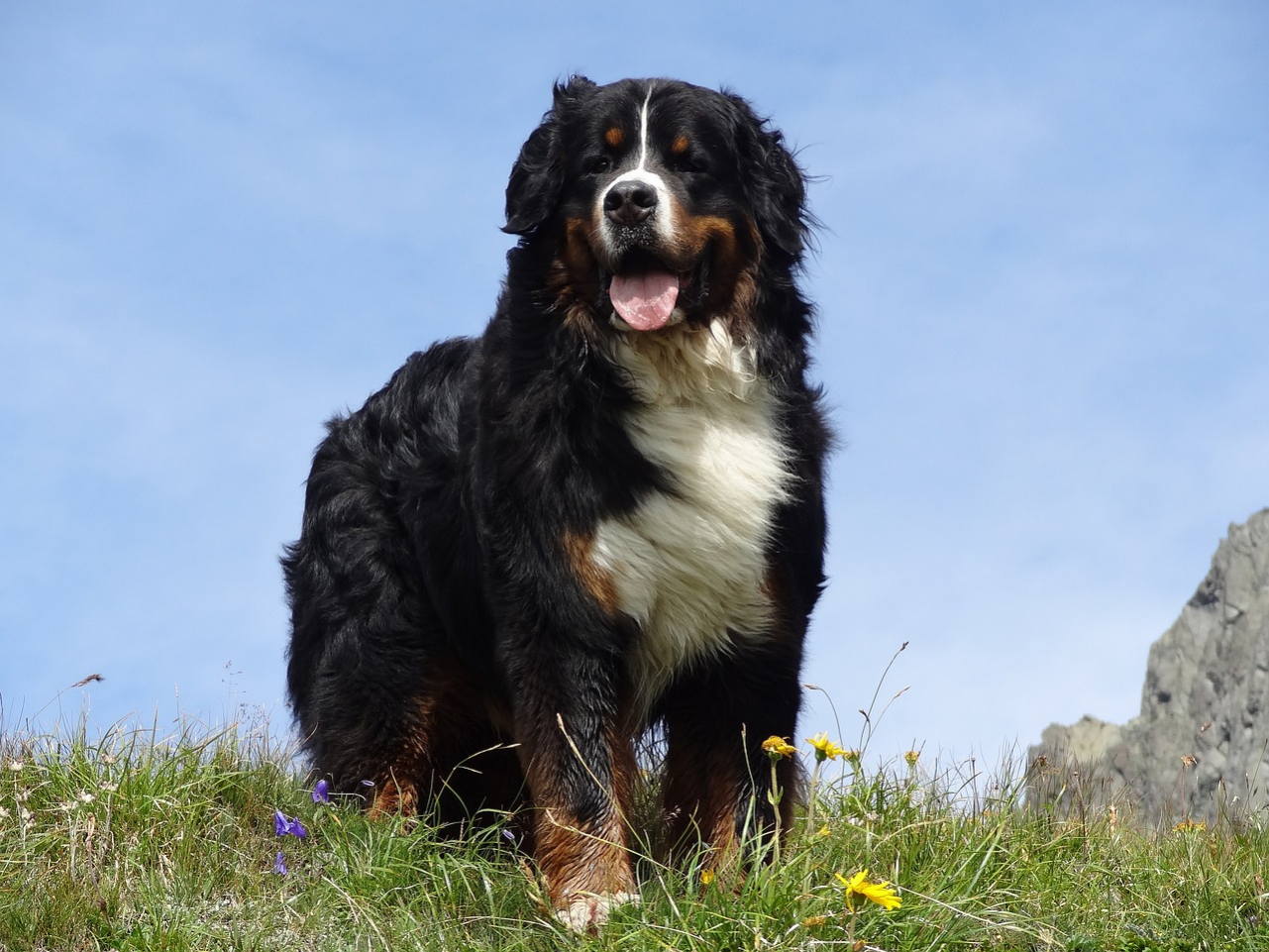
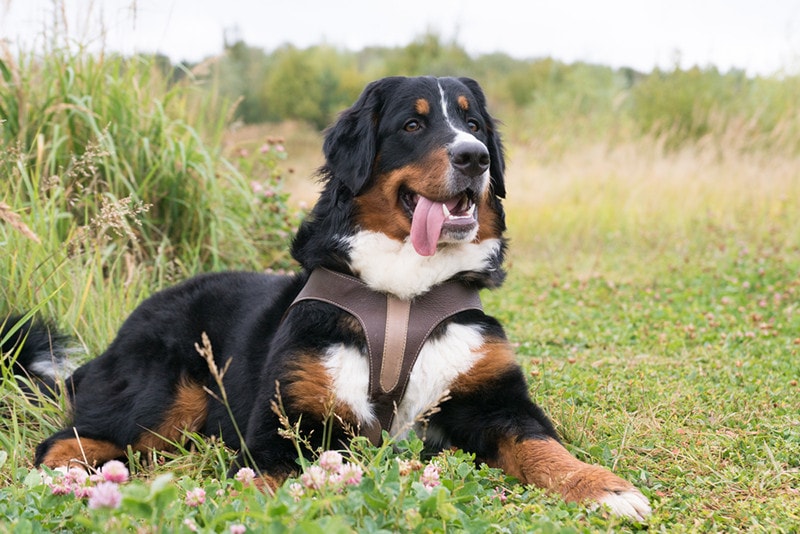
Bernese Mountain Dogs, also known as “Berners” among the enthusiasts of this breed, are gentle giants and one of the most attractive Swiss service dogs. They have shiny, soft, black fur and gorgeous markings. They are robust with solid bones and powerful shoulders. In some situations, Bernese Mountain Dogs need 2–3 years to reach full maturity.
They are loyal and intelligent dogs that get along well with children, but also with other pets. They live an average of 7–10 years, but in terms of health problems, Bernese Mountain Dogs are no strangers to them. Among the most common medical conditions of Bernese Mountain Dogs are gastric dilatation, eye diseases, cancer, hip and elbow dysplasia, and a few others.

The 8 Bernese Mountain Dog Health Problems to Watch For
Sometimes Bernese Mountain Dogs have health problems caused by irresponsible breeding. Not all Bernese Mountain Dog puppies have these health problems, but it is important to be aware of the possibility that they may occur and to take your dog to the vet for regular check-ups.
Here are the most common diseases of this breed:
- Cancer
- Eye disease
- Hip dysplasia
- Elbow dysplasia
- Hypothyroidism
- Gastric dilatation and volvulus ("bloat")
- Von Willebrand disease (a blood clotting disorder)
- Vascular disease
1. Cancer
Lymphoma, lymphosarcoma, and malignant histiocytosis (MH) are the forms of cancer that most often affect Bernese Mountain Dogs,1 causing their early death. The average survival time for MH is 2–4 months from diagnosis.
Clinical Signs include:
Cancer treatment includes chemotherapy, surgery, and medication.

2. Progressive Retinal Atrophy (PRA)
Progressive retinal atrophy is a degenerative disease (gradual degradation of the retina) that causes gradual vision loss,2 leading to irreversible bilateral blindness. Progressive retinal atrophy is a hereditary genetic disease.
Most dogs with PRA cope well with this condition as long as their surroundings do not change their position often. As a result, if your dog has been diagnosed with PRA, it is recommended not to change the furniture around.
If you're concerned about your dog's health we suggest you speak to a vet.
3. Hip Dysplasia
Hip dysplasia is mostly a genetically determined condition in joint development, but some external factors, growth,3, and nutrition can also have a negative effect on your dog's joint development.
This condition involves displacement of the femur from the leg joint. Some dogs may show pain or lameness in one or both hind limbs, while others may show no clinical signs. X-rays are the best method of diagnosing this medical condition.
Over the years, the affected dogs can develop arthritis. Bernese Mountain Dogs suffering from hip dysplasia should no longer be bred as they can pass it to their offspring.

4. Elbow Dysplasia
Elbow dysplasia or fragmented medial coronoid process (FMCP) is a condition similar to hip dysplasia. It is a degenerative disease that affects one-third to two-thirds of individuals.
It is believed that elbow dysplasia is caused by the abnormal growth and development of the bones that lead to the weakening and deformation of the joints. If your dog is suffering from elbow dysplasia, they can end up developing arthritis or even become permanently lame. Treatment includes surgery, weight management, medical care, and anti-inflammatory therapy.

5. Hypothyroidism
Hypothyroidism in dogs is a slowly progressive disorder in which the thyroid gland does not secrete adequate amounts of thyroid hormones (T3 and T4) to maintain normal organ functions. This condition is usually found in middle age to older Bernese Mountain Dogs.
Clinical signs include:
Diagnosis is made by testing thyroid hormones, and treatment includes changing the diet and administering synthetic thyroid hormones.
6. Gastric Dilatation and Volvulus (“Bloat”)
Gastric dilatation and volvulus (GDV) are medical emergencies because they can put your dog's life in danger. Gastric dilatation usually occurs in large dogs that ingest food quickly and in large quantities, together with many liquids. It can occur even when dogs exert intense physical effort immediately after eating.
GVD is more common among older dogs. After rapid eating, the stomach fills with too much gas or air that expands it. In some cases, the stomach can twist on itself (volvulus), accumulating even more gas. Your dog will no longer be able to belch or vomit to get rid of the excess air in the stomach, and blood circulation to the heart will be made with difficulty. The blood pressure will drop, and your dog will go into shock. The treatment is surgical.

7. Von Willebrand Disease (A Blood Clotting Disorder)
Von Willebrand disease is an inherited condition that can be found in both humans and dogs. The disease represents a blood circulation dysfunction that affects blood coagulation.
This condition is diagnosed at 3–5 years of age and cannot be cured. However, it can be controlled with treatments that include cauterization of wounds, blood transfusions before surgery, and avoidance of certain medications.
8. Portosystemic Shunt (PSS)
Portosystemic shunt is a congenital disease (present from birth) that is characterized by the fact that the blood bypasses the liver. Therefore, your dog's blood cannot be cleaned by the liver as it should be.
PSS can be:
Signs:
Less common clinical signs are gastrointestinal problems (vomiting, diarrhea) and urinary problems. In most cases, surgery is the best solution.

Conclusion
Although the Bernese Mountain Dog is a strong, robust, and resistant breed, this does not mean it is not prone to certain diseases. The most common diseases of this breed include cancer (especially malignant histiocytosis), elbow and hip dysplasia, portosystemic shunt, hypothyroidism, progressive retinal atrophy, von Willebrand disease, and gastric dilatation and volvulus.
Other common conditions are allergies and epilepsy. Many of these diseases are the result of irresponsible breeding.
To make sure your dog is healthy, it is necessary to take them to the vet for regular check-ups.
Featured Image Credit: RasaBas, Shutterstock
Expert dog care, straight to your inbox
Vet-reviewed advice, training tips, and the best of Dogster. Free, and you can unsubscribe anytime.
By signing up, you agree to our Terms & Conditions and Privacy & Cookies Policy.
Dr. Iulia Mihai, DVM MSc (Veterinarian)
Dr. Iulia Mihai is a veterinarian with more than 13 years of experience in laboratory, cancer and pet pathology. Dr. Mihai studied at the University of Agronomical Sciences and Veterinary Medicine of Bucharest, Romania. She has a master’s degree in equine and pet pathology and studied epithelial cancer for her Ph.D. Iulia has a passion for internal medicine and parasitology and started volunteering at the faculty’s clinic in her third year of college. She enjoys writing and educating people about disease prevention, nutrition, behavior, and treatment. She has worked in a couple of veterinary clinics over the years as an internal medicine specialist.
Join the conversation
Ask a question, share your story, or send private feedback.