Why Does My Cat Hate My Dog? Possible Reasons & Vet-Approved Tips


In this article
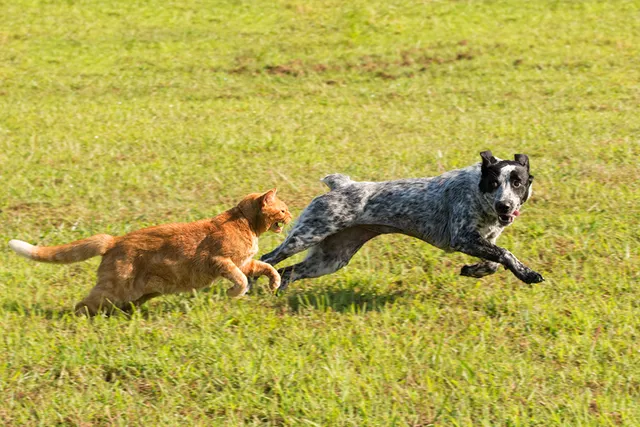
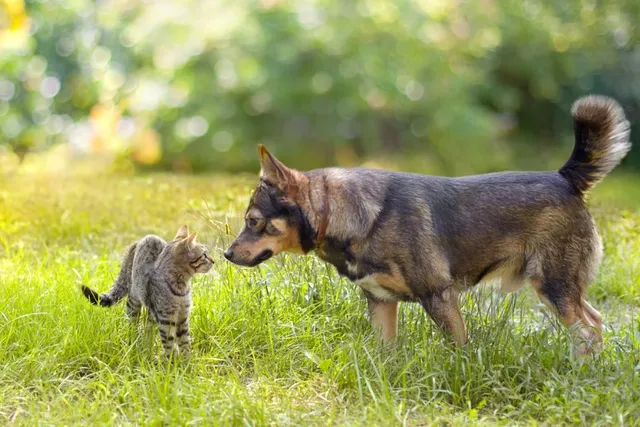
Cats and dogs can get along well. They can live in the same house, share the same spaces, and even form close bonds. But that isn’t always the case. Even with a placid pair, there can be trouble between the two, and while you might expect the dog to be the instigator, it is often the cat that seemingly hates the dog.
That dislike could be based on individual experiences, or it might be instinctive. Here, we look at some of the reasons that your cat might have taken a dislike to your dog and what you can do to help remedy the situation.

The 7 Possible Reasons Your Cat Hates Your Dog
1. They Fought Previously
If your cat and dog have fought previously, your cat will remember it. Even if the fight stemmed from playtime that got a little too real, if your cat got hurt or scared, they will associate that feeling with being around your dog. It is important to split fights up, but not by putting yourself in the middle of the furor.
Distract the cat and dog carefully. For example, if you spook your cat by shouting, you might find that they start to distrust you, and the same thing can happen with the dog.

2. They’ve Had Negative Experiences With Other Dogs
Your cat might be projecting fear or distrust caused by other dogs onto your dog. While a lot of dogs are respectful of cats in their own home, some will give chase when they see a cat outside the home. Even if your cat hasn’t had a direct run-in with a dog, if they have seen and heard ferocious barking and snapping from behind closed gates, they might expect more of the same from your pet pooch.
You can’t change past experiences, but you can improve your cat’s opinion of dogs, typically through careful and gradual introductions as well as positive reinforcement.
3. They’re Being Territorial
Cats are territorial, and your cat views your home as their territory. As such, they might not hate the dog specifically, but rather the idea of having a new addition to the home. This reaction would have been the same whether you brought home a dog, another cat, or potentially even a child.
Your cat needs to know that your home is still their castle and that they won’t lose their favorite spot or have their food eaten. Give them their own space, away from the dog, and make gradual introductions so the two can bond safely.

4. Your Dog Is Being Aggressive (or Too Playful)
When they feel threatened, some cats will run away. Others will stand their ground, which can mean claws and teeth. If you see your cat attacking your dog, you might only be seeing the tail end of an incident that your dog started. Your dog might not be showing aggression, but their play could be too overwhelming for the cat.
I have a young but big dog, and two settled cats, and I’ve seen my fair share of fights at home. The majority were started by my boisterous 1-year-old dog, who is still a playful puppy. She can still get a little bit too “paws-on” during playtime. Sometimes the cats will move away, but other times they’ve had enough, and they strike out. And the problem is self-perpetuating. The dog views a swipe from the cats as playtime. And so, it continues.
5. They Have No Experience with Dogs
When I first adopted Tula, the big bouncy pup, I brought her home to two cats that had minimal experience with dogs—apart from through the window. They were understandably fearful, and their instinctive reaction was to swipe. They didn’t hate the dog, but they viewed the approximations as attacks, and that response was the best way for them to deal with this new problem.
If you’ve just brought a new pup into the house, your cats could be reacting with the same defensive instinct. It might take time, but through careful introductions, you can teach your cats that the new dog isn’t that scary.

6. Introductions Were Rushed
The first few meetings between your cats and dogs are important. They set the scene for what is going to come. If your dog gets up in your cat’s face or paws at them, which is a natural action for dogs, this will make your cats cautious at best and fearful at worst.
Introductions need to be gradual, and they need to respect the cat’s boundaries especially.
7. They Might Be Playing
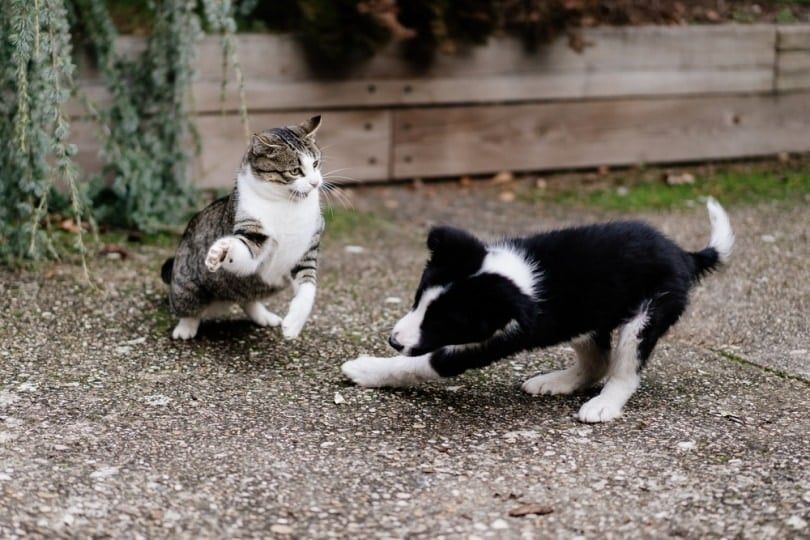
When you see paws swiping faces and you hear the bark of an excited dog and the meow of a playing cat, it is possible to mistake playful actions for aggressive ones.
Cats and dogs love to play; it’s why we should all spend more time engaging in playful activities with our pets. But since we know cats and dogs have a reputation for fighting, it’s easy to mislabel it.
Here’s What to Do
1. Make Gradual Introductions
This can’t be overstated. Ignore the old advice to throw them into a room together and let them sort it out themselves. It won’t work. In fact, it will probably make matters much worse.
Give both pets their own space, and consider putting up a stairgate between them. The stairgate will allow them to sniff and look at one another but prevent them from fighting. It will encourage positive early interactions and set your cat and dog up for a long and loving relationship. It will take time and effort initially, but it will make things easier in the long run.

2. Give Them Both Space
Cats can get grumpy, especially if their sleep is interrupted. If the dog is the one that’s interrupting their sleep, they are likely to be the target of your cat’s ire—and their claws. Make sure your cat has a private resting space. They will appreciate spots that are high up and out of reach of the dog, and some cats love to hide out in closets and other confined, dark, difficult-to-reach spots.
Similarly, your dog deserves their own space. Provide at least one bed. Most dogs prefer to be with, or at least near, their humans, so put the beds in the living room and other areas you frequent. Both pets will learn they have their own space, and they will retreat there if everything gets a bit much for them.
3. Play With Your Cat
Cats love to play. It mimics the act of hunting and allows them to burn off energy, and it should be encouraged. Take some time every day to play with your cat.
Grab a wand or another interactive toy that puts some room between your fingers and your cat’s claws, and spend 20 minutes playing with them. It will help control anxiety and reduce aggression and could be enough to stop your cat from charging after your dog with unfurled claws.

4. Play With Your Dog
Similarly, dogs also love to play. A tired dog is not only better behaved around the house, but they are also mentally fulfilled after playing fetch or engaging in a tug game with you, so they are less likely to bug the cat.
Besides, making sure your dog gets plenty of walks, look for ways to add playtime to your daily roster. Play fetch, hide toys and treats around the house, or even sign up for flyball or another canine sports activity. Your cat would thank you if they could and you’ll appreciate the harmony between the household pets.
5. Break Up Fights Carefully
If your cat and dog do fight, you should break it up but avoid the temptation to shout and don’t put yourself between them. Some people use a spray bottle: others use something that makes a loud noise. In any case, you don’t want your cat to associate the shock with you.
But this should be enough to get both their attention, calming increasing anxiety and potentially allowing the cat the chance to escape.
How Long Does It Take for a Cat to Get Used to a Dog?
Some cats and dogs gel quite quickly, even within a matter of days, but you should be prepared for the fact that it can take several months. Make introductions gradually, give them space, and spend time with both pets to reassure them both.

Can I Train My Cat to Leave My Dog Alone?
You can train a cat to leave your dog alone in much the same way you would train your dog. Ensure that both pets have physical and mental stimulation by offering exercise and playtime. When your cat ignores the dog, offer praise and rewards. Over time, they will associate this positive interaction with the action of ignoring the dog, and they will repeat the process.
Summary
Cats and dogs can live in harmony, but it does take time and effort on your part. Make careful introductions and don’t try forcing things. This might mean starting again if your pets have already been introduced, but the effort will be worth it when you have a harmonious and peaceful pet-filled house.
Sources
Featured Image Credit: asife, Shutterstock
Expert dog care, straight to your inbox
News, insights, expert advice, and everything dog.

No spam — unsubscribe anytime.
By signing up, you agree to our Terms & Conditions and Privacy & Cookies Policy.
How useful was this post?
Click a star to rate. You can leave written feedback afterwards. (We read all feedback.)
Matt is a freelance writer from the UK. He lives with his partner and daughter, as well as two cats and one dog. A data analyst by profession, Matt moved from numbers to words more than 15 years ago and has been writing ever since. Having volunteered at a local animal sanctuary, he has a lot of experience with dogs, cats, and horses. Matt has also kept bearded dragons, a variety of birds, fish, guinea pigs, hamsters, mice, and rats. His daughter has adopted the same passion for animals, keeping and breeding snakes. A geek at heart, Matt is a member of a local board gaming group and regularly forces his family to “enjoy” board games with him at home.