How Good Is a Cocker Spaniel With Cats? Vet-Reviewed Introduction Tips & Tricks



Cocker Spaniels are a popular breed of dog known for being friendly and affectionate. If you're a cat owner hoping to adopt a Cocker Spaniel, you may wonder how well the two will get along.
As a general answer, Cocker Spaniels can easily accept another furry member under the right conditions but it's impossible to predict the exact relationship between two individual animals. Still, understanding their typical behaviors can help you make an informed decision, although the relationship’s success will depend on the pets’ personalities, early socialization, and previous experiences.
Today, we'll explore the characteristics of Cocker Spaniels and cats and what to expect when introducing them. We've also included tips for fostering a positive relationship between the two.

Cocker Spaniels and Cats: What to Expect
Cocker Spaniels can generally get along well with cats under the right circumstances. Still, each animal has their own unique personality, experiences, and behaviors based on early socialization with other pets. So, there's no guarantee that any two animals will get along perfectly.
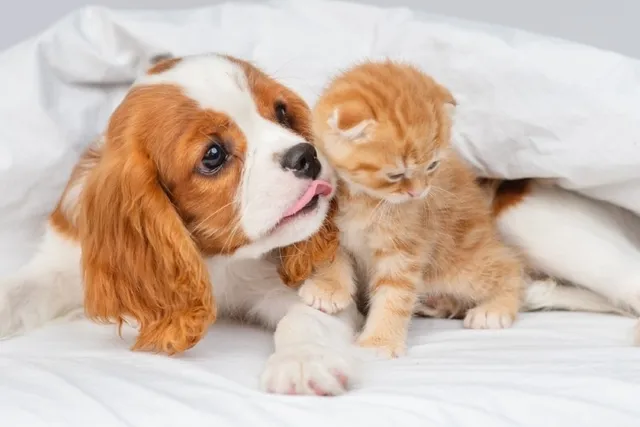
When properly socialized, these dogs typically interact with cats in a friendly and curious manner. They may approach a cat with a wagging tail and attempt to sniff or lick them. Cocker Spaniels are generally not too forward towards cats and some may try to play with them.
But you must remember that they were first bred as hunting dogs. So, they have an instinct to chase small animals, including cats. This means some Cocker Spaniels may be more inclined to potentially harm your cats.
You must also keep in mind that each animal is unique, and their behavior towards each other depends on their personalities and experiences. Some Cocker Spaniels may be more inclined to get along with cats and show little interest in chasing them. Meanwhile, others may need more time and effort to develop a good relationship.
When introducing a Cocker Spaniel to a cat, take things slow and ensure both animals feel safe. This may involve keeping them separated at first. Then, you may gradually allow them to spend more time together under supervision.


The 8 Vet-Reviewed Tips for Introducing a Cocker Spaniel to Cats
When introducing a Cocker Spaniel to a cat, you must take steps to ensure peaceful coexistence. Here are some tips to help owners prevent conflict between their Cocker Spaniel and cat:
1. Start with Scent-Swapping
Scent-swapping is a crucial first step when introducing a Cocker Spaniel to a cat. It allows each animal to become familiar with the other's scent before they meet in person. This can help reduce any fear or anxiety they may feel when they finally come face-to-face.
To start scent-swapping, rub a clean towel on your Cocker Spaniel. Pay particular attention to their neck, back, and tail, where their scent is most concentrated. Then, place the towel near your cat's playing area or somewhere they spend a lot of time.
Allow your cat to sniff the towel and become familiar with your Cocker Spaniel's scent. You can also do the reverse and rub a towel on your cat and place it near your Cocker Spaniel's sleeping area. This will familiarize your Cocker Spaniel with your cat's scent.
Repeat this process three or four times for a few days. This way, your pets have ample opportunity to become familiar with each other's scent. It will reduce any fear or anxiety they may feel when meeting in person.

2. Start Slowly
Introducing a new pet to the household can be an exciting time. But taking things slow is vital to ensure a smooth transition for all involved. Start in a controlled environment where you can watch their interactions closely.
One way to do this is to introduce them in a small room with a gate or a separate area of your home. This can help prevent any sudden movements that could startle either animal. You can also control their interactions by keeping the dog on a leash, in a crate, or using a baby gate to separate them.
When your Cocker Spaniel and cat are first introduced, ensure the dog is not able to approach the cat, and let the cat choose where they want to go next. Confident cats, especially in the case of puppies, may approach and sniff the dog, especially if the dog is calm and distracted with treats, while more anxious ones could take a few days or weeks to actually get close to the dog. This is fine and should not be rushed.
When they finally get to the point that they are both calm and relaxed around each other, with the dog showing no intent to chase the cat, and the cat going about their business, reward them both with treats and praise. You may now slowly allow them to sniff each other and get used to coming close to each other. You can also do this by placing their food bowls on opposite sides of the gate or in separate room areas. This will allow them to get used to each other's presence without feeling intimidated, and by receiving a reward such as food and treats, they will begin to associate each other’s presence with a positive experience.
3. Supervise Interactions
Supervising your Cocker Spaniel and cat's interactions will ensure they can coexist peacefully. When your pets are in the same room, keeping a close eye on them is essential, and it’s best to keep the dog on a leash until both pets are comfortable around each other. Also, be alert for any signs of aggression or over-excitement.
Aggression can manifest as growling, hissing, barking, or swatting. Over-excitement can also be a concern, as it can cause your Cocker Spaniel to chase or pounce on your cat. This will inevitably make your cat feel threatened or scared.
You must separate your pets immediately if you notice any of these behaviors. This can prevent any potential conflicts and ensure both animals' safety. You can do this by separating them with a baby gate or placing them in different rooms.
It's also important to know your Cocker Spaniel's prey drive. As a hunting breed, your Cocker Spaniel may chase after small animals, including cats. If you notice this behavior, work on training and socialization to help your dog overcome this behavior with your cat.
4. Give Each Animal Their Own Space
Providing each animal with their own space helps ensure they can coexist peacefully. When animals share a space, territorial issues can arise, leading to conflict and stress. Giving each pet their own space can provide them with a haven to retreat if they feel overwhelmed or stressed.
One way to provide separate spaces is to assign specific rooms or areas of the house for each animal. For example, you can set up a cozy bed and toys for your cat in a spare room. Meanwhile, your Cocker Spaniel has a crate or a bed in the living room or another area of the house. This will prevent territorial disputes and give each pet a place to enjoy some alone time.

5. Provide Plenty of Resources
Ensuring each animal has separate food and water bowls, toys, and bedding can prevent resource guarding, especially from the dog. More importantly, it promotes peaceful coexistence between your Cocker Spaniel and cat.
Resource guarding occurs when an animal perceives a particular resource as valuable. So, they attempt to prevent other animals from accessing it. This can cause conflict and tension between your pets and may lead to aggression.
To prevent resource guarding, provide each animal with their own set of resources. That includes separate food and water bowls ideally not close to each other, as well as different toys and bedding. As a result, they'll feel free from the need to compete with the other animal for access.
You should also feed your pets in separate areas of the house. This prevents any competition or aggression during mealtime. Dogs are usually the ones who don’t like having other animals next to their food bowls when they’re eating and this may cause them to lash out if the cat is just passing by. You may feed your Cocker Spaniel in one room and your cat in another or use a pet feeder to dispense food at specific times for each animal.
6. Use Positive Reinforcement
Positive reinforcement is a powerful tool to promote coexistence between your pets. By rewarding your pets for calm and friendly behavior, you encourage them to build a positive association with each other.
One of the best ways to use positive reinforcement is through treats. When you see your Cocker Spaniel and cat interacting well, reward each with a small treat. So, they'll associate good behavior with treats and continue to act friendly to each other.
Besides treats, you can also use praise and playtime as rewards for good behavior. Whenever you see your pets interacting calmly, offer them lots of verbal praise. You can also engage them in a gentle play session to reinforce such interactions.
7. Be Patient
Allowing your pets to approach each other at their own pace is also crucial. This can help prevent fear, anxiety, and aggression from either pet. Each pet has a unique personality, so they may not immediately become best friends.
To help ease the introduction, keep your Cocker Spaniel on a leash and your cat in a separate room. Allow your Cocker Spaniel to sniff the room and become familiar with your cat's scent. Meanwhile, let your cat sniff around your Cocker Spaniel's bedding and toys.
Even if your pets don't become instant friends, it doesn't mean they can't coexist in peace. Give them enough time to get used to each other and continue supervising their interactions. Over time, they may learn to tolerate each other or even become friends and play together.
8. Seek Professional Help
If your Cocker Spaniel and cat are still struggling to get along, seek help from a professional trainer, a veterinarian, or a behaviorist. They can help identify any underlying issues behind this struggle. They can also develop a personalized plan to help your pets learn to get along.
For example, a behaviorist may recommend desensitization and counter-conditioning techniques. That involves introducing the pets inside a controlled environment and rewarding them for good behavior. A trainer or a veterinarian may also work with you to develop a reward-based training plan.

Conclusion
Cocker Spaniels and cats can get along nicely under the right circumstances. Understanding their behaviors can help foster a positive bond between the two.
It's crucial to remember that every animal is unique. While some Cocker Spaniels may be more inclined to bond with cats, others may need more time and effort.
Being patient and proactive in your approach gives your Cocker Spaniel and cat the best chance at a harmonious coexistence.
See also:
Featured Image Credit: Ermolaev Alexander, Shutterstock
Expert dog care, straight to your inbox
News, insights, expert advice, and everything dog.

No spam — unsubscribe anytime.
By signing up, you agree to our Terms & Conditions and Privacy & Cookies Policy.
How useful was this post?
Click a star to rate. You can leave written feedback afterwards. (We read all feedback.)
Jeff is a data privacy tech professional who spends his evenings writing and practicing photography. He's been a software team lead at various Fortune 100 startups for 20 years and loves to relax after work with his pets.