Do Dogs Have Bones in Their Tails? Vet-Verified Facts & Info


In this article
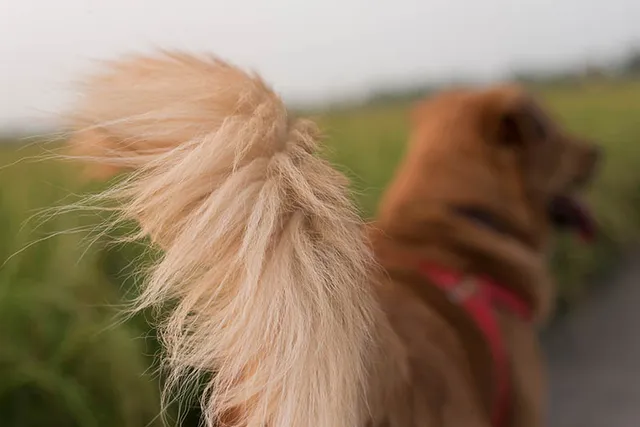
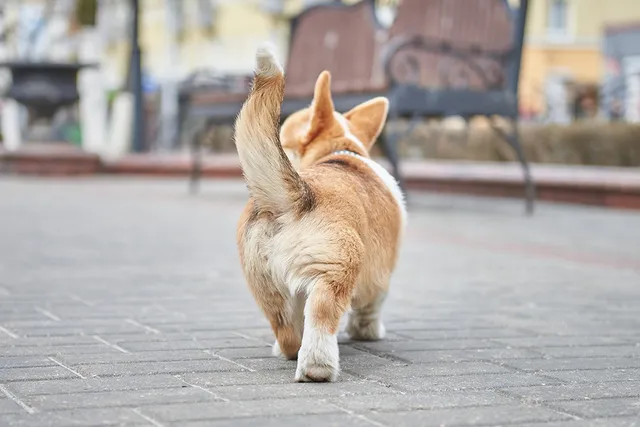
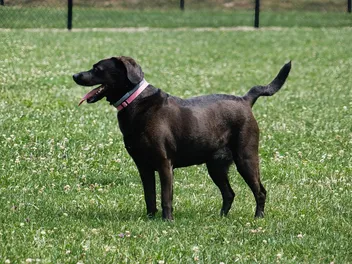
A dog’s tail is a powerful communication tool, but it is also used to help keep insects away, spread their scent, and balance. So do dogs tails have bones? The tail is an extension of your dog’s spine, and it does contain bones—typically around 20 of them in a typical dog.
There are various injuries and ailments that can affect your dog’s tail, some of which are very painful, and some that require veterinary attention to help ensure they heal fully. Below, we look at the anatomy of a dog’s tail as well as some of the conditions and injuries that might affect your canine companion’s tail.

Dog Tail Anatomy

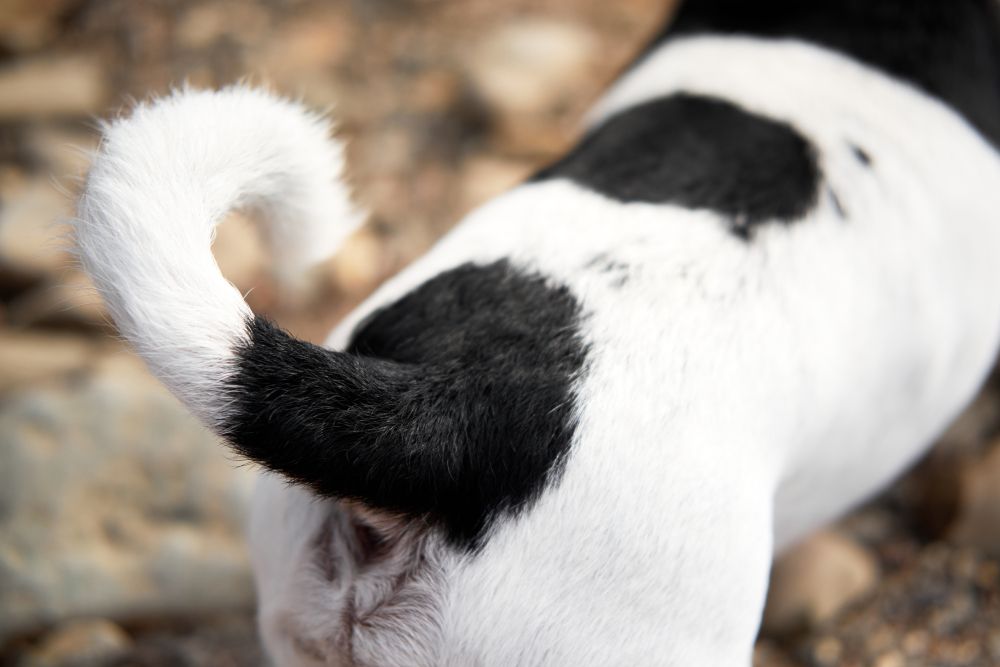
The tail is an extension of your dog’s spine. As such, whether your dog has an upright, flat, or even a curled tail, it does contain bones. These bones are called vertebrae and the ones in the tail are called caudal or coccygeal vertebrae. The exact number of bones in a dog’s tail depends on breed, size, and other factors, but there are usually around 20 bones. The caudal vertebrae are larger near the pelvis and become smaller towards the tip of the tail. As such when a dog’s tail is docked as a puppy it has several bones amputated.
There are discs between the bones while muscles and nerves make it possible for dogs to wag and control the movement of their tails. There is of course skin, hair and blood supply to the region too.
Functions of the Tail
The tail is a prominent feature on a lot of dogs. There are lots of different types of tails, from short to long, flat to curved, and thick to thin, they are important functionally for dogs.
Communication
We tend to look at an approaching dog’s tail to determine whether it is happy or anxious to see us, and we’re not alone. Other dogs look at tail positions in the same way, and they use their tails to convey their emotions to other canines. When tails have been altered by docking or in breeds whose tails don’t move freely (such as Pugs and BullDogs) it can cause difficulties in inter-dog communication.
This is why the move is to discourage the docking of tails unless it is for medical or safety reasons.

Balance
A recent study suggests that a dog’s tail is not strong or large enough to have much influence on a dog’s movement, which means that its use in balance is limited.1 However, you will notice a dog moving its tail from side to side when attempting to balance.
Scientists believe this likely means that while the tail was once a balancing tool, this has changed as dogs have become domesticated.
Protection
The tail doesn’t do much to protect against large predators, but it can help waft away flies and other insects. Tails can protect the back end and especially the delicate areas around the anus, belly and genitalia.
Some dogs also curl their tail up and rest their head on it while sleeping, which may be a means of protecting against insects from the ground while providing a warm and comfortable sleeping position.

Scenting
A dog has scent glands on either side of the anus, and they use these to mark territory. Wafting the tail is said to help spread the scent so that it covers a larger area and improves a dog’s scenting capabilities.
Conditions That Affect the Tail
The tail is important to communication and may be used for balance and other purposes. It is also a prominent feature, and this prominence can lead to injuries and other conditions that specifically affect the tail.
Some of the most common include:

The 4 Facts About Dog Tails
Dogs’ tails are very important to dogs. Not only do they use them to relay their emotions, but they could help prevent dog fights. If a dog approaches another with its tail wagging, the other dog recognizes that it is not a threat and is therefore more likely to accept it.
Below are four other fascinating facts about dog tails.
1. Dogs Don’t Wag Their Tails When They’re Alone
Although difficult to prove or disprove, it is believed that dogs do not wag their tails when they’re alone, because it is primarily used as a means of communication. However, a dog might wag its tail when it hears a noise or believes somebody is approaching, in anticipation of communicating with them.
2. Dogs Can Still Thrive Without Tails
Sometimes, a dog must have its tail amputated, especially if it has suffered an especially nasty injury. Dogs can thrive without tails, although it can hamper their ability to communicate with other dogs.

3. Dogs Learn Tail Wagging from Their Moms
Tail wagging is not a reflexive action, and most puppies do not start to wag their tails as a means of communication until they reach 4 or 5 weeks of age when they pick the habit up from their mom.
4. Tail Docking Is Illegal in a Lot of Countries
Although it is not strictly prohibited in the US, tail docking is illegal in the UK, Australia, most of Europe, and many other countries around the world. It is considered an inhumane practice that can lead to health problems further down the line, especially as the procedure is typically carried out without anesthesia and by breeders, rather than qualified vets.

Do Dogs Feel Pain in Their Tails?
Dog tails are made up of bones, muscles, other tissues, and nerves. As such, dogs do feel pain in their tails and some dogs can have very sensitive tails, hence why they don’t like having them touched or stroked. It is also possible for dogs to develop a “slipped disc” between the first couple of tail vertebrae which can cause pain.
What Does It Mean When a Dog Wags Its Tail?
Generally, a dog wags its tail quickly side to side to show it is not aggressive or to show happiness, excitement, or anticipation. Dogs also wag their tails to show happiness to their humans, and it is generally a positive sign when a dog wags their tail. Other tail positions and movements signal other emotions and messages.

Conclusion
Dogs use their tails primarily for communication, although they may also use them as aids to help with balance, wafting insects away, and even to help spread scent.
Dogs do have bones in their tails, and the tail itself is an extension of the spine and contains muscles as well as nerves, blood vessels and approximately 20 bones in total, starting with wide bones at the base of the tail and tapering off to smaller bones at the tip of the tail.
Sources
https://www.cell.com/current-biology/fulltext/S0960-9822(13)01143-3
https://royalsocietypublishing.org/doi/10.1098/rsbl.2023.0407
https://vcahospitals.com/know-your-pet/tail-injuries-in-dogs
https://www.akc.org/expert-advice/news/new-study-what-do-dogs-use-tail-for/
https://www.arkansasonline.com/news/2022/oct/31/ask-the-vet-other-nations-ban-tail-docking-of/
https://www.petmd.com/dog/conditions/behavioral/happy-tail-syndrome-dogs
https://vcahospitals.com/know-your-pet/acute-caudal-myopathy-limber-tail
Featured Image Credit: lightman_pic, Shutterstock
Expert dog care, straight to your inbox
Vet-reviewed advice, training tips, and the best of Dogster. Free, and you can unsubscribe anytime.
By signing up, you agree to our Terms & Conditions and Privacy & Cookies Policy.
Matt is a freelance writer from the UK. He lives with his partner and daughter, as well as two cats and one dog. A data analyst by profession, Matt moved from numbers to words more than 15 years ago and has been writing ever since. Having volunteered at a local animal sanctuary, he has a lot of experience with dogs, cats, and horses. Matt has also kept bearded dragons, a variety of birds, fish, guinea pigs, hamsters, mice, and rats. His daughter has adopted the same passion for animals, keeping and breeding snakes. A geek at heart, Matt is a member of a local board gaming group and regularly forces his family to “enjoy” board games with him at home.
Join the conversation
Ask a question, share your story, or send private feedback.