How to Go Skiing & Snowshoeing With Dogs: 8 Vet-Reviewed Simple Tips



Enjoying the outdoors with our dogs in the winter can be a bit complicated. Unlike humans, dogs can’t easily use snowshoes or skis. However, that doesn’t mean we can’t take these dogs with us at all. It just takes a little bit of extra planning and know-how.
Many dogs are resilient and can handle cold weather, but tolerance varies depending on breed, coat type, age, and health. Some dogs thrive in snowy conditions, while others may need additional protection or shorter outings.
Keep reading for our tips on involving your dog in your next skiing and snowshoeing adventure.

The 8 Tips on How to Go Skiing & Snowshoeing With Dogs
1. Don’t Overexert Your Dog
Walking in the snow is more challenging than walking on clear ground. Therefore, you’ll need to consider your dog’s stamina and plan your trip accordingly. We recommend taking it slow at first and taking a break whenever you notice your dog fatiguing.
Many dogs will continue to push themselves as long as their favorite human is involved. However, the last thing we want is for our canine to become injured. Therefore, it’s vital that you don’t push your dog too far.
Be particularly cautious about elevation changes. Taking your dog up a large mountain on your first trail isn’t recommended.
2. Use Proper Gear
Most breeds require an extra layer of protection against cold weather. All short-haired breeds fall into this category. However, we would also include most long-haired breeds unless they were specifically bred for colder weather. Huskies and Malamutes fall into this category, but even a Shih Tzu or Sheepdog is going to need some extra protection.
Dogs that are exposed to the elements can get hypothermia and frostbite, just like a person. Just because your dog has a layer of fur doesn’t mean they’re protected enough.
Don’t skimp on your dog’s gear either, and check on them regularly while out. They can’t tell you if they’re too cold or hot, so you’ll need to make that judgment call yourself.
You’ll also need to protect your dog’s feet, which are particularly sensitive to the cold and ice. Consider getting your dog some sturdy booties that are comfortable for them to wear. You’ll need to get your dog used to these shoes in advance, as many dogs aren’t used to walking with things on their feet. This isn’t an area you should skimp on, as these boots will be the only thing between your dog’s feet and the cold.
You may also want to use a wax-based ointment to keep your dog’s paws extra-protected. This ointment prevents ice from sticking to your dog’s feet. If you’re in shallow snow where salt isn’t a problem, you may be able to use this instead of booties.
A hands-free leash is also essential. You don’t want to have to hold a leash and your poles. Therefore, a leash that wraps around your waist is an easy option. However, you cannot use this with a dog that pulls on a leash, as they may very well pull you over.

3. Consider Skipping a Leash Altogether
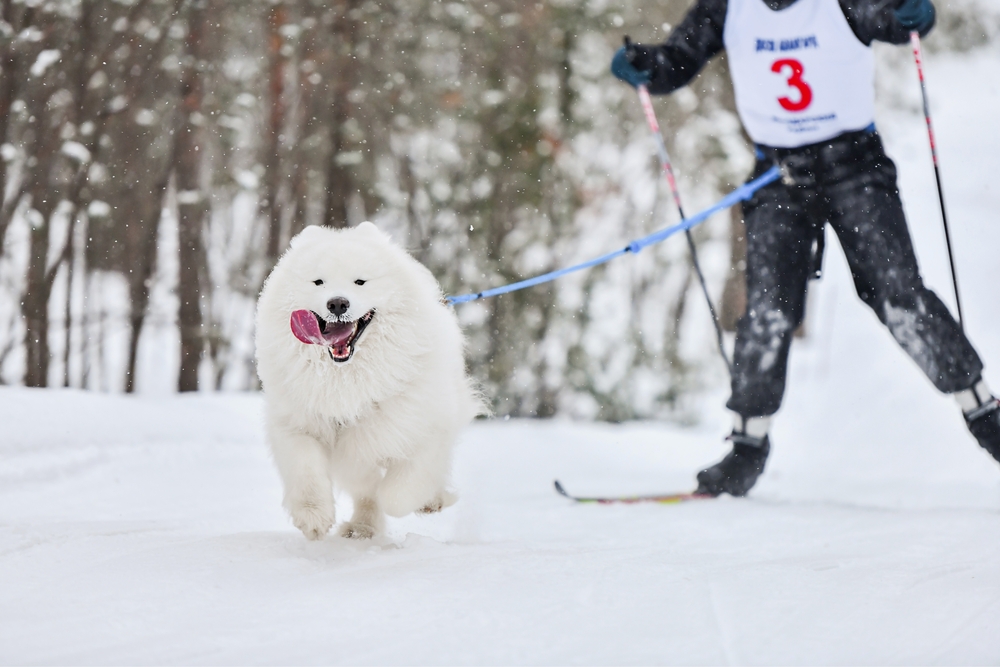
You may also want to consider skipping a leash altogether, especially if you’re skiing. Unless you're using your dog to purposefully pull you while you’re skiing, you probably don’t want to risk injury by attaching a running dog to yourself.
Instead, you should train your dog to reliably come when you call and stay near you while you’re skiing. Therefore, we only recommend skiing with your dog when they are well-trained. Otherwise, it is an accident waiting to happen.
4. Be Mindful of Others
Not everyone likes dogs. In fact, if you have a larger dog, it is very possible that others may be fearful of them. If you’re in a dog-friendly area, you’ll probably run into other dogs, too. Therefore, you should only hit the slopes with your dog if you can confidently control them around other people and pets. Be mindful of other skiers and be prepared to remove your dog from potentially troublesome situations before they start.
If your dog isn’t as trustworthy around other dogs and people, then you should stick to areas where running into others isn’t going to happen, such as the backcountry.

5. Take Breaks Often
Walking through the snow is tiring. Walking behind someone on snowshoes is less tiring than running behind skis. You can probably keep a pretty close eye on your dog when snowshoeing, but it may be harder to notice signs of fatigue when skiing. Therefore, we recommend stopping every 15 minutes to give your dog a rest and check on them.
Be sure to have water available for your dog, preferably in a collapsible bowl. Offer this every time you stop, as you don’t want your dog eating snow to quench their thirst. You may also want to bring some small snacks for your pooch, as running through the snow burns a lot of calories.
6. Watch the Temperature
Sometimes, it is simply too cold to adventure with your dog. Watch the temperature and don’t take your dog out when the wind chill is too low. Any windchill below 10 degrees Fahrenheit (-12 degrees Celsius) is too cold for most dogs, but especially smaller, short-haired, or young dogs may need to be kept inside at even higher temperatures than this. Always watch your dog for signs of frostbite and hypothermia. Senior dogs, ones suffering from health issues, and puppies need to spend even less time outside in the cold.

7. Inspect Your Dog Carefully
Be sure to inspect your dog’s feet, ears, and underside after every walk or outdoor adventure. If frostbite is going to happen, it will probably happen in one of these areas. Snowballs can also develop between your dog’s toes and along its underside. These can keep your dog colder for longer and may lead to discomfort.
Even if your dog wears booties, be sure to inspect their paws. Snow can get in their boots, leading to snowballing. If salt is on your walk, be sure to remove as much as possible with soap and water.
8. Always Be on the Safe Side
Hypothermia and frostbite can develop quickly in dogs, especially in small breeds or those with thin coats, puppies, dogs with low body fat, advanced age, or underlying health conditions. Therefore, you have to be extra careful when taking your dog outside in the elements. Even if you are technically okay at a certain temperature doesn’t mean your dog is. When in doubt, speak to your vet or other experts about when it is safe for your dog to be outside.
If you notice any signs of frostbite or hypothermia, perform first aid as soon as possible, getting them somewhere warm, and visit your closest vet. These conditions can be extremely serious for many dogs, and vet treatment is always required to prevent complications.
Conclusion
Taking your dog with you snowshoeing or skiing can be a great bonding experience, and it helps both of you get some exercise. However, the elements tend to be much tougher on dogs in these winter situations than on a regular walk, so there are some special things to keep in mind. We recommend being reasonably cautious anytime you’re handling freezing temperatures, but that doesn’t mean your dog has to stay inside all winter.
With the proper gear and planning, you can easily take your dog on trips with you. However, you must take the time to research the proper gear and prepare your dog. In the end, these steps simply make the trip more laid back and less stressful. Finally, remember that not all dogs tolerate cold weather the same way. Some are much more sensitive, especially those with short coats, small body weight, puppies, seniors, and sick dogs, which will benefit more from appropriate indoor activities instead.
See also:
What Is Schutzhund? A Comprehensive Guide to the Incredible Dog Sport
Roeckl Sports Winter Glove Review: Keeping Your Dog-Walking Hands Fashionably Warm
Featured Image Credit: Petr Ryabchun, Shutterstock
Expert dog care, straight to your inbox
Vet-reviewed advice, training tips, and the best of Dogster. Free, and you can unsubscribe anytime.
By signing up, you agree to our Terms & Conditions and Privacy & Cookies Policy.
Kristin loves to help pet parents create a fulfilling life for their pets by informing them on the latest scientific discoveries and helping them choose the best products for their pets. She currently resides in Tennessee with three cats, four dogs, two fish, and a lizard, though she has dreams of owning chickens one day!
Join the conversation
Ask a question, share your story, or send private feedback.