Male vs. Female Dogs: Vet-Reviewed Behavior Differences


In this article
When you’re ready to bring a new dog into your home, you’ll need to consider what breed best suits your family. But would the sex of the dog also be a deciding factor?
There are indeed differences in physical appearance and temperament between males and females. That said, all dogs have unique personalities.
Here, we discuss a few of the differences between male and female dogs, which might help you decide which sex will likely make the best pet for you and your family.

Male and Female Dogs 101

Of course, there are notable physical and temperamental differences between male and female dogs. But you should also be aware of how owners can influence their dogs’ temperament, particularly in how the sexes are treated.
For example, we humans tend to have certain expectations concerning how we approach and deal with our pets depending on their sex. We may treat males more rough and tough, with wrestling and tug-of-war type exercises, while females may get a gentler approach.
Essentially, how our dogs mature and grow from puppyhood to adult dogs is shaped by how we train and socialize them. This doesn’t always mean they will act specifically “male” or “female.”
That said, certain common traits tend to show up in each sex. Just bear in mind that there are always exceptions to the rule!

Male Dog Overview

Personality / Character
Several factors directly impact a dog’s personality. Besides training and socialization, there are hormones, whether the dog has been neutered, and of course, the breed.
Personality traits used to describe male dogs include that they tend to be goofy, energetic, and more affectionate toward humans than female dogs. They are also known to take longer to mature and can remain full-grown puppies for years! However, if your male dog is unneutered, you may be dealing with more aggressive, territorial, and sometimes frustrating behaviors.
A neutered male will be less fixated on unspayed females (naturally). While they probably won’t be as aggressive or territorial, depending on the breed, you might still find your male urinating to mark his territory and protecting his family from anyone he considers an intruder.
Appearance
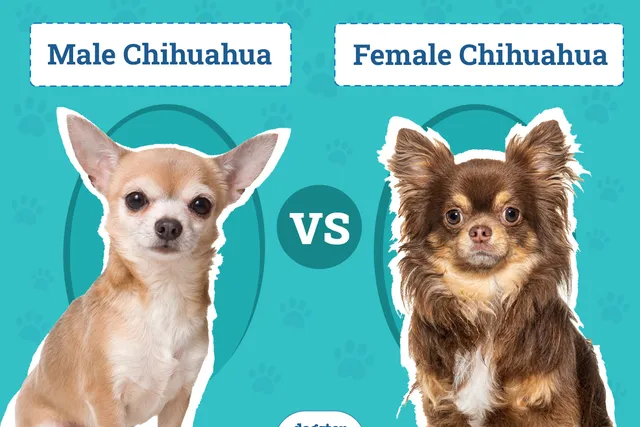
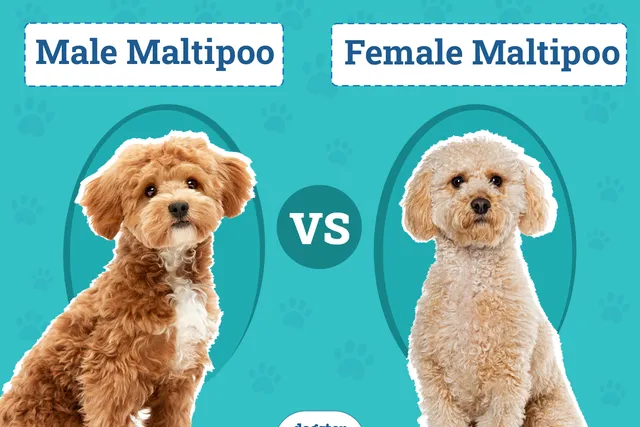
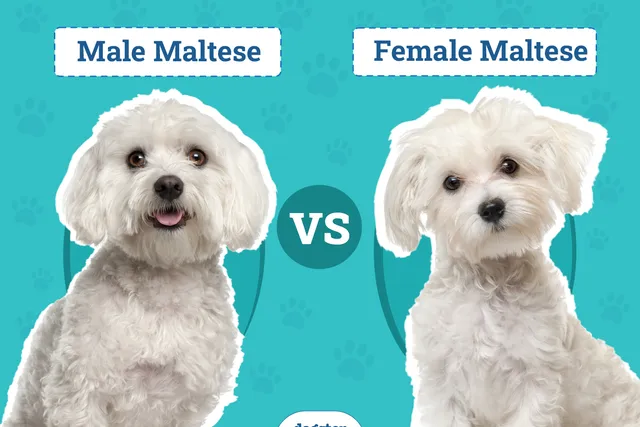
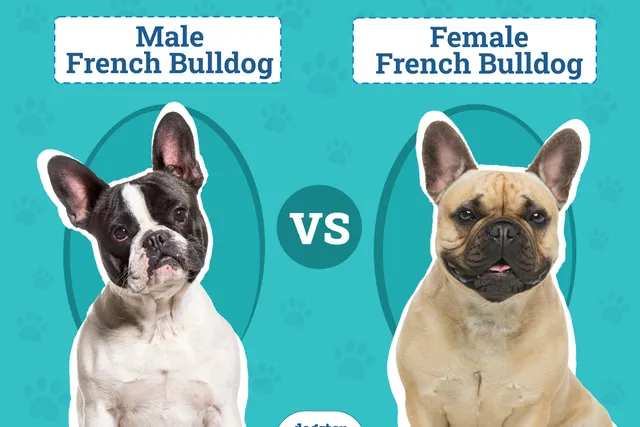
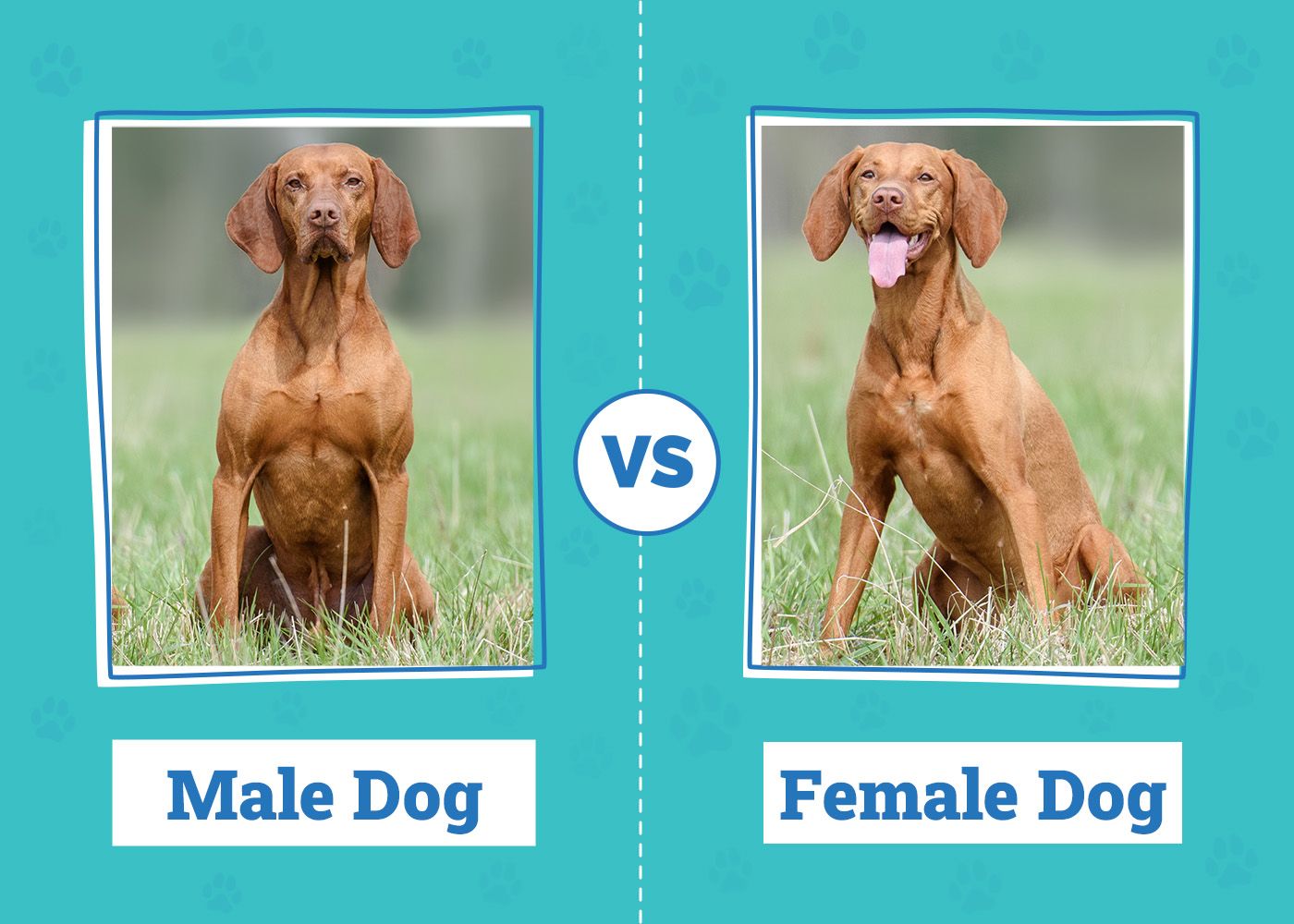
This is also breed-dependent, but for the most part, males tend to be larger and heavier than females. Their builds can be stockier, with larger bones and thicker muscles than what you find with females.
Since this depends on the breed, though, particularly with mixes, you might find larger females than males in a litter (especially if the parents are two breeds of notably different sizes).
Training 🎾
Male dogs can be harder to train than females, and it’s thought that this is due to how much longer it takes for them to mature. Many male dogs are also known for their boisterous, zany personalities, which might make it more challenging for them to focus during training.
But bear in mind that this is just a generalization, and you’ll likely find some male dogs easier to train than some female dogs.

Health & Care
Male dogs can encounter health conditions related to their reproductive systems, many of which seem to occur in unneutered dogs. Therefore, experts recommend neutering dogs, which can help prevent these health issues, including testicular tumors. That said, caring for your male dog, such as feeding and grooming him, isn’t much different from caring for a female dog. How much you need to feed your dog depends on their current weight, age, and activity level. Male dogs, usually being larger, are more likely to eat more than females.
Pros
- Playful, energetic, and silly
- Protective
- Physically larger (which can be a pro or a con)
- Neutering being less expensive and less invasive than spaying
- Affectionate
Cons
- Unneutered males being more aggressive and territorial
- Showing more dominant behavior
- Taking longer to mature
- May be less easy to train
- Might be too boisterous for young children

Female Dog Overview

Personality / Character
Female dogs are often considered calmer, gentler, and more independent than males. They can be affectionate, but male dogs tend to seek affection more than females.
While this might be a stereotype, it’s thought that female dogs are more maternal and nurturing. But this depends on the individual dog and the breed. It’s also said that females might be more attentive to their owners than males, and they typically mature quicker.
Appearance
Females tend to be smaller and lighter in weight. Since they aren’t quite as heavy boned, many female dogs will look more svelte than male dogs.
Training 🎾
Females are believed to mature faster and be more attentive, so they may be easier to train than males. They're also thought to be easier to house train and tend to be less vocal than male dogs.

Health & Care
Like with male dogs, unspayed females might encounter reproductive issues, such as mammary tumors and pyometra. Beyond this, male and female dogs can encounter similar health conditions regardless of sex. Grooming also comes down to the breed.
Pros
- May be easier to train
- Typically more independent
- Mature faster
- Maternal and protective, therefore often great with children
- Tend to be calmer and gentler
Cons
- May not be as affectionate
- Spaying being more invasive and expensive
- Unspayed females requiring extra care when going into heat

Which Sex Is Right for You?
For the most part, a dog’s breed and temperament are more important than their sex, so it doesn’t matter which one you adopt. But if you already have a dog in the household, it’s generally recommended that you get a dog of the opposite sex. Two male or two female dogs are more likely to jockey for dominance. This process is easier if you bring home a puppy rather than an adult. There’s a saying that female dogs love you and that male dogs are in love with you. But the validity of this depends entirely on the individual dog; you will definitely find some female dogs that are more affectionate than some males. So, take into account your family and your own personality, and use that to guide you to the right dog. Focus on activity levels, trainability and other traits rather than solely on the sex of a dog.
Sources
Featured Image Credit: valery.kruk, Shutterstock
Expert dog care, straight to your inbox
News, insights, expert advice, and everything dog.

No spam — unsubscribe anytime.
By signing up, you agree to our Terms & Conditions and Privacy & Cookies Policy.
How useful was this post?
Click a star to rate. You can leave written feedback afterwards. (We read all feedback.)
Kathryn was a librarian in a previous lifetime and is currently a writer about all things pets. When she was a kid, she hoped to work in a zoo or with wildlife in some way, thanks to her love for animals. Unfortunately, she's not strong in the sciences, so she fills her days with researching and writing about all kinds of animals and spends time playing with her adorable but terribly naughty tabby cat, Bella. Kathryn is hoping to add to her family in the near future – maybe another cat or two and a dog.