Male vs Female Weimaraners: Vet-Verified Differences (With Info & Pictures)


In this article
The Weimaraner is a great pet to make part of your family. Males of this breed are known for their goofy antics and loveable attitudes. With a boy Weimeraner, you can spend hours outside running or inside the house playing fetch and other games. These males want to make their owners happy and will take part in any activity you’re up to. Female Weims are more docile, yet stubborn. With one of these ladies, you should be prepared to let her rule the kingdom while you plan on doing her bidding. These girls show great focus and dominate most animals in the home. While they may be the smaller of the breed, they easily show the boys who’s boss.
If you’re debating on which Weimaraner is best suited for you and your family, take a look below to learn the differences between males and females of this breed. Hopefully, this will help you choose the perfect pet for your lifestyle.

Visual Differences

At a Glance
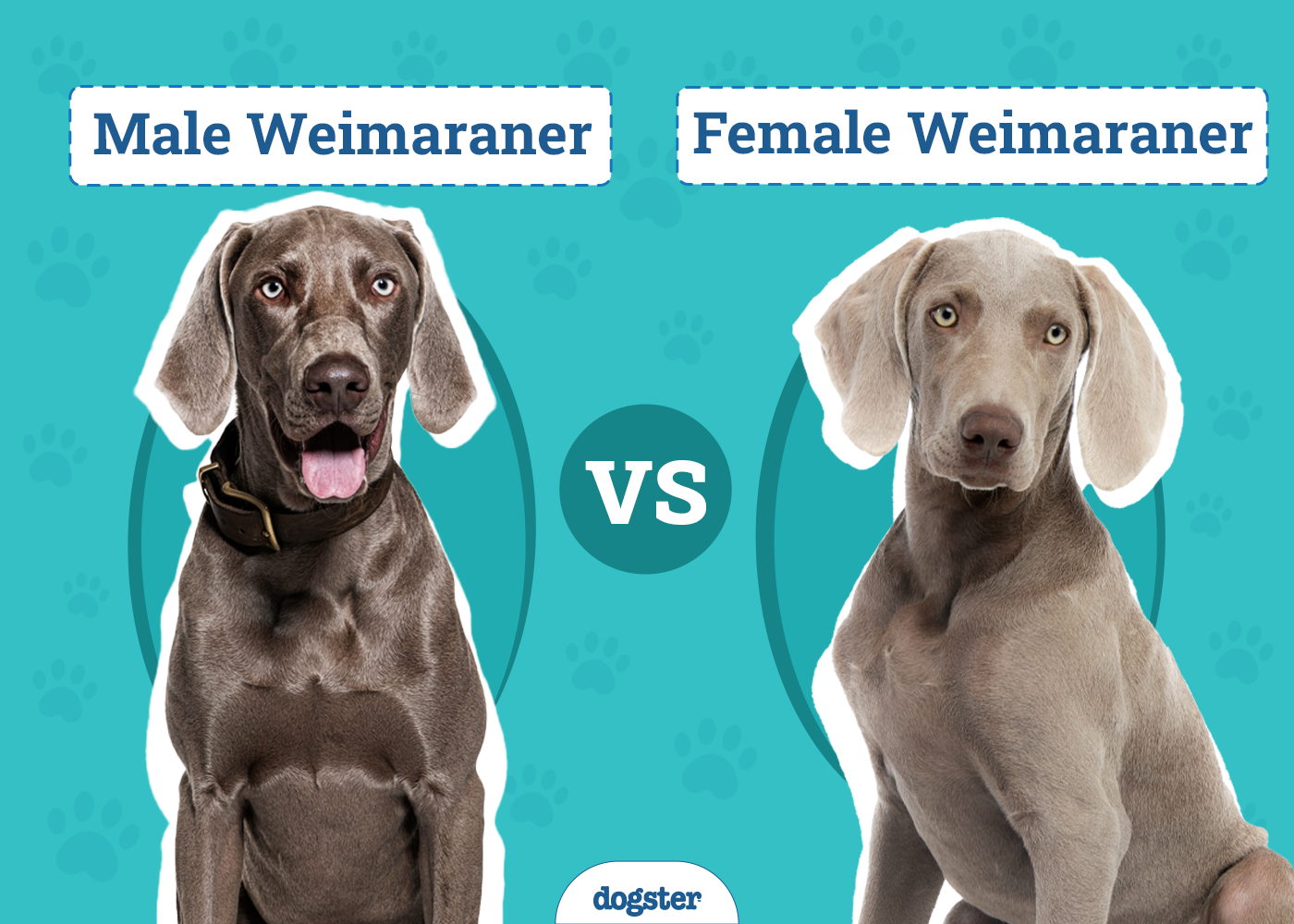
Upon first glance at the Weimaraner, you’ll see males are slightly larger than females. While this is common in most breeds of dogs, you’ll notice the difference here is quite noticeable. Female Weims may appear as small and less impending as their male counterparts but remember, with this breed, the females are often the most dominant.
Weimaraners 101

The Weimaraner is a great dog breed to bring into your home. This dog breed is known for its ability to mingle with adults and children while offering the love and obedience pet parents hope for. These dogs are also great with other animals when socialized early. By bringing a Weim into your home, you’ll be opening the door to a new pet that can fit into any family without issue.
Male Weimaraner Overview

Personality
While normally female dogs are considered the most affectionate of the sexes, that’s not true of Weimaraners. Male Weimaraners are vocal, loveable dogs who enjoy alerting you to their wants and needs. They are playful and affectionate which means they’ll want quite a bit of your time. Weimaraners are also very eager to please. When playing games such as fetch, they will immediately jump into action and return objects just to hear you praise them.
Training
Training with a male Weimaraner takes a bit of patience. While they may be the more loving and playful of the sexes, they are also the easiest to be distracted. All Weimaraners mature slowly. This means you may see puppy-like actions out of them for several years. Some, never grow out of this. When it comes to training, however, even with their short attention spans, males are easier to train than females due to their eagerness to please their owners.
Health & Care
Unfortunately, Weimaraners are susceptible to several minor health conditions. One illness male Weims are more prone to is dilated cardiomyopathy. This illness affects male Weims far more than females of the breed.
Another issue many males Weims experience is steroid-responsive meningitis-arteritis. SRMA normally affects young male Weims but has been known to affect dogs of this breed as old as 6 years of age.
To help keep your Weimaraner boys healthy, most veterinarians recommend having them altered at an early age. Once your male is at least 12 months of age, having him neutered will help reduce some of the illnesses they are prone to.
Breeding
While breeding your Weimaraner may be your goal, keeping the possible health risks of not neutering your dog in mind is vital. It is also important to remember that as they age, male Weims' attitudes may change slightly if they remain intact. Once they are around 2 years old, you could see your Weim start showing aggression to other dogs. They may also start roaming which can make them more difficult to control in certain settings.
Pros
- Extremely affectionate to their families
- Eager to please
Cons
- Unaltered males may show signs of aggression
Female Weimaraner Overview

Personality
While male Weimaraners are goofy and loveable, females of this dog breed are a bit more reserved. Female Weims love their humans and show affection, but only when they’re in the mood. These females enjoy spending time alone as they are quite independent. These ladies love to bark if they don’t get their way and are very good at showing when they aren’t happy. It is also said that female Weims make better guard dogs than males due to their focus and their ability to be the more dominant dog inside the house.
Training
The stubbornness of female Weimaraners makes them more difficult to train than their male counterparts even though they mature at an earlier age. When training a female Weim, always remember to use a consistently firm hand. Their focus is a great asset for training but can also put you into a battle of wills against your dog due to their stubborn natures.
Health & Care
Female Weimaraners are mostly healthy but are prone to patent ductus arteriosus. This hereditary disease is a common heart defect found in many dogs that is only treatable with surgery. Some issues are threats to both males and females of this breed. Hip dysplasia, mast cell tumors, bloat, and dental disease are a few of the common issues female Weims may encounter throughout their lives.
Like with males, spaying your female Weim will help protect them from certain illnesses that may affect an unaltered female of this breed.

Breeding
At around 9 to 15 months of age, intact females go into their first heat. This is a common thing for females who haven’t been spayed. If you’re planning on spaying your female Weimaraner, expect to deal with at least one heat cycle as it’s recommended that they not be spayed until after the completion of this cycle.
Pros
- More focused and less hyper
- Great guard dogs
Cons
- Can be stubborn and headstrong
Which Sex Is Right for You?
The Weimaraner is a great dog, no matter which sex you choose to bring home. For those who want a loving dog that is a great pet, there is no wrong answer with this breed. The choice, however, comes with the lifestyle you lead.
Those with more active lifestyles are best suited with a male Weim. These dogs are active, love to play, and are eager to please their owners in any game or activity they take part in. Great with families, it’s important to be careful if you have small children. With their hyper tendencies, they could jump up on small children without the intention of doing any harm.
Female Weims are more headstrong and stubborn which makes them better suited for owners with a bit of experience when it comes to owning dogs. Females are also more focused and protective of their homes and families which makes them ideal for families who hope for a great watchdog.
If you’re ready to bring a Weimaraner into your home, consider your situation before choosing between a male or female. This will help you make the best decision when it comes to which sex would work in your home. Either way, you go, a Weimaraner will make a perfect companion for years to come.
Related Reads:
Expert dog care, straight to your inbox
Vet-reviewed advice, training tips, and the best of Dogster. Free, and you can unsubscribe anytime.
By signing up, you agree to our Terms & Conditions and Privacy & Cookies Policy.
Nicole has loved animals of all sizes her whole life so it's no wonder she has dedicated her career to helping them through what she loves best: learning, writing, and sharing knowledge with others. She’s the proud mom of two dogs, a cat, and a human. With a degree in Education and 15+ years of writing experience, Nicole wants to help pet parents and pets around the planet to live happy, safe, and healthy lives.
Join the conversation
Ask a question, share your story, or send private feedback.