How Far Away Can a Dog Smell a Coyote? Vet-Verified Distance Facts

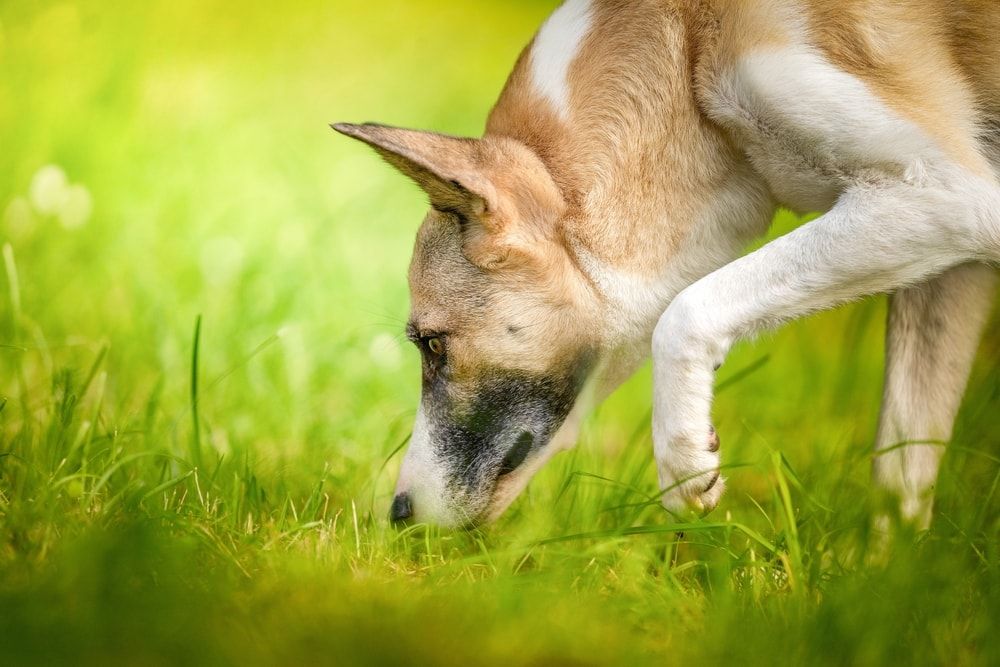
Dogs have an astounding sense of smell. The canine nose contains 200–300 million scent receptors, depending on the breed, and humans have a paltry 5 million.1 Dogs have a second scent organ to boost their sniffing abilities. Their sense of smell is so acute that some dogs can be trained to detect certain medical conditions, including changes associated with diabetes or some cancers, using scent samples.
Dogs understand the world mainly through smell, relying heavily on olfaction, as we do on our sight. It's why your canine buddy loves to stop and sniff during walks; it's how they learn who's been around, for how long, and when. You may wonder if dogs can smell coyotes; the answer is yes. Dogs can smell coyotes just as they can sniff out cats and humans. While there is no scientifically established maximum distance for detecting coyote scent, research shows that dogs typically detect scents from about 80 to 200 feet (approximately 25–60 meters) in many field situations. However, detection can occasionally occur at distances of over 1,800 feet (about 550 meters) under ideal conditions.2 Read on for more information about dogs and coyotes.

What's a Coyote?

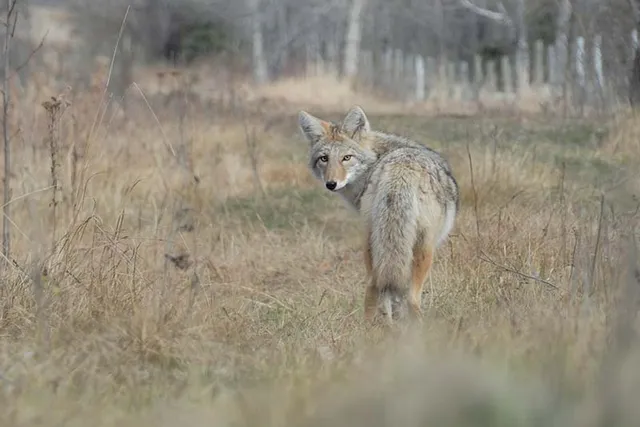
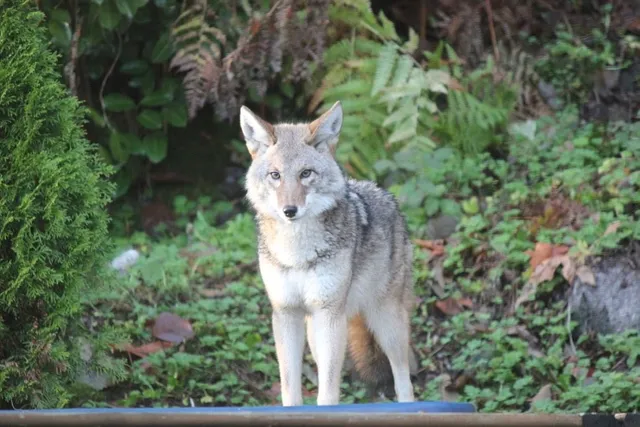
Coyotes, technically Canis latrans, are members of the Canidae family. They're native to North America and genetically related to wolves. Coyotes are smaller than their Canis lupus cousins, which often weigh more than 80 pounds and grow to over 30 inches at the shoulder. Male coyotes can reach up to 24 inches at the withers and weigh up to 40–45 pounds. Some are over 4 feet long, nose to tail. Most live around 6–8 years in the wild, but captive animals often reach their 20s.
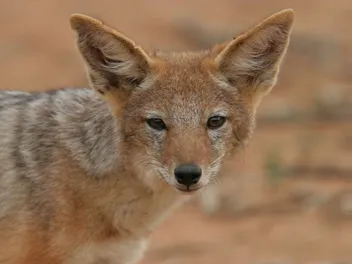
Most have rough gray or reddish coats, but coyotes in mountainous areas have fur highlighted with black and white markings. Those living in deserts have a light shade of gray. Coyotes have long, bushy tails and are recognizable by their narrow muzzle and upright ears.
They’re primarily carnivores; the majority of their diet consists of small mammals, particularly snowshoe hare and rodents. They'll also eat birds, snakes, fish, prairie dogs, and marmots. Coyotes hunting cooperatively in pairs or packs occasionally can bring down larger prey, such as elk and wild sheep. When hunting larger prey, coyotes focus on easy-to-catch individuals, like those caught in ice or weakened by hunger. Coyotes will also scavenge and eat roadkill.
These incredibly adaptable animals also augment their diets with fruit, insects, and grass. When having difficulty finding or catching prey, coyotes turn to fruit, including blackberries, apples, and peaches. They'll also eat a wide variety of plant material and human food sources when available. Desert-dwelling coyotes regularly consume caterpillars and beetles, particularly in the spring. They regularly prey on livestock in farm areas and have been known to kill cats and small dogs.
Coyotes originally had a range that stretched from the Sonoran Desert to Alberta, Canada, but after wolf populations began to decline, these medium-sized predators expanded into Central America and Alaska. Coyotes have substantial populations in Eastern Canada and the northeastern part of the United States, but they can now be found throughout the continental United States. Only the Darien Gap currently limits natural expansion into South America. They don't have many natural predators, but mountain lions and wolves occasionally kill coyotes.

Can Dogs Mate With Coyotes?
As members of the same genus, coyotes and dogs can interbreed, much like dogs and wolves and wolves and coyotes! There are three primary North American hybrids: coydogs, wolf dogs, and coywolves.
Coyote/dog mixes are called coydogs and are also known as dogotes. The mix usually involves a coyote father and a domestic dog mother, partly because successful breeding between female coyotes and male domestic dogs is less commonly reported. Coydogs and dogotes were intentionally bred in pre-Columbian Mexico as well as in Canada, where the large hybrids were used as sled dogs. Intentional breeding of wild canids as pets is uncommon and often restricted or regulated due to behavioral and welfare concerns.
Coydogs aren't that common in the wild as the natural breeding seasons of the two species don’t fully align; coyotes tend to breed during the winter, while domestic dogs can cycle year-round, but most commonly come into heat one to two times per year. Depending on the size of the dog parent, coydogs can be larger than coyotes, with some reaching up to about 27 inches at the withers and weighing more than 100 pounds in rare cases. And they often display their mixed ancestry by producing bark-yips.
Wolfdogs are wolf-dog mixes that have been around for millennia. They can be found almost anywhere gray wolf populations have come under pressure and had regular contact with domestic dogs. Humans have also selectively bred these two similar animals to intentionally create domestic breeds with wolf genes, including the Saarloos Wolfdog and the Czechoslovakian Vlcak.
Coywolves are mixes of coyotes, wolves, and domestic dogs, and they're frequently found in the wild. Coywolves resemble small wolves but exhibit behavioral characteristics inherited from all three of their ancestors. Most are incredibly adaptable, can live in urban environments, and capture prey in forests. Many eastern North American "wolves" are genetically coyote–wolf hybrids, sometimes with limited domestic dog ancestry. Even their vocalizations may reflect mixed ancestry, since many start with a wolf-like growl and end with a hail of coyote-like yips.
Conclusion
Dogs can smell coyotes over long distances, but detection range varies widely depending on environmental conditions, and there is no scientifically established maximum distance. But just because your dog doesn't react to a coyote doesn't mean they haven't figured out there's one in the neighborhood. Coyotes are members of the same genus as dogs, and the two often display similar instinctual behaviors, such as marking and howling.
The two species can interbreed, creating coydogs and dogotes. Coyotes can also mate with wolves to create coywolves, who usually have coyote and wolf ancestry primarily, with a little bit of domestic dog DNA in some populations. Dogs probably smell coyotes with the same olfactory ability with which they sniff out other canines, including domestic dogs and wolves.
Sources
Featured Image Credit: Pawtraits, Shutterstock
Expert dog care, straight to your inbox
Vet-reviewed advice, training tips, and the best of Dogster. Free, and you can unsubscribe anytime.
By signing up, you agree to our Terms & Conditions and Privacy & Cookies Policy.
Nicole has loved animals of all sizes her whole life so it's no wonder she has dedicated her career to helping them through what she loves best: learning, writing, and sharing knowledge with others. She’s the proud mom of two dogs, a cat, and a human. With a degree in Education and 15+ years of writing experience, Nicole wants to help pet parents and pets around the planet to live happy, safe, and healthy lives.
Join the conversation
Ask a question, share your story, or send private feedback.