Dogster is reader-supported. When you buy via links on our site, we may earn a commission at no cost to you. Learn more.

Lifestyle

How Big Do Great Pyrenees Get? Average Weight & Growth Chart (Vet-Verified)

Ashley Bates
By Ashley Bates · Reviewed & fact-checked by Dr. Chyrle BonkVet Approved
Dr. Chyrle Bonk
Reviewed & Fact-Checked byDr. Chyrle BonkDVM (Veterinarian)
On top of caring for animals and writing for veterinary publications, Dr. Chyrle Bonk owns a small cattle herd! When she’s not busy with those things, she can be found somewhere enjoying the Idaho outdoors with her husband and two kids. Dr. Chyrle Bonk received her Doctor of Veterinary Medicine (DVM) from Oregon State University in 2010.View authorThe information is current and up-to-date in accordance with the latest veterinarian research. Learn more
Updated on July 4, 2026
Share
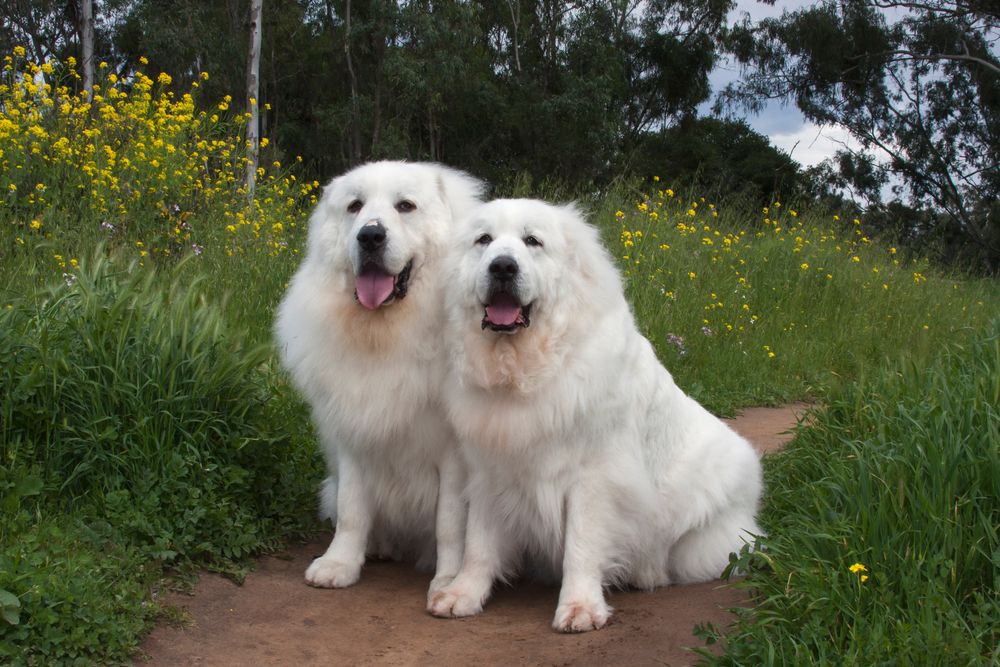
Two white Great Pyrenees in a field of mustard flowers

Size can be a huge determining factor when you are getting a dog. Some people live in apartment spaces that have size limitations while others prefer a large dog over any other size.

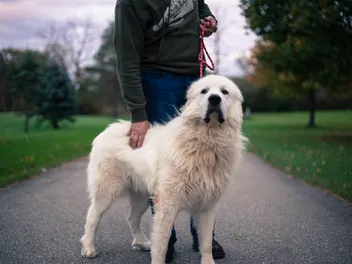
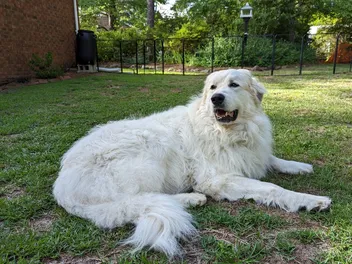
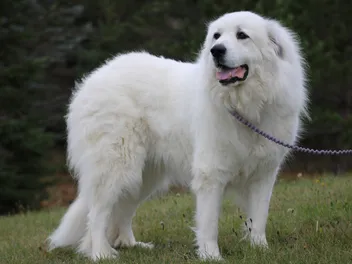
Regardless of what category you fall under or why you are concerned, you will likely want to know how big your Great Pyrenees is supposed to get. While many different factors can influence the total size, we definitely have some averages along with what influences the ultimate height and weight. An average adult Great Pyrenees can weigh up to 85-125 pounds and measure 27 to 32 inches tall.

Dogster divider_v2_NEW_MAY_24_

Great Pyrenees Overview

The Great Pyrenees is considered a giant dog that towers over many other canines. These gentle, docile creatures are well revered for being playful and good-natured.

This dog will get massive before your eyes. You'll bring home a small fluffy puppy and wind up with a giant in just a few short months. They will impress you with their rapid growth in the beginning, but they will tend to taper out once they reach about a year of age.

If you are interested in the Great Pyrenees, you're likely wondering exactly how big they will get. After all, if you know anything about the breed, you know that these are not small house dogs.

Image Credit: everydoghasastory, Shutterstock

Great Pyrenees Size and Growth Chart

Now we're going to get into the actual growth of the Great Pyrenees. Keep in mind that these measurements are averages and will vary depending on the genetics and other factors relating to the Great Pyrenees.

If you have a Pyrenees cross, it can change these results dramatically, so keep in mind that this is only designed to show you the averages for a purebred Great Pyrenees.

AgeWeight Range
2 months10-30 pounds
3 months25–40 pounds
4 months35–55 pounds
5 months45–70 pounds
6 months50–80 pounds
7 months55–85 pounds
8 months60–90 pounds
9 months65–95 pounds
10 months70–100 pounds
11 months70–105 pounds
12 months80–110 pounds
24 months85-125 pounds

When Does a Great Pyrenees Stop Growing?

The Great Pyrenees takes quite a long time to mature. While they typically reach their mature height of 25”-32” by their first birthday, these dogs aren't considered fully grown until they reach about 2 years of age. Many veterinarians don't want to fix a Great Pyrenees until they reach a more mature stage to allow for complete growth and development.

Spaying or neutering too early can potentially lead to:

  • Orthopedic problems
  • Cancer
  • Weight gain
  • Ligament tears
Image Credit: Cody Hanson Photography, Shutterstock
Dogster divider_v2_NEW_MAY_24_

Factors Affecting the Size of the Great Pyrenees

There are several different factors that can affect your Great Pyrenees’s growth. Ultimately, it depends on the individual dog and the lifestyle that you create for them.

Genetics

Genetics play a huge role as to how big your Great Pyrenees will get. These dogs can vary in size depending on bloodlines and several other factors. When puppies are born to a specific set of parents, they will carry a combination of their genetic material, meaning that they will be much like their parents in terms of size, and even temperament!

Image Credit: schubbel, Shutterstock

Diet

Diet can severely impact the growth of your Great Pyrenees. Especially when they are in their growth stages, diet is a crucial element to how big your dog will get. If you feed your dog a nutritious diet that has all of the elements they need as puppies, they will be more likely to grow to their full potential.

However, if a dog was malnourished or overfed as a puppy, it can impact how they develop later.

Every pet is unique in their nutritional needs, so we recommend reaching out to your vet for advice.

Sex

In many cases, males exceed the height and weight of their female counterparts. This can vary a little bit depending on the bloodline. For example, some Great Pyrenees bloodlines might be absolutely massive while others are on the small end of the scale no matter the sex.

However, within the same litter, the male puppies generally get bigger than the females.

Health

If a Great Pyrenees has poor health, it could affect their growth. Different illnesses can play a role in how efficiently nutrients are utilized, how much a dog can exercise, etc. This can impact how big they become.

Age

Obviously age impacts how big your Great Pyrenees is. A puppy, for example, will be very small while a full size adult will be enormous. The first two years of life are filled with stages of rapid and gradual growth until they reach their mature size. Weight can fluctuate over time but in general, their body will remain the same size.

Image Credit: thecandacemiller, Shutterstock
Dogster divider_v2_NEW_MAY_24_

Ideal Diet for Maintaining a Healthy Weight

Maintaining a healthy weight is incredibly important for a Great Pyrenees. All dogs need to be at a healthy weight, but it is especially crucial for large dogs. Carrying around extra weight can negatively affect the way that their joints function.

Here are some tips on how to improve your Great Pyrenees' diet overall.

Choose a Proper Diet

Choosing a proper diet for your Great Pyrenees is paramount. You should always pick a diet based on the advice of your veterinarian, so make sure to clear any dietary choices with them.

Several factors can influence the type of dog food you feed your Great Pyrenees. These dogs can do very well on a high-quality kibble or canned food designed for large or giant breeds. These diets tend to be more affordable and easy to feed.

Fresh food diets are becoming increasingly popular. Many companies offer fresh food diets that are explicitly designed, packaged, and delivered straight to your door just for your dog. These types of diets can be pretty expensive, so make sure to understand the implications of price before you commit to purchase.

Feed Measured Portions

Most fresh foods come in individually sized portions that are designed to match the needs of your dog's age and nutritional requirements.

Dry kibble and wet canned food have recommended feeding guidelines on the package so you can feed your dog the appropriate amount of dog food at each meal. These are just recommendations and some dogs may need more or less, so speak to your vet about the proper feeding amounts for your specific dog and diet.

No matter the method you use to feed your dog, you should always make portion control a top priority.

Offer Healthy Snacks

There are plenty of safe and health-conscious snacks for dogs to help them maintain a healthy weight and provide them with a little nutritional boost. You can choose healthy alternatives, such as fresh fruits, vegetables, lean protein, and grains. Just talk to your veterinarian first to be sure the snacks you are offering are safe and beneficial.

Image Credit: Sierra Tango, Shutterstock
Dogster divider_v2_NEW_MAY_24_

How to Measure Your Great Pyrenees

Measuring your Great Pyrenees will be very important. In addition to making sure they’re growing properly, it will help you determine exactly what size collar, harness, and other products to purchase for them.

Here is how you can appropriately measure your Great Pyrenees to get the best fit. First you're going to need something to measure with. It's best to use a flexible measuring tape and a piece of paper to record your results.

  • Body Length: To measure body length, you will start from the base of the tail and extend the measuring tape to the very base of the neck between the shoulder blades.
  • Chest Girth: Chest girth is measured from the top of the dog's shoulder, around the largest part of the chest, and back up to meet the other side.
  • Height: To measure height, you will place the measuring tape on the floor by your dog's front paw and extend the tape all the way to the highest point of the shoulder.
  • Neck Girth: All you are essentially doing with neck girth is measuring around your dog's neck. You would just take the measuring tape and circle it around the dog's neck at the widest part.
  • Weight: Weighing your dog is easy. Just have them sit on a scale. When they’re a puppy, you can also weigh yourself, then weigh yourself holding the dog and subtract your weight. However, this won’t work as well as your Pyrenees continues to grow.
Dogster divider_v2_NEW_MAY_24_

Conclusion

Now you know more about the Great Pyrenees and how big they will get. Even though the ultimate weight and height depends on several factors, you could always get a good average.

Remember that nutrition is incredibly important, especially in the first year of life. Make sure that your Great Pyrenees is getting all of the right nutrients by feeding them a high-quality diet formulated for large breed dogs in order to give them the healthiest life possible.

Related stories:


Featured Image Credit: Danita Delimont, Shutterstock

Want content like this delivered to you?

News, insights, expert advice, and everything dog

Ashley Bates
Authored by

Ashley Bates

Join the Conversation

10 Responses

MK
Mary Kayser says:
December 9, 2024

Our gentle giant, Frosty, lived 13 years! He was huge! He was by far the sweetest creature ever put on this earth! You could take food out of his mouth! The Grandkids would cuddle with him and he would just sigh with contentment! Everyone loved Frosty! If you are considering getting a Great Pyrenees, consider their size. He could take up the entire couch! And ideally they like a yard to run in, not acreage, but at least a backyard. They really don’t eat huge amounts, just a normal dog appetite. Their coats are gorgeous, but thick and I would not recommend a hot climate. His favorite spot was the AC vent all summer. He wouldn’t hurt a flea, but they can kill a predator like a wolf to defend their family “herd”. They are very strong muscular dogs, originally bred as sheep herders in the Great Pyrenees Mountains of France, very smart and huge lovable dogs.

Joe Burns
Joe Burns says:
December 9, 2024

Hi Mary, thank you for sharing! It sounds like Frosty was the perfect dog. :)

L
Linda says:
December 9, 2024

Good article.I've had 8 Pyrenees- Anatolian crosses over the past 25 years,6 of them presently.This cross has worked out very well as property guards on my acreage.I would suggest what my vet recommended on raising pups.Keep them on puppy chow til 3mo.old,then switch them to adult maintenance chow.The reason being that puppy chow is so high in protein it causes too-rapid bone growth instead of slow,steady growth where the bones can fill in solidly to carry their great size & weight.This has given my dogs very solid, substantial growth.

Joe Burns
Joe Burns says:
December 12, 2024

Hi Linda, thank you for sharing your story. That is sound advice from your vet, and I'm happy to hear it has worked so well for you. Large breeds that receive energy excess from eating too much food or above caloric needs during growth are prone to obesity, reduced longevity and rapid growth, with risk of developmental orthopedic diseases. Reduced energy density and a moderate fat level are recommended. However, that doesn't mean that all large breeds should be changed into adult food at 3 months, so it is always best to check with your vet as you have done. :)

BE
Brian Essich says:
December 9, 2024

I have 2 chihuahua's moving to where they're are coyotes what is the best protective dog against and ok with small dogs

Joe Burns
Joe Burns says:
December 13, 2024

Hi Brian, thanks for getting in touch. Coyotes are more likely to avoid large dogs, so the Great Pyrenees would be an excellent choice as a new addition to your family. They're known for their natural guarding instincts, but they're also a very calm and gentle breed that will get along well with your Chihuahuas if you train and socialize them properly. I hope this helps. :)

MK
Mary Kayser says:
December 9, 2024

Thanks for your Reply. Yes, Frosty was the perfect dog, but there are so many perfect dogs, unforgettable dogs that stay in your heart forever. We took in a flood rescue from the Midwest Flood of '93. She had "people" eyes. She looked at me with gratitude every day, and I'm not imagining that! She seemed to know we gave her a second chance. We grieved when she crossed over the Rainbow Bridge and I could still tear up just thinking of her. But I know I will see her again, waiting for my patiently as she did. Our Vet tells us if there's no animals in heaven, he's NOT going! God bless you, Mary

JG
Joseph Gordon says:
January 1, 2025

I have a great pryneese name Brutus James. he is abnormally large for the breed weighing in at 165 lbs. the vet says he's very healthy weight wise and says he is taller then a great dane. he is on a limited food diet to keep hi. healthy weight wise. he is so gentle. but will defend us, our livestock, and our property with his life. he has fought off 5 coyotes one night. although the barking can be obsessive and sometimes annoying, it's him doing his job to warn off predators. I wouldn't give him up for anything in the world. he loves playing and just being loved on. also your best friends if you have treats. lol. I strongly suggest doing your research before you get one though. they are not for everyone. especially with their barking.

Radim Chudej
Radim Chudej says:
January 2, 2025

Hello Joseph, thank you very much for your message. Your Brutus James sounds absolutely amazing! It must be very comforting to know you have such a protector guarding you. It is also great to hear that you are taking good care of your dog. They will always reward you with love and affection, although we agree that Great Pyrenees is not for everyone. However if you will find the courage and give these pups time and attention, you have a wonderful companion for years to come. Thank you and have a great day!

JD
Juliette Deschenes says:
January 5, 2025

I must apologize in advance. They are no herders, they are guardians. They were bred to protect the farm and its inhabitants from predators such a wolves,coyotes, bear, wild cats and criminals. They are indeed very kind to their charges. They are exceptionally tolerant of children and small animals, like cats, rabbits, chickens and even ferrets. All who live on their farm are treated with kindness. I had a lady friend who bred and rescued the. Late afternoon as the sun went down, a lot of stray cats living nearby would run to her acreage and climb the chain link fences to bed down for the night with her dogs knowing they would be safe from hungry coyotes.

How Long Do Great Pyrenees Live? Vet-Verified Average Lifespan, Data & Care Guide

How Long Do Great Pyrenees Live? Vet-Verified Average Lifespan, Data & Care Guide

The Great Pyrenees is one of the largest dog breeds of all. They are considered a giant breed and have the reputation for being very gentle, protective, and pl…

Ashley Bates
By Ashley Bates · 2 weeks ago
How Big Does a Great Dane Get? Average Weight & Growth Chart

How Big Does a Great Dane Get? Average Weight & Growth Chart

The Great Dane is a giant breed of dog that is known for being a gentle giant because of its seeming ability to understand that it is much larger than virtuall…

Nicole Cosgrove
By Nicole Cosgrove · 2 days ago
Great Pyrenees Dog Breed: Info, Pictures, Care & Facts

Great Pyrenees Dog Breed: Info, Pictures, Care & Facts

The Great Pyrenees dog is a large breed that is both protective and loyal by nature. Lovingly referred to as the Pyrs, this dog has traditionally served as a s…

Rachael Gerkensmeyer
By Rachael Gerkensmeyer · 2 days ago
How Big Do St. Bernards Get? Average Weight & Growth Chart

How Big Do St. Bernards Get? Average Weight & Growth Chart

St. Bernards are one of the most iconic giant dog breeds, and you may know them from the movie Beethoven or for their reputation as mountain rescue dogs. These…

Codee Chessher
By Codee Chessher · 2 days ago
July 4, 2026

How Much Does a Great Pyrenees Cost? 2026 Price Guide

Owning a dog of any kind can be a huge expense. However, when you have one as large as the Great Pyrenees, you can probably estimate that you will be spending…

Ashley Bates
By Ashley Bates
How Much Does a Great Pyrenees Cost? 2026 Price Guide
June 17, 2026

11 Vet-Verified Great Pyrenees Facts That You May Not Know

Great Pyrenees are beautiful and amazing dogs that have coexisted with humans for many years. While they’re most recognized for their large size and luxurious…

Jessica Kim
By Jessica Kim
11 Vet-Verified Great Pyrenees Facts That You May Not Know
July 4, 2026

When Do Puppies Stop Growing? Vet Verified Growth Table & Facts

Dogs come in all shapes and sizes. When they’re small, fuzzy puppies, they can look similar in size. But as time moves on, we start to really see how quickly s…

Cassidy Sutton
By Cassidy Sutton
When Do Puppies Stop Growing? Vet Verified Growth Table & Facts
June 17, 2026

Are Great Pyrenees Good With Kids & Families? Breed Temperament & FAQ

The Great Pyrenees is a classic dog of epic proportions. These massive canines are gentle but have quite a presence at the same time. They have a reputation fo…

Ashley Bates
By Ashley Bates
Are Great Pyrenees Good With Kids & Families? Breed Temperament & FAQ
June 17, 2026

Are Great Pyrenees Good With Cats? Vet-Reviewed Behavior & Temperament

The Great Pyrenees is a lovable dog, making the breed an excellent family pet, bred as herding dogs in the Pyrenees mountains. They are large animals, with mal…

Chris Dinesen Rogers
By Chris Dinesen Rogers
Are Great Pyrenees Good With Cats? Vet-Reviewed Behavior & Temperament
July 4, 2026

How Big Do Golden Retrievers Get? Vet-Verified Average Weight & Growth Chart

Golden Retrievers, often referred to as Goldens or Goldies for short, are beloved family pets often featured in movies and shows. You’ll also see them on searc…

Krysha Thayer
By Krysha Thayer
How Big Do Golden Retrievers Get? Vet-Verified Average Weight & Growth Chart
July 4, 2026

How Big Will My Tibetan Mastiff Get? Weight & Growth Chart

If you are looking for a massive dog breed, the Tibetan Mastiff is certainly one of the biggest dog breeds out there. But just how big is your Tibetan Mastiff…

Adam Mann
By Adam Mann
How Big Will My Tibetan Mastiff Get? Weight & Growth Chart
July 4, 2026

How Big Does a Belgian Malinois Get (With Growth & Weight Chart)

Bred around Malines, Belgium, the Belgian Malinois get their name from their home city. However, the Belgian Malinois is an individual dog breed in America, wh…

Jeff Weishaupt
By Jeff Weishaupt
How Big Does a Belgian Malinois Get (With Growth & Weight Chart)

Love Dogs? So Do We! Join the Dogster Community

Stay informed with expert pet care insights delivered straight to your inbox! Discover professional guidance on animal behavior, feeding tips, trusted product picks, and much more.

You may opt-out at any time. View our Privacy Policy for more information.

The Dogster app on a phone