Bull Terrier Dog Breed: Info, Pictures, Facts, Traits & History

In this article
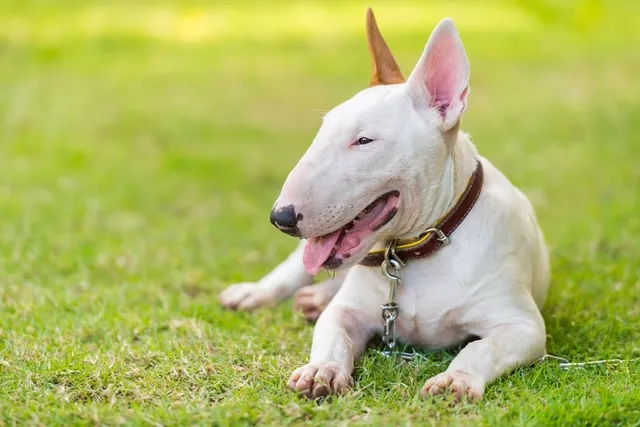
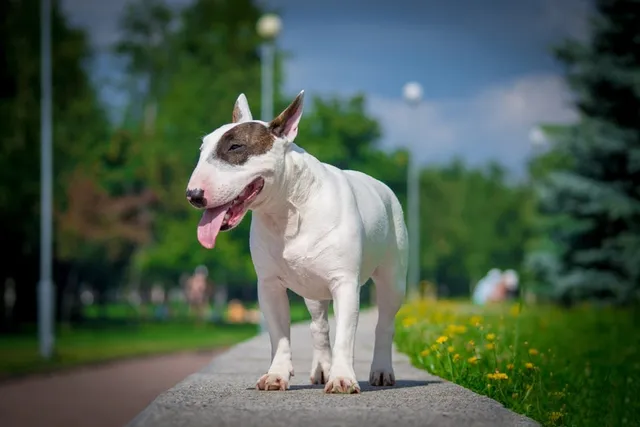
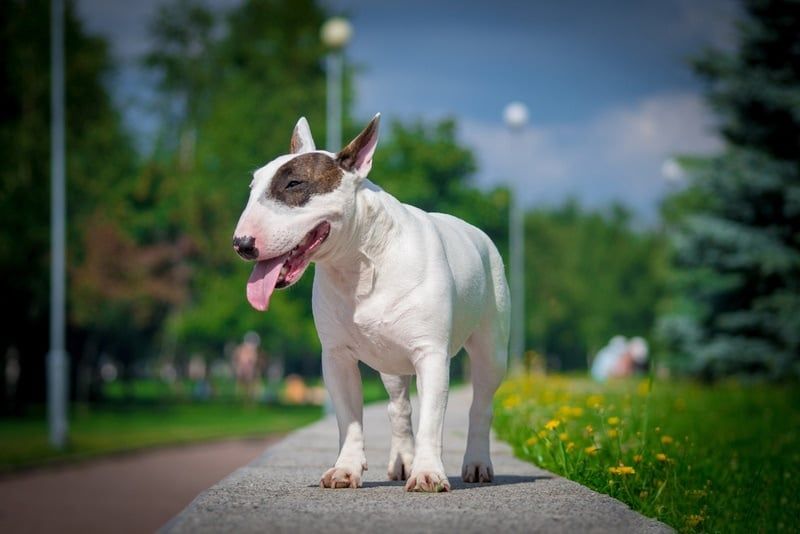
The Bull Terrier is a unique-looking dog. They have an egg-shaped head, which is their most notable feature. They were originally bred for bull baiting and dog fighting in England. However, they have come a long way from this beginning and are mostly kept as companion dogs now.
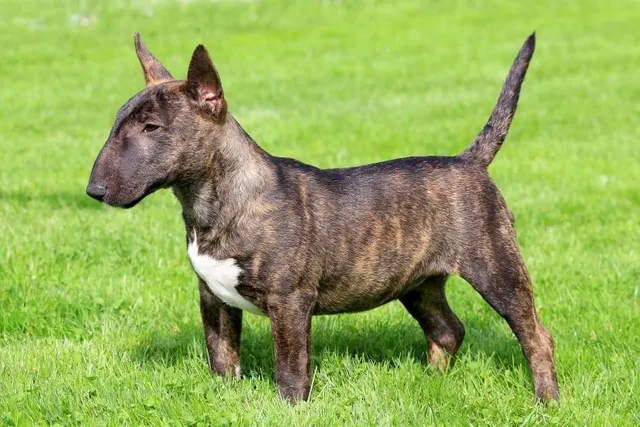
They’re exceptionally friendly and energetic, working best for more active families. You can find them in a huge array of colors, including white, brindle, and black. They can be stubborn and independent, though, which can make them hard to train.
Breed Overview
Height:
Weight:
Lifespan:
Colors:
Suitable for:
Temperament:
Bull Terriers are known today for their fun-loving nature—a distant cry from their dogfighting past. They are very active, so we typically only recommend them for more active individuals. It’s important to train and socialize them properly. Otherwise, they can be somewhat aloof.
These dogs require proper care, though. Otherwise, they may not be as friendly as many people claim. Keep reading to find out everything you need to know about these potentially great companions.
Bull Terrier Characteristics

Bull Terrier Puppies

Bull Terriers are incredibly playful and active. While they do need to sleep a lot, like many puppies, they will spend their waking moments running around and getting into things. These puppies require dedicated play, walks, and mental stimulation. Otherwise, they can quickly get into mischief. They aren’t easy puppies to take care of by any means.
Finding these dogs can be a bit challenging. They aren’t nearly as common as some other breeds, so just finding a breeder can be hit-or-miss. Furthermore, these dogs must get temperament testing, which many low-quality breeders do not use.
Temperament & Intelligence of the Bull Terrier 🧠
Bull Terriers are well-known for their clowning personalities. They love games and have seemingly boundless energy. These dogs also require a very active lifestyle. Otherwise, they can become bored and restless. Don’t adopt one of these dogs unless you can put up with their activity needs.
Bull Terriers form strong bonds with their families, and they’re known for being very loyal. They’re also very affectionate with their own families, though they can be aloof with others. They’re great dogs for families with children due to their constant curiosity and affection.
While these dogs are pretty friendly with people, early socialization is vital. Otherwise, they can be aloof and less confident. Remember, they were originally not bred to be friendly to other dogs. Therefore, you need to work even harder for them to be friendly to other canines.
Bull Terriers are quick learners. They’re rather intelligent and figure out how things work pretty quickly. However, they are independent and not particularly obedient. Therefore, they don’t always listen to what you say, especially if there are any distractions.
Their intelligence is coupled with a strong will, so they might even question commands or decide not to listen to you altogether. They require tons of patience and persistence during training. Therefore, we highly recommend them to experienced dog owners.
Are These Dogs Good for Families? 👪
Bull Terriers can often be good for families. However, this isn’t always true. Their high energy needs make them harder for more laidback families to manage. You need to be cautious if you have cats or rabbits, as well. These dogs have very strong prey drives, which means that they tend to chase anything that moves.
These dogs can be very playful and energetic for those that are more active. If you want a dog that can keep up with you, Bull Terriers can be a great choice. They can also be friendly with proper socialization, though proper socialization is still required. It’s important that you have enough time to socialize your puppy properly.
Bull Terriers aren’t always gentle with children, either. Very small children may find their roughness off-putting, and they can commonly forget just how big they are. Therefore, we recommend being cautious if you have toddlers, as accidental injuries may occur.

Does This Breed Get Along With Other Pets? 🐶 😽
Bull Terriers each have their own personality. However, as a whole, these dogs aren’t the friendliest towards other pets.
They’re naturally aloof and suspicious of other dogs, though proper breeding and socialization can help with this. However, some individuals may still be cautious of other dogs, no matter what your socialization plan is. Luckily, these dogs are generally friendly with other dogs in the household that they grow up with. It’s mostly stranger dogs that you have to worry about.
These dogs also have a pretty high prey drive. Therefore, they will likely chase cats, rabbits, hamsters, and any other small pets. We don’t recommend leaving them alone with your felines, especially the standard size. They are plenty large enough to seriously injure a cat.
Things to Know When Owning a Bull Terrier
Food & Diet Requirements 🦴
Bull Terriers are very active, playful dogs. However, they don’t have specific dietary needs. They work just fine on any dog food made for their size group. For larger dogs, this likely means a large-breed dog food. It’s especially important that you select a food fitting for a large dog, as bigger dogs have different dietary needs than small dogs.
Puppies especially need large-breed dog food. Otherwise, they may be more prone to hip dysplasia and a range of other health issues. Overnutrition of large puppies leads to faster bone growth, leading to abnormal bone remodeling. The end result is a less dense skeletal structure, which leads to bone problems later in life.
If your Bull Terrier is particularly active, you may need to invest in a high-protein food. Very active dogs may need extra help maintaining their muscle mass, and extra protein can help with this.
Choose food that is tailored to your dog’s specific life stage. If your dog is a puppy, food formulated for large puppies is necessary. After your dog has grown, switch to adult food, which is often lower in calories. Seniors don’t have to switch to senior dog food at a particular point. Senior dog food is made to handle health issues that are common as dogs age, like joint problems.
You don’t need to switch to senior dog food until your dog has these issues—which may happen very early or may not happen at all! Senior dog food recipes are all different, too. One may have higher calories to help prevent muscle loss, while another may have lower calories to combat weight gain.

Exercise 🐕
Bull Terriers are very active. Therefore, you’ll need to provide them with at least one hour of exercise each day. Preferably, this exercise should be split into multiple sessions throughout the day. There are many ways to help your dog get the exercise they need.
Brisk walks are a great way to get your dog worn out. Aim for truly brisk walks, though. You want to be moving, or the walk won’t be fast enough to wear your canine out. Aim for at least 30 minutes of walking once a day. You need to invest in other exercise opportunities throughout the day, though.
You can also run with your Bull Terrier, which is a more efficient way to meet their exercise needs. When running, you only need to run for about 15 minutes before these dogs are tired. If you can train your dog to run next to a bike, then they can run full-speed, helping them stretch their legs.
Your Bull Terrier also enjoys playing games like fetch, tug-of-war, and frisbee. These are a laidback way for them to release their energy, often without you getting worn out, too. For dogs that have advanced through training, agility challenges are another great way to get them some exercise.
Your Bull Terrier also needs mental stimulation. Otherwise, they can become bored. Mixing up their physical exercise can help with mental exercise, too. Walking somewhere new or playing with a new toy can help your dog’s brain stay active. Training sessions are another easy way to mentally challenge your dog. You only need 10 minutes of training at a time.
Some games are also mentally stimulating, like hide-and-seek. Agility training also requires a lot of mental work on behalf of the dog. Both of these are very efficient ways to get your dog’s mind exercised.
Training 🎾
While Bull Terriers can be hard to train, it’s still important to train them. They require quite a bit of patience and consistency, as they will learn how to skirt around the rules very quickly. You should start socializing your bull terrier as soon as you bring your puppy home. Expose them to a range of different people, animals, and places. The more confident these dogs become, the less likely they are to act aggressively.
Enroll your puppy in group training classes for a safe, fun way to socialize them. While these classes shouldn’t be their only source of socialization, they do let your dog interact with many other dogs and people in a new environment. They’re often pretty inexpensive, too, so there is little reason to skip them.
You should also start training as quickly as possible. While these dogs are smart, they can also be stubborn. Therefore, it’s important to get them training as quickly as possible and remain consistent throughout their lives. Have everyone onboard with the training to prevent your bull terrier from finding inconsistencies and exploiting them.
You should follow all of the usual advice when training these dogs. Use short, clean commands, and keep training sessions short. Reward any movement in the right direction and practice all commands in many different places.

Grooming ✂️
Bull Terriers do not need much grooming. Luckily, they have short, smooth coats that don’t require much brushing or bathing.
That said, we do recommend using a rubber brush or brushing glove to remove loose fur once a week. Your Bull Terrier shouldn’t need much more brushing than that. Brushing also helps remove dust and dirt from their coat, helping your canine remain clean without a bath. Brushing also helps stimulate your dog’s skin and promotes a healthy coat.
You should only bathe your Bull Terrier when necessary. For puppies, this may be more often, as they tend to get dirty faster. However, adults likely only need a bath every few months to once a year. If your dog looks dirty, you should give them a bath. Otherwise, skip it.
Baths can irritate your dog’s skin and cause all sorts of skin issues. You should avoid overbathing your dog, as this will cause more problems than benefits. When possible, spot-clean your dog with a damp cloth instead of giving them a full bath.
Your dog’s nails and ears also require cleaning. Trim your dog’s nails every few weeks to keep them at a comfortable length. Overgrown nails can mess with your dog’s gait and split.
Most Bull Terriers do not have many issues with their ears. However, you should still keep them in mind and check them regularly. Redness, odors, or discharge can be signs of ear infections. Don’t use cotton swabs in your dog’s ears, but you can use a damp cotton ball to clean around the outside of the ear if it is dirty.
Like all dogs, your Bull Terrier also needs their teeth brushed every 2 to 3 weeks. They are prone to dental problems, like many dogs out there.
Health and Conditions 🏥
Bull Terriers are surprisingly healthy dogs. However, they can still develop health problems.
These terriers are particularly prone to a few genetic conditions. The most serious one is lethal acrodermatitis, which is a recessive disease that only affects these dogs. It messes with their skin and paw pad development, eventually leading to inflammation and infection. It is deadly, as the name suggests, and there is no cure for it. Luckily, DNA testing can prevent two carriers from breeding together, eliminating the chance of affected puppies being born.
These dogs may also develop deafness, especially later in life. Around 20% of Bull Terriers are deaf in at least one ear. White Bull Terriers are more likely to end up deaf than Bull Terriers of a different color.
Dilated cardiomyopathy is also possible in these dogs, but this condition is sadly prevalent in most dog breeds. It can be genetic or linked to diet. It’s vital that you feed your dog a complete food to help prevent this heart condition. Regular screening can also be helpful, as it helps treat this condition early.
Male vs. Female
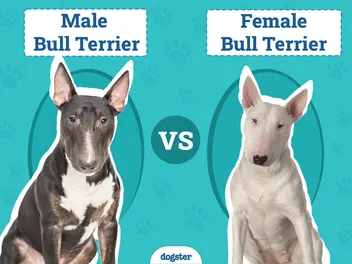
These dogs don’t differ much between genders. Females weigh a bit less than males by about 10 pounds. Males may also have a wider head on account of their larger size. However, these physical characteristics are where differences stop.
Some owners and breeders do claim that temperament differences exist. However, none of these are backed by science, and most are likely eliminated if your dog is spayed or neutered. If your dog isn’t, then hormones may have an effect on their behavior.
For instance, females often experience personality changes over their lives depending on where they are in their cycle. When they come in heat, females may become more or less affectionate.
3 Little-Known Facts About the Bull Terrier
1. They have triangular eyes, unlike practically all other dog breeds.
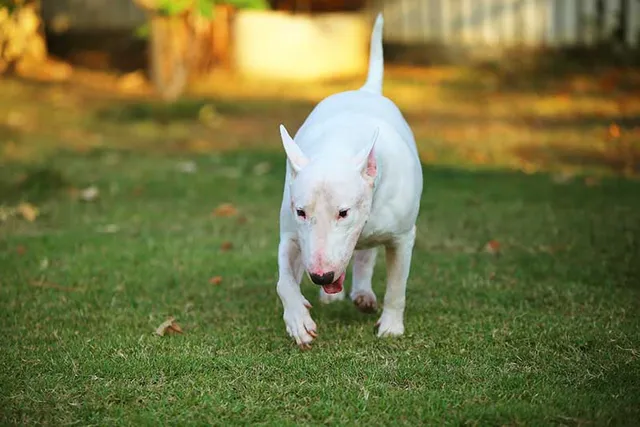
Many dogs have almond-shaped eyes, but Bull Terriers have unique triangular eyes. They’re one of the only dog breeds that have this unique feature.
2. Bull Terriers were bred to have weirdly shaped heads for a reason.
Their egg-head was purposefully bred because the wider head made it harder for them to be grabbed during a dogfight. When dogfighting ended, breeders still maintained this unique characteristic.
3. Despite their history, they aren’t aggressive.
These dogs have been kept as companion animals for generations. Therefore, their more aggressive tendencies have been eliminated by breeders almost completely. Proper breeding and temperament testing can help ensure that your dog is playful and friendly.

Conclusion
Bull Terriers are interesting, unique dogs. They were originally bred for dogfighting, but they are kept solely as companion dogs today. Most are very friendly and playful, especially with proper socialization and breeding.
That said, we still recommend choosing a solid breeder who performs the proper temperament and health testing. These steps often cost more, making the resulting puppies cost more. However, they help ensure that the puppy you’re adopting is high-quality, healthy, and friendly.
Featured Image Credit: dudonyrud, Shutterstock
Expert dog care, straight to your inbox
News, insights, expert advice, and everything dog.

No spam — unsubscribe anytime.
By signing up, you agree to our Terms & Conditions and Privacy & Cookies Policy.
How useful was this post?
Click a star to rate. You can leave written feedback afterwards. (We read all feedback.)
Kristin loves to help pet parents create a fulfilling life for their pets by informing them on the latest scientific discoveries and helping them choose the best products for their pets. She currently resides in Tennessee with three cats, four dogs, two fish, and a lizard, though she has dreams of owning chickens one day!